Last updated: 27 July 2026
Have you ever noticed that almost every traditional Indian home has a Tulsi plant growing in the courtyard, balcony, or garden? This isn’t just a matter of faith or tradition. For centuries, Tulsi (Holy Basil) has been valued in Ayurveda for its remarkable health-supporting properties and its ability to promote overall well-being.
Whether enjoyed as fresh leaves, herbal tea, or Tulsi-infused water, this sacred herb has long been used to support digestion, strengthen immunity, promote respiratory health, and help the body cope with everyday stress.
In this article, you’ll discover the 9 science-backed Tulsi benefits, learn about the different types of Tulsi found in India, how to prepare Tulsi tea at home, and a few important precautions to keep in mind before making it a part of your daily routine.
What is Tulsi (Holy Basil)?
Tulsi (Holy Basil), scientifically known as Ocimum tenuiflorum, is one of the most treasured medicinal herbs in Ayurveda. Revered for thousands of years, it is known for its distinctive aroma, therapeutic properties, and deep cultural significance in India.
In many Indian households, Tulsi is considered a sacred plant and is often grown in the courtyard, balcony, or garden. Beyond its spiritual importance, it has long been used in traditional Ayurvedic practices to support overall health and well-being.
Tulsi leaves are naturally rich in plant compounds, including antioxidants and essential oils, which contribute to their health-supporting properties. In Ayurveda, the herb is traditionally used to promote digestion, support respiratory health, strengthen the body’s natural defences, and help the body adapt to everyday stress.
Today, Tulsi is widely enjoyed as fresh leaves, herbal tea, kadha (herbal decoction), and in various Ayurvedic formulations. Its versatility and long history of traditional use continue to make it one of the most valued herbs for daily wellness.
New to Ayurveda?
To understand the ancient healing system behind Tulsi, read our What Is Ayurveda? A Simple Beginner’s Guide.
Types of Tulsi
Although there are several varieties of Tulsi, three types are most commonly known and used in India. Each has its own unique characteristics and traditional uses in Ayurveda.
1. Rama Tulsi (Green Tulsi)
Rama Tulsi, also known as Shri Tulsi, is the most commonly grown variety in Indian homes. It has bright green leaves with a mild, pleasant aroma and slightly sweet taste. Traditionally, it is used to prepare herbal tea and home remedies for everyday wellness.
2. Krishna Tulsi (Shyam Tulsi)
Krishna Tulsi is easily recognized by its dark green to purplish leaves and stronger aroma. In Ayurveda, it is traditionally valued for supporting respiratory health and is commonly used in herbal preparations for coughs and seasonal discomfort.
3. Vana Tulsi (Wild Tulsi)
Vana Tulsi is a wild variety that grows naturally in forests and hilly regions. It has light green leaves with a refreshing fragrance and is widely used in Ayurvedic formulations. This variety is appreciated for its traditional role in supporting overall health and vitality.
What Makes Tulsi Good for Health?
The secret behind Tulsi’s health benefits lies in its rich blend of natural plant compounds, including antioxidants, essential oils, and phytochemicals such as eugenol, ursolic acid, and rosmarinic acid. These compounds have been studied for their antioxidant and anti-inflammatory properties, which are believed to contribute to many of Tulsi’s traditional uses in Ayurveda.
Because of this unique composition, Tulsi has been valued for centuries as a herb that supports overall well-being. Let’s now explore the key health benefits that make Tulsi one of Ayurveda’s most treasured herbs.
Health Benefits of Tulsi
From supporting digestion to promoting natural immunity, Tulsi offers a wide range of health-supporting properties. While many of its traditional uses come from Ayurveda, modern research has also explored several of its beneficial plant compounds. Here are some of the top Tulsi benefits and why this remarkable herb deserves a place in your daily wellness routine.
1. Supports Healthy Digestion
A healthy digestive system is the foundation of overall well-being, and Tulsi has long been used in Ayurveda to support gut health.
Tulsi may help:
- Ease occasional bloating and gas
- Promote healthy digestion
- Support regular bowel movements
- Reduce the feeling of heaviness after meals
Quick Tip: Enjoy a warm cup of Tulsi tea after meals to support comfortable digestion.
2. Promotes Good Oral Health
Thanks to its natural antibacterial properties, Tulsi is a popular herb for maintaining oral hygiene.
Traditionally, Tulsi is used to:
- Freshen breath naturally
- Support healthy gums
- Maintain oral hygiene
- Promote overall dental health
Simple Tip: Chew a few fresh Tulsi leaves occasionally or enjoy Tulsi tea as part of your daily routine.
3. Helps Relieve Cough and Cold
For generations, Tulsi has been one of the most trusted home remedies for seasonal coughs and colds.
It may help:
- Soothe a sore throat
- Provide comfort during seasonal coughs and colds
- Support respiratory health
- Promote overall wellness during seasonal changes
Best Way to Enjoy: Prepare Tulsi tea with fresh ginger and black pepper for a comforting herbal drink.
4. Supports Heart Health
Tulsi contains antioxidants that help protect the body’s cells from oxidative stress, an important part of maintaining overall heart health.
It may support:
- Healthy cholesterol levels as part of a balanced lifestyle
- Normal blood pressure
- Protection against free radical damage
- Overall cardiovascular wellness
Did You Know? Herbs work best when combined with a balanced diet, regular exercise, and healthy lifestyle habits.
5. Supports Healthy Skin and Hair
Tulsi has long been used in traditional beauty remedies because of its antioxidant and antibacterial properties.
It may help:
- Support clearer-looking skin
- Soothe minor skin irritation
- Promote a healthy scalp
- Maintain healthy-looking hair
Simple Tip: Fresh Tulsi leaf paste is traditionally used in homemade face packs and hair masks.
6. Helps Manage Everyday Stress
In Ayurveda, Tulsi is valued as an adaptogenic herb, meaning it may help the body adapt to everyday physical and mental stress.
It may help:
- Promote relaxation
- Support emotional well-being
- Calm the mind
- Reduce mental fatigue
Best Way to Enjoy: A warm cup of Tulsi tea in the evening can be a soothing addition to your daily routine.
7. Promotes Respiratory Health
Tulsi is traditionally used to support healthy breathing and keep the respiratory system comfortable during seasonal changes.
It may help:
- Soothe the throat
- Support comfortable breathing
- Ease seasonal respiratory discomfort
- Promote respiratory wellness
Quick Tip: Warm Tulsi water can be used for gargling to help soothe a sore throat.
8. Strengthens Natural Immunity
One of the most well-known Tulsi benefits is its ability to support the body’s natural defence system.
It may help:
- Support natural immunity
- Protect against oxidative stress
- Promote overall wellness
- Support seasonal health
Did You Know? Tulsi tea is naturally caffeine-free, making it a refreshing herbal drink any time of the day.
9. May Help the Body Fight Mild Infections
Tulsi has traditionally been used in Ayurveda to help the body defend itself against mild seasonal infections.
It may help:
- Support the body’s natural defence system
- Promote recovery during seasonal illnesses
- Provide antibacterial and antioxidant support
- Support overall well-being
How to Make Tulsi Tea at Home
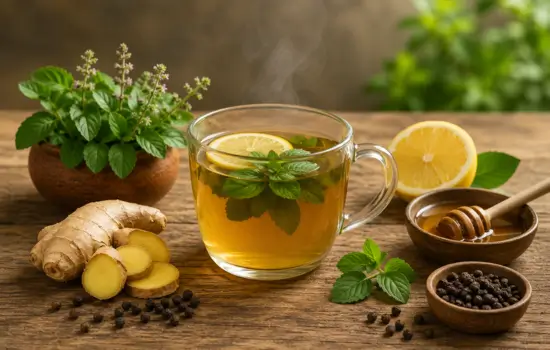
Tulsi tea is one of the simplest and most popular ways to enjoy the goodness of Holy Basil. Naturally caffeine-free and soothing, it can be enjoyed at any time of the day. You can also add a few common kitchen ingredients to enhance its flavour.
Ingredients
- 5-7 fresh Tulsi leaves (or 1 teaspoon dried Tulsi leaves)
- 1 cup water
- Optional: 2-3 black peppercorns, or a few slices of fresh ginger
- Honey or lemon (optional). Add after the tea has cooled slightly
Method
- Bring 1 cup of water to a boil.
- Add the Tulsi leaves and simmer for 2-3 minutes.
- If using ginger or black pepper, add them while the tea is simmering.
- Turn off the heat, cover the pan, and let the tea steep for 2 minutes.
- Strain into a cup. Once the tea has cooled slightly, add honey or lemon if desired.
Tip: Avoid adding honey to very hot tea, as excessive heat may reduce some of its beneficial properties.
Who Should Avoid or Limit Tulsi?
Tulsi is generally safe for most people when consumed in moderation. However, it’s best to be cautious in the following situations:
- If you’re pregnant or breastfeeding: Consult your doctor before using Tulsi regularly as a herbal remedy.
- If you take blood-thinning or diabetes medicines: Tulsi may interact with certain medications or affect blood sugar levels. Speak with your healthcare provider before consuming it daily.
- If you have a Pitta-dominant constitution or excess Pitta: According to Ayurveda, Tulsi has a warming (heating) nature. It is best enjoyed in moderation, especially during hot weather or if you experience signs of excess Pitta, such as acidity or excess body heat.
- Avoid excessive amounts: More isn’t always better. Enjoy Tulsi in moderation as part of a balanced diet.
Final Thoughts
For generations, Tulsi has been more than just a medicinal herb. It has been a cherished part of Indian homes and Ayurvedic traditions. Whether enjoyed as fresh leaves, a soothing cup of Tulsi tea, or a comforting kadha, this humble herb reminds us that some of the best wellness habits are often the simplest ones.
By including Tulsi in your daily routine in moderation, along with a balanced diet and healthy lifestyle, you can embrace a time-tested Ayurvedic tradition that supports overall health and well-being. After all, true wellness often begins with the small habits we practise every day.
Frequently Asked Questions (FAQs)
1. Can I consume Tulsi every day?
Yes, Tulsi can generally be consumed daily in moderation as part of a balanced diet. If you are pregnant, breastfeeding, or taking medications, consult your healthcare provider before using it regularly.
2. What is the best way to consume Tulsi?
You can enjoy Tulsi as fresh leaves, Tulsi tea, or a traditional kadha. Choose the method that best suits your daily routine.
3. What is the best time to consume Tulsi?
There is no fixed best time. Many people prefer consuming Tulsi in the morning or as a soothing herbal tea during the day.
4. Which type of Tulsi is best for health?
Rama Tulsi and Krishna (Shyam) Tulsi are the varieties most commonly used in Ayurveda, while Vana Tulsi is also valued for its traditional uses.
5. How many Tulsi leaves can I eat in a day?
There is no fixed recommended number, but many people traditionally consume 4-5 fresh Tulsi leaves in moderation as part of their daily routine.
Disclaimer
The information shared in this article is intended for educational purposes only and is not a substitute for professional medical advice. If you have any medical concerns or underlying health conditions, please consult a qualified healthcare professional.
References
- The Clinical Efficacy and Safety of Tulsi in Humans: A Systematic Review of the Literature
- The Clinical Efficacy and Safety of Tulsi in Humans: A Systematic Review of the Literature (PubMed)
- The Science Behind Sacredness of Tulsi (Ocimum sanctum Linn.)
- Therapeutic Uses of Ocimum sanctum Linn. (Tulsi) with a Note on Eugenol and Its Pharmacological Actions
- Tulsi – Ocimum sanctum: A Herb for All Reasons

A natural living enthusiast passionate about Ayurveda and holistic wellness. Through HealthBooti, she shares well-researched, practical health tips and lifestyle guidance to help individuals and families embrace healthier habits naturally. Her mission is to make natural healing simple, safe, and accessible for everyday life.