Do you often feel stiffness or discomfort in your neck, shoulders or back after sitting for hours? And when you finally get up, does your lower back feel tight or uncomfortable?
If you spend most of your day at a desk, you probably know the feeling. Hours can pass while you’re working, attending meetings or staring at a screen, with hardly any movement in between. Staying in the same position for too long can leave your body feeling stiff and uncomfortable.
You can’t just stop going to the office because your back is hurting or your neck feels stiff. But that doesn’t mean stiffness and discomfort have to become part of your daily routine.
You don’t need a gym or a long workout to give your body a break. A few simple stretches can give your body a much-needed break after those long hours of sitting. And many of them can be done right beside your desk or even from your chair.
So, if sitting is a big part of your day, let’s make a little time for stretching too.
Before We Start: What Will You Stretch?
Neck feeling tight? Shoulders a little stiff? Maybe your lower back or legs need some attention too. Let’s take it from the top.
| If you’re feeling… | Try this |
|---|---|
| Neck feels tight | Gentle neck stretch |
| Shoulders feel stiff or tired | Shoulder rolls |
| Tightness across the chest | Gentle chest opener |
| Upper back feels stiff | Upper-back stretch |
| Lower back feels stiff | Seated side stretch |
| Hips feel tight after sitting | Standing hip-flexor stretch |
| Tightness at the back of your thighs | Seated hamstring stretch |
| Calves feel tight after sitting | Standing calf stretch |
You don’t have to do all eight every time. Start with the ones your body seems to need most, or use the complete routine when you have a few extra minutes.
1. Gentle Neck Stretch
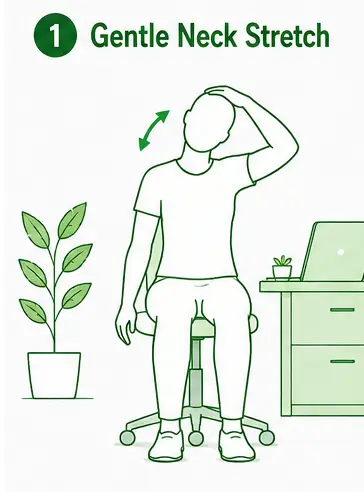
If you’ve been looking at a screen for hours, your neck may be one of the first places to feel tight. Give it a gentle stretch and a chance to change position.
How to do it:
- Sit or stand comfortably and let your shoulders relax.
- Slowly tilt your head towards your right shoulder. Don’t lift your shoulder towards your ear.
- Hold for 15-20 seconds, breathing normally.
- Slowly return to the centre and repeat on the other side.
You should feel a gentle stretch along the side of your neck. Don’t pull or force your head down.
2. Shoulder Rolls
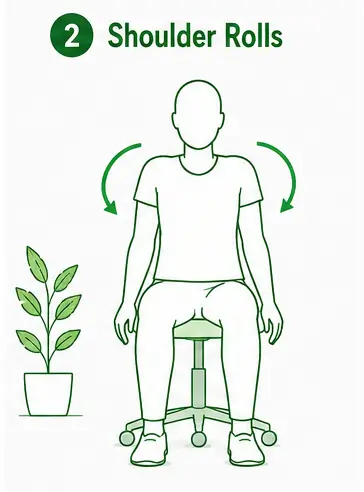
After hours at a desk, your shoulders can start feeling tight and tired without you even noticing. Shoulder rolls are a simple way to get them moving again, and you can do them right from your chair.
How to do it:
- Sit or stand comfortably with your arms relaxed by your sides.
- Slowly lift both shoulders towards your ears.
- Move them gently back and then down, making a slow circle.
- Repeat 8-10 times, then change direction and roll them forward.
Keep the movement slow and relaxed. There is no need to make big circles or force the movement.
3. Gentle Chest Opener
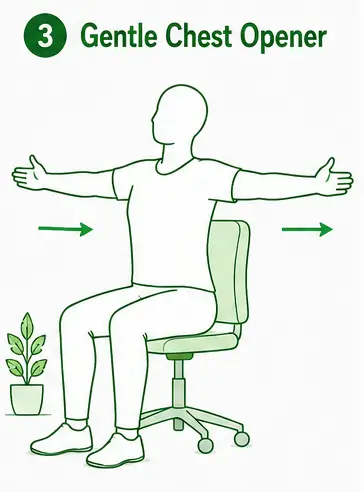
When you’re working at a desk, your arms are usually in front of you for hours, typing, writing or using your phone. A gentle chest opener gives your upper body a chance to move in the opposite direction.
How to do it:
- Sit or stand comfortably with your shoulders relaxed.
- Bring your arms out to the sides.
- Gently draw your shoulders back and down and open your chest.
- Hold for 10-20 seconds, breathing normally.
- Relax and repeat if comfortable.
Keep your neck relaxed and avoid forcing your shoulders backward. You should feel a gentle stretch across your chest and the front of your shoulders, not pain.
4. Upper-Back Stretch
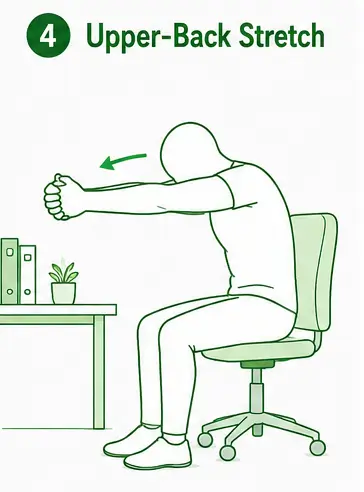
After spending hours reaching towards a keyboard or leaning towards a screen, your upper back may appreciate a little movement in the opposite direction.
How to do it:
- Sit or stand comfortably.
- Reach both arms straight out in front of you.
- Interlace your fingers and gently reach your hands forward.
- Allow your upper back to round slightly as you reach.
- Hold for 15-20 seconds, breathing normally.
You should feel a gentle stretch across your upper back and between your shoulder blades. Don’t force the movement or try to round your back more than feels comfortable.
5. Seated Side Stretch
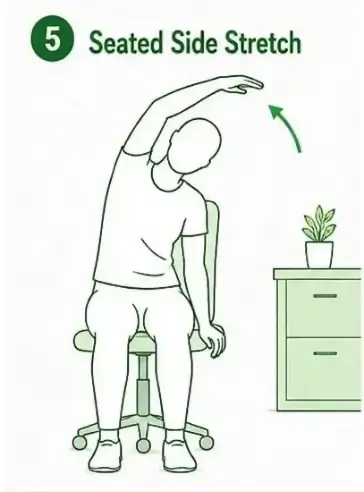
If your lower back feels stiff after sitting for a while, this gentle side stretch gives your back and sides a chance to move.
How to do it:
- Sit upright with both feet flat on the floor.
- Let your right arm hang comfortably by your side.
- Slowly slide your right hand down towards your right knee while gently leaning your upper body to the right.
- You should feel a gentle stretch along the side of your waist and lower back.
- Hold for 10-15 seconds, then return to the centre and repeat on the other side.
Keep the movement gentle and controlled. Don’t force yourself farther to the side or collapse forward.
6. Standing Hip-Flexor Stretch
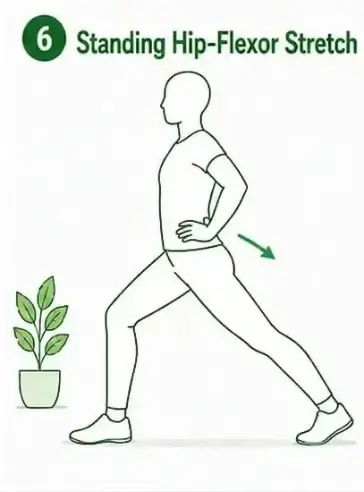
Your hips stay in a bent position while you’re sitting, so after several hours at a desk, standing up and giving them a gentle stretch can feel good.
How to do it:
- Stand tall and take a small step back with your right foot.
- Keep both feet pointing forward.
- Gently bend your front knee and shift your hips forward while keeping your upper body upright.
- Hold for 15-20 seconds, then return to the starting position.
- Switch legs and repeat on the other side.
You should feel a gentle stretch at the front of your back hip. Don’t push your hips too far forward or arch your lower back to deepen the stretch.
7. Seated Hamstring Stretch
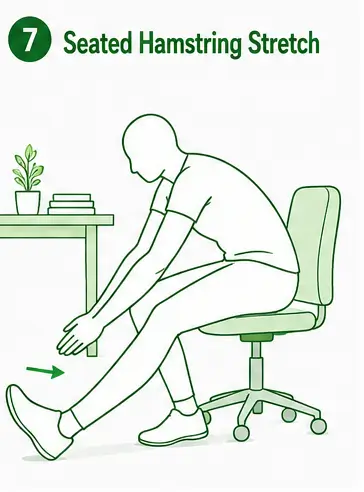
Your hamstrings are the muscles along the backs of your thighs, and they spend much of your sitting time with your knees bent. This simple chair stretch gives the backs of your legs a chance to move and stretch.
How to do it:
- Sit near the front of a sturdy chair and extend one leg straight in front of you, keeping your heel on the floor.
- Keep your back relatively straight and gently lean forward from your hips.
- Reach towards your extended leg only as far as feels comfortable.
- Hold for 15-20 seconds, then slowly sit back.
- Switch legs and repeat.
You should feel a gentle stretch along the back of your thigh. Don’t round your back or try to reach your toes just to go farther.
8. Standing Calf Stretch
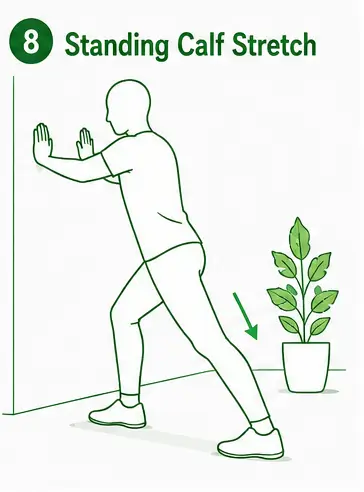
Your calves may not get much attention during a long day at your desk, but standing up and stretching them can be a simple way to get your lower legs moving again.
How to do it:
- Stand facing a wall or desk and place your hands on it for support.
- Step your right foot back and keep that heel on the floor.
- Keep your back leg straight and gently bend your front knee.
- Lean forward slightly until you feel a comfortable stretch in the calf of your back leg.
- Hold for 15-20 seconds, then switch legs.
Keep your back heel down and your toes pointing forward. Don’t bounce or force the stretch
Keep every stretch gentle and comfortable. Don’t bounce, force a deeper stretch or hold your breath. You should feel a gentle stretch, not pain. If a movement hurts or makes your symptoms worse, stop and give your body a break.
Try This 5-Minute Desk Reset
You don’t have to do all eight stretches every time. If your neck feels tight, start with the neck stretch. If your shoulders need a break, try the shoulder rolls. Just pick the areas your body needs most.
Have a few more minutes? Try one full round, working your way down:
Neck – Shoulders – Chest – Upper back – Lower back – Hips – Legs
Take your time with each stretch and keep it comfortable. There’s no need to rush or force a deeper stretch.
Have more time? Go through another round.
And if you only have a minute or two, that’s okay too. A few stretches are better than waiting for the “perfect” break that never comes.
Final Thoughts
You can’t always avoid long hours at your desk. Work has to get done, meetings have to happen, and some days are simply busier than others.
But you can give your body a few minutes of movement and stretching along the way. You don’t need a perfect routine or a big workout. Just find a few stretches that feel good and make them part of your workday.
So, if sitting is a big part of your day, let’s make a little time for stretching too. Your body will appreciate the break.
Disclaimer
These stretches are for general wellness and are not a substitute for medical advice. Stretch gently and stop if you feel pain or discomfort. If you have an injury or medical condition, consult a healthcare professional before exercising.
References
- NHS – Sitting Exercises
- NHS – Flexibility Exercises
- Fit India Mission – Fitness Protocols and Guidelines for 18-65 Years

A natural living enthusiast passionate about Ayurveda and holistic wellness. Through HealthBooti, she shares well-researched, practical health tips and lifestyle guidance to help individuals and families embrace healthier habits naturally. Her mission is to make natural healing simple, safe, and accessible for everyday life.