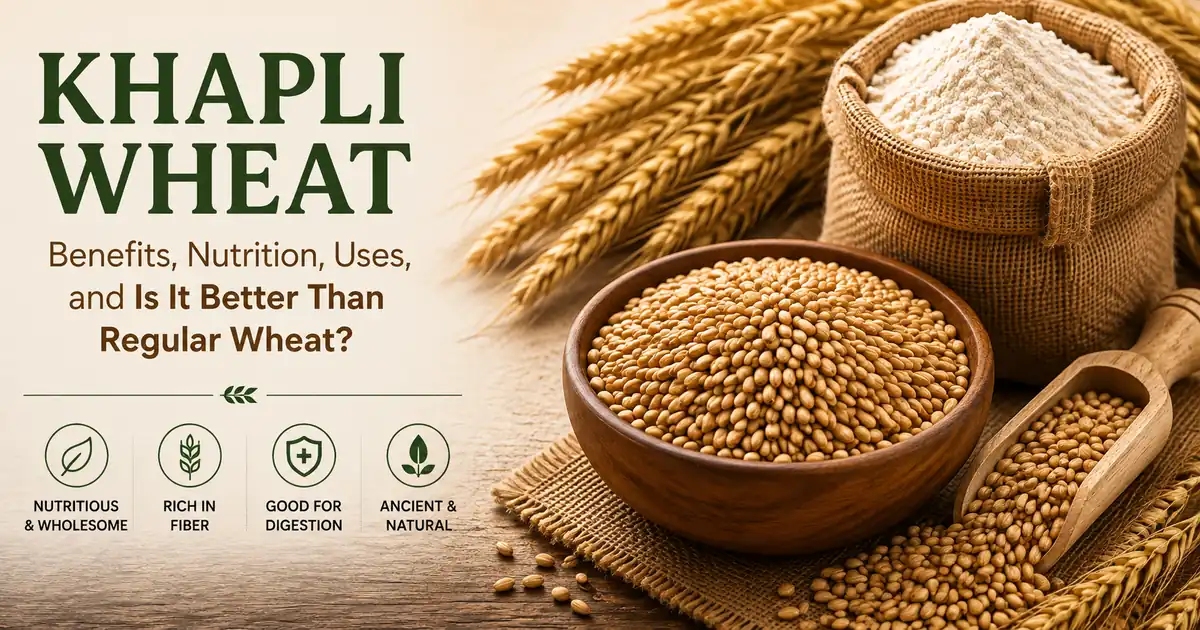
Is Khapli wheat really better than regular wheat, or is it just another health trend? With so many people switching to ancient grains, it’s easy to get confused by the claims. Some say it’s more nutritious. Others believe it’s better for digestion and blood sugar, but how much of that is actually true?
In this guide, you’ll discover what Khapli wheat is, its nutritional value, health benefits, common uses, and how it compares with regular wheat. We’ll also separate facts from common myths so you can decide whether it’s the right choice for your diet.
What Is Khapli Wheat?
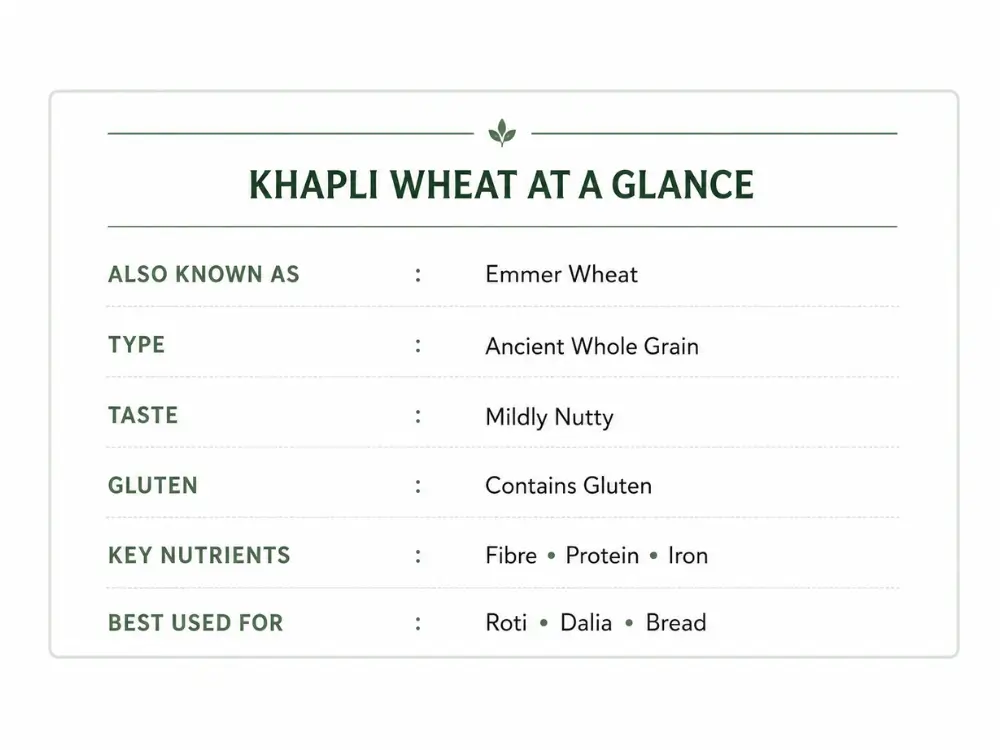
Khapli wheat, also known as Emmer wheat, is one of the oldest wheat varieties cultivated by humans. It has been grown for thousands of years and is still valued in parts of India for its rich nutritional profile and wholesome taste.
Unlike many modern wheat varieties, Khapli wheat is traditionally grown with minimal processing, making it a popular choice among people who prefer whole, natural foods. It has a slightly nutty flavour, a firm texture, and is commonly used to make rotis, chapatis, porridge (dalia), and even breads.
Today, Khapli wheat is making a comeback as more people look for nutritious alternatives to refined grains. While it isn’t a miracle food, its high fibre content, protein, and essential minerals make it a wholesome addition to a balanced diet.
Why Is Khapli Wheat Making a Comeback?
Khapli wheat, also known as Emmer wheat, is one of the world’s oldest cultivated wheat varieties. It is believed to have originated in the Fertile Crescent, a region covering parts of present-day Turkey, Syria, Iraq, and neighbouring areas, before gradually spreading to Europe, Africa, and the Indian subcontinent.
Although modern wheat became the preferred choice for large-scale farming because of its higher yields, Khapli wheat continued to be cultivated in parts of India, particularly Maharashtra and Karnataka, preserving its traditional heritage.
Today, Khapli wheat is gaining popularity again as more people look for whole grains and minimally processed alternatives to refined flour. Its nutritional profile, distinctive nutty flavour, and versatility have made it a popular choice among health-conscious consumers.
Khapli Wheat Nutrition
One of the biggest reasons behind Khapli wheat’s growing popularity is its nutritional profile. As a whole grain, it naturally provides dietary fibre, protein, vitamins, and essential minerals that support overall health.
While the exact nutritional values can vary depending on the variety and how it’s processed, Khapli wheat is generally richer in fibre and certain micronutrients than many refined wheat products.
| Nutrient | Why It Matters |
|---|---|
| Dietary Fibre | Supports healthy digestion and helps you feel full for longer. |
| Protein | Helps build and repair body tissues. |
| Iron | Supports the production of healthy red blood cells. |
| Magnesium | Contributes to normal muscle and nerve function. |
| Zinc | Supports normal immune function and wound healing. |
| B Vitamins | Help convert food into energy and support overall metabolism. |
Note: The nutritional content of Khapli wheat may vary depending on the variety, growing conditions, and milling process.
Health Benefits of Khapli Wheat
Khapli wheat is valued not only for its traditional heritage but also for its impressive nutritional profile. Here are some of the key health benefits that make it a wholesome addition to a balanced diet.
1. Supports Healthy Digestion
Khapli wheat is naturally rich in dietary fibre, which supports healthy digestion, promotes regular bowel movements, and contributes to a healthy gut.
2. May Help Support Better Blood Sugar Management
As a whole grain rich in dietary fibre, Khapli wheat may help slow the digestion of carbohydrates and support steadier blood sugar levels than many refined wheat products when eaten as part of a balanced diet.
3. Keeps You Fuller for Longer
The combination of fibre and protein helps promote a feeling of fullness after meals, which may reduce unnecessary snacking and support healthy eating habits.
4. Rich in Essential Nutrients
Khapli wheat provides important nutrients such as iron, magnesium, zinc, and B vitamins that support energy production, muscle function, and overall well-being.
5. Supports Overall Heart Health
Whole grains are associated with better heart health as part of a balanced diet. Thanks to its fibre content and naturally occurring nutrients, Khapli wheat can be a heart-friendly choice when included in an overall healthy eating pattern.
Khapli Wheat vs Regular Wheat
Both Khapli wheat and regular wheat can be part of a healthy diet, but they differ in their nutritional profile, taste, texture, and how they’re commonly used. Here’s a quick comparison to help you understand the key differences.
| Feature | Khapli Wheat | Regular Wheat |
|---|---|---|
| Type | Ancient wheat (Emmer) | Modern common wheat |
| Fibre | Generally higher | Lower |
| Protein | Good source | Good source |
| Taste | Mildly nutty | Mild |
| Texture | Denser and heartier | Softer |
| Gluten | Contains gluten | Contains gluten |
| Best For | Whole-grain meals, rotis, porridge | Everyday rotis, bread, baked goods |
Note: The exact nutritional composition can vary depending on the variety and how the wheat is grown and milled.
Before You Choose Khapli Wheat
| Question | Quick Answer |
|---|---|
| Is Khapli wheat easy to digest? | Many people find whole-grain Khapli wheat easier to digest, but individual tolerance varies from person to person. |
| Does Khapli wheat contain gluten? | Yes. It contains gluten and is not gluten-free, so it isn’t suitable for people with celiac disease. |
| Is Khapli wheat good for diabetes? | As a fibre-rich whole grain, it may help support steadier blood sugar levels than many refined wheat products when eaten as part of a balanced diet. |
| Is Khapli wheat worth the higher price? | It usually costs more than regular wheat because it’s produced in smaller quantities. Whether it’s worth the price depends on your budget and dietary preferences. |
| Is Khapli wheat easy to find? | It’s becoming easier to find in supermarkets, organic stores, and online, though it’s still less common than regular wheat flour. |
Final Thoughts
Khapli wheat has stood the test of time for a reason. As one of the world’s oldest cultivated grains, it continues to be valued for its whole-grain nutritional profile, distinctive flavour, and traditional heritage.
While it isn’t a miracle food or a gluten-free alternative, it can be a wholesome addition to a balanced diet. Whether it’s the right choice for you depends on your health needs, dietary preferences, and budget.
If you’re looking to explore traditional grains and add more variety to your meals, Khapli wheat is certainly worth trying. As with any food, the key to good health lies in an overall balanced diet and healthy lifestyle, not in a single ingredient.
Frequently Asked Questions(FAQs)
1. Can I eat Khapli wheat every day?
Yes. Khapli wheat can be part of a balanced daily diet if it suits your nutritional needs. As with any grain, variety and portion control are important for overall health.
2. What does Khapli wheat taste like?
Khapli wheat has a slightly nutty, earthy flavour and a denser texture than regular wheat. Many people enjoy its rich taste in rotis, breads, and other traditional recipes.
3. Can Khapli wheat be used to make rotis?
Yes. Khapli wheat flour is commonly used to make rotis, chapatis, parathas, and other Indian flatbreads. The dough may feel slightly different from regular wheat, but it works well for everyday cooking.
4. Is Khapli wheat the same as Emmer wheat?
Yes. Khapli wheat is the Indian name commonly used for Emmer wheat (Triticum dicoccum), one of the oldest cultivated wheat varieties.
5. How should Khapli wheat be stored?
Store Khapli wheat or its flour in an airtight container in a cool, dry place away from moisture and direct sunlight. Proper storage helps maintain its freshness and quality.
Disclaimer
This article is for informational purposes only and is not a substitute for professional medical advice. Always consult a qualified healthcare professional before making significant changes to your diet or managing any medical condition.
References
- The Ancient “Khapli” Wheat: Is it Under-utilised? – Asian Agri-History
- Cultivated Emmer Wheat (Triticum dicoccon Schrank), an Old Crop with Promising Future: A Review – Genetic Resources and Crop Evolution
- Chromosomal Biotypes in Emmer Wheat – Nature
- Genetic Dissection and Stability Analysis of Grain Protein Content and Thousand-Grain Weight in Emmer Wheat (Triticum turgidum subsp. dicoccum) Germplasm – Scientific Reports

A natural living enthusiast passionate about Ayurveda and holistic wellness. Through HealthBooti, she shares well-researched, practical health tips and lifestyle guidance to help individuals and families embrace healthier habits naturally. Her mission is to make natural healing simple, safe, and accessible for everyday life.
Really well put