Last Updated: 30 July 2026
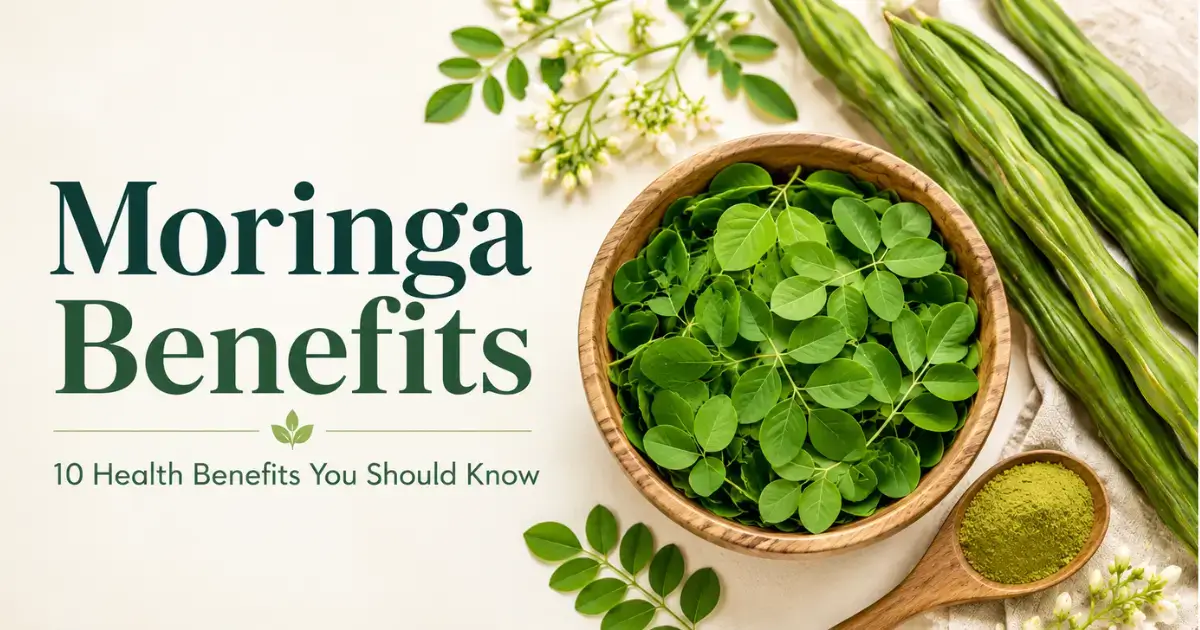
From a bowl of hot sambar in South India to herbal teas and green powders sold around the world, Moringa has come a long way. What was once a humble backyard tree is now celebrated globally as one of nature’s most nutrient-rich plants.
One of the most fascinating things about Moringa oleifera is that almost every part of the tree is useful. Its leaves, tender pods (drumsticks), flowers, seeds, and even the oil extracted from its seeds have been used for generations in cooking and traditional Ayurveda. Among them, the leaves are especially valued for their impressive nutritional profile, packed with vitamins, minerals, antioxidants, and plant compounds.
But does Moringa really deserve its reputation as a “superfood”? In this article, we’ll explore the top Moringa benefits, its nutritional value, common uses, and simple ways to include it in your daily diet.
What Is Moringa?
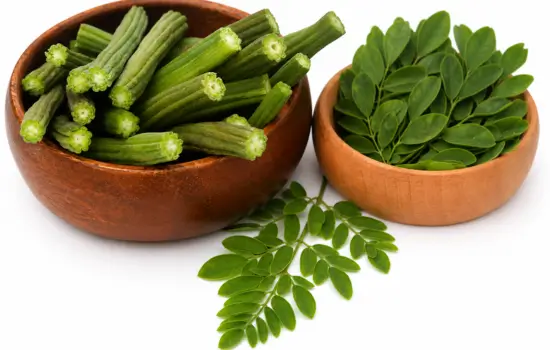
Moringa oleifera is a fast-growing tree native to the Indian subcontinent and is widely grown across India, especially in the southern states.
One of the unique features of Moringa is that almost every part of the tree is useful. The leaves, tender pods (drumsticks), flowers, seeds, and seed oil are commonly used in cooking or traditional practices. In India, the immature pods, popularly known as drumsticks, are a staple ingredient in dishes like sambar, curries, and soups.
Because of its versatility and impressive nutritional profile, Moringa is known by several different names around the world.
| Name | Also Known As |
|---|---|
| Moringa oleifera | Scientific name |
| Drumstick tree | Common name in India |
| Horseradish tree | Named for the pungent taste of its roots |
| Ben tree | Traditional English name |
Nutritional Value of Moringa
One of the biggest reasons behind the growing popularity of Moringa is its impressive nutritional profile. Its leaves are naturally rich in vitamins, minerals, antioxidants, and plant compounds that help support overall health and wellbeing.
Here’s a quick look at some of the key nutrients found in Moringa leaves and why they matter:
| Nutrient | Why It Is Important |
|---|---|
| Vitamin A | Supports healthy vision, skin, and immune function |
| Vitamin C | Acts as an antioxidant and supports immunity |
| Calcium | Helps maintain strong bones and teeth |
| Iron | Supports the formation of healthy red blood cells |
| Potassium | Helps maintain normal muscle and nerve function |
| Protein | Contributes to the growth and repair of body tissues |
| Antioxidants | Help protect cells from oxidative stress caused by free radicals |
While Moringa is undoubtedly a nutrient-rich food, it is not a magic cure or a substitute for a balanced diet and healthy lifestyle. Think of it as a nutritious addition that can complement an overall healthy eating pattern.
Uses of Moringa
Different parts of the Moringa tree are used in different ways:
1. Moringa Leaves
Fresh leaves can be cooked like other leafy vegetables, while dried leaves are commonly used as Moringa powder.
2. Moringa Pods (Drumsticks)
The young pods are a popular vegetable in Indian cooking and are often added to curries and sambhar.
3. Moringa Seeds
Seeds are sometimes used to extract Moringa oil, which is used in cooking and skincare products.
4. Moringa Tea
Moringa leaves can be brewed into herbal tea, which is consumed as a refreshing wellness drink.
Health Benefits of Moringa
1. Rich in Antioxidants
One of the key benefits of Moringa is its rich antioxidant content. Antioxidants help protect the body’s cells from damage caused by free radicals, which can accumulate through normal bodily processes and environmental factors. Including antioxidant-rich foods like Moringa as part of a balanced diet may support overall health and wellbeing.
2. May Help Reduce Inflammation
Moringa contains natural plant compounds with anti-inflammatory properties. Including it as part of a balanced diet may help reduce inflammation and support overall health and wellbeing.
3. May Help Support Immunity
Moringa leaves are rich in nutrients such as vitamin C, vitamin A, and antioxidants, all of which play an important role in normal immune function. Including Moringa as part of a balanced diet can help support your body’s natural defences and overall wellbeing.
4. A Good Plant-Based Nutrition Source
Moringa leaves are a good source of plant-based protein and contain several essential amino acids. While they can contribute to your daily protein intake, they shouldn’t be your only source of protein. For a well-balanced vegetarian diet, it’s important to include a variety of protein-rich foods. If you’ve ever wondered whether vegetarians really get enough protein, learn more in our guide on protein for vegetarians.
5. May Support Heart Health
Moringa contains antioxidants and beneficial plant compounds that may help support heart health. Some studies suggest it may help maintain healthy cholesterol levels, although more human research is needed.
6. May Help Maintain Healthy Blood Sugar Levels
Some studies suggest that Moringa leaves may help support healthy blood sugar levels. While the early findings are encouraging, more high-quality human studies are needed to understand its effects better.
7. May Support Bone Health
Moringa leaves are a natural source of calcium and other minerals that help maintain strong bones. When enjoyed as part of a balanced diet and active lifestyle, they can contribute to overall bone health.
8. May Improve Digestive Health
The fibre found in Moringa leaves and drumsticks can help support healthy digestion and regular bowel movements. While adding fibre-rich foods to your diet is a great start, other lifestyle habits also play an important role. If you’re looking for more practical tips, explore our guide on natural ways to relieve constipation.
9. May Support Healthy Skin and Hair
Moringa is rich in vitamins, minerals, and antioxidants that help support healthy skin and hair. Its seed oil is also widely used in skincare products for its nourishing and moisturising properties.
10. May Support Healthy Iron Levels
Moringa leaves contain iron, an essential mineral that helps support the formation of healthy red blood cells. Pairing iron-rich foods with vitamin C-rich foods may also help improve iron absorption. For more iron-rich foods and practical tips, read our complete guide to managing iron deficiency anaemia naturally.
Who Should Be Careful With Moringa?
For most people, eating Moringa leaves or drumsticks as part of a balanced diet is perfectly fine. However, concentrated Moringa supplements aren’t the right choice for everyone.
If you’re pregnant, have an ongoing medical condition, or take medicines for blood pressure or diabetes, it’s best to check with your doctor before adding Moringa supplements to your routine.
How to Add Moringa to Your Diet
Whether you enjoy traditional Indian meals or prefer quick, healthy recipes, Moringa is surprisingly easy to include in your daily diet.
- Add drumsticks to sambar, curries, soups, or stews.
- Cook fresh Moringa leaves like other green leafy vegetables.
- Mix Moringa powder into smoothies, curd, yogurt, or buttermilk.
- Brew Moringa tea for a light and refreshing herbal drink.
The best way to enjoy Moringa is to include it regularly as part of a balanced diet, rather than relying on it as a single “superfood.”
Quick Tip:
Fresh Moringa leaves and drumsticks are great choices when they’re in season. If fresh Moringa isn’t available, good-quality Moringa powder can be a convenient alternative.
Final Thoughts
Moringa has been a part of Indian kitchens and Ayurveda for generations, and today it’s gaining recognition around the world for all the right reasons. From its nutrient-rich leaves to its versatile drumsticks and seeds, this remarkable plant offers an easy way to add more goodness to your everyday meals.
If you haven’t tried Moringa yet, start small and enjoy it in the form that suits you best. When combined with a balanced diet and healthy lifestyle, it can be a simple yet nourishing addition to your daily routine.
Disclaimer
The information in this article is for general educational purposes only and should not be considered a substitute for professional medical advice, diagnosis, or treatment. If you have any health concerns or are considering using Moringa supplements, consult a qualified healthcare professional.
References
- An Updated Comprehensive Review of Moringa oleifera (2023)
- A Systematic Review of Moringa oleifera (2022)
- Drumstick Varieties Thar Harsha and Thar Tejas
- Moringa: An Underutilised Multipurpose Powerful Vegetable for Nutritional Security

A natural living enthusiast passionate about Ayurveda and holistic wellness. Through HealthBooti, she shares well-researched, practical health tips and lifestyle guidance to help individuals and families embrace healthier habits naturally. Her mission is to make natural healing simple, safe, and accessible for everyday life.