Last Updated: 2 June 2026
One of the biggest myths about vegetarian diets is that they don’t provide enough protein. Many people believe that protein mainly comes from meat, fish, and eggs, which often leads to the assumption that vegetarians may not get enough of this important nutrient.
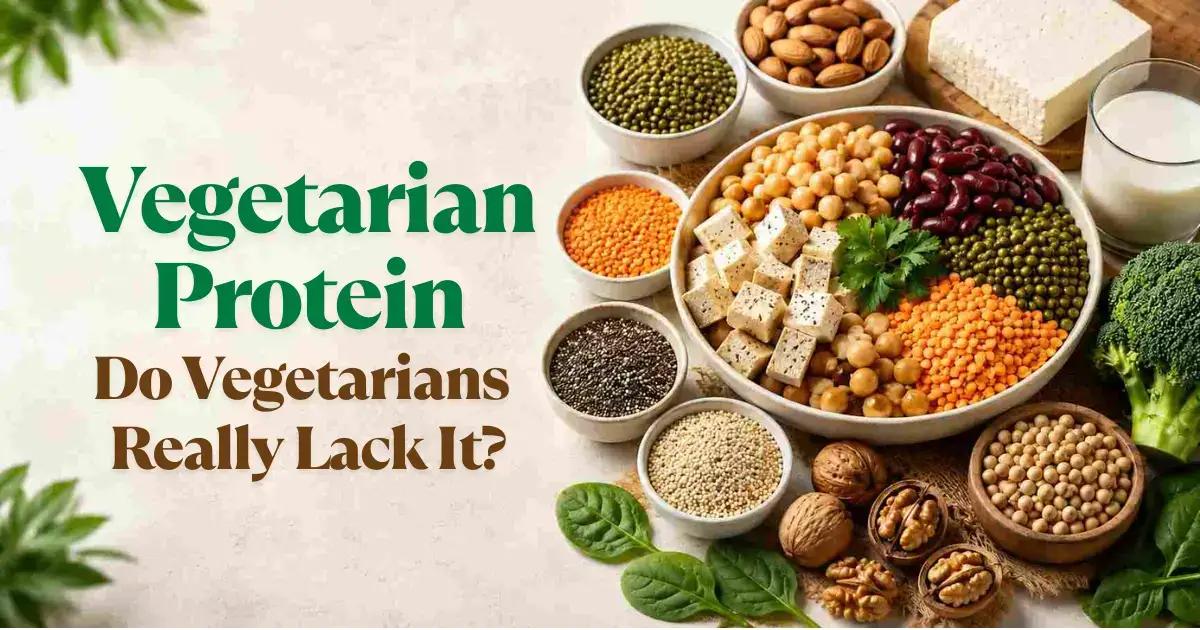
The truth is that a well-planned vegetarian diet can easily provide all the protein your body needs. Understanding the best vegetarian protein sources can help ensure you’re meeting your daily protein needs. Everyday foods such as lentils, beans, dairy products, soy foods, nuts, seeds, and whole grains all contribute to your daily protein intake.
So, do vegetarians really get enough protein, or is it simply a myth? Let’s look at what protein does for the body, how much you actually need, and the best vegetarian foods that can help you meet those needs naturally.
Why Is Protein Important?
Protein is one of the essential nutrients your body requires every day.
It plays several important roles, including:
- Building and repairing muscles
- Supporting healthy skin, hair, and nails
- Producing enzymes and hormones
- Maintaining a healthy immune system
- Helping you stay full for longer
- Supporting growth and recovery
Without adequate protein, the body cannot function efficiently.
How Much Protein Do You Need Daily?
Protein requirements vary depending on age, body weight, physical activity, and overall health.
A general guideline for healthy adults is:
0.8-1 gram of protein per kilogram of body weight per day
For example:
- A person weighing 50 kg needs approximately 40-50 grams of protein daily.
- A person weighing 60 kg needs approximately 48-60 grams of protein daily.
Athletes, highly active individuals, older adults, and people recovering from illness may require more.
The good news is that most people can meet these requirements through regular meals without relying on protein supplements.
Do Vegetarians Really Lack Protein?
In most cases, the answer is no.
A vegetarian diet does not automatically lead to protein deficiency. The belief that vegetarians struggle to get enough protein is largely a myth. While protein is often associated with meat, fish, and eggs, many vegetarian foods also provide significant amounts of protein.
In fact, a balanced vegetarian diet that includes dals, legumes, dairy products, soy foods, nuts, seeds, and whole grains can easily help most people meet their daily protein needs.
One reason this myth persists is the confusion around the term “complete protein.” Let’s understand what it means and whether vegetarians need to worry about it.
What Is a Complete Protein?
A complete protein is a protein source that contains all nine essential amino acids that the body cannot make on its own. These amino acids are needed for muscle growth, tissue repair, hormone production, and many other important functions.
Many animal foods naturally contain all essential amino acids. However, vegetarians can also get complete protein by eating certain plant foods or by combining different protein-rich foods throughout the day.
For example:
- Dal + rice
- Rajma + rice
- Chole + roti
- Hummus + whole wheat bread
These combinations provide complementary amino acids, helping create a more complete protein profile.
Vegetarian Foods That Naturally Contain Complete Protein
Some vegetarian foods already contain all nine essential amino acids on their own, including:
- Soybeans
- Tofu
- Tempeh
- Edamame
- Quinoa
- Dairy products such as milk, curd, paneer, and Greek yogurt
The good news is that you don’t need to combine proteins at every meal. Eating a variety of protein-rich foods throughout the day is usually enough for most healthy adults. Among these, soy foods such as soybeans, tofu, tempeh, and edamame are particularly rich in protein, making them excellent choices for vegetarians.
Best Vegetarian Protein Sources
Here are some of the most nutritious vegetarian foods that can help you meet your daily protein needs.
1. Lentils and Dals
Lentils are among the most affordable and widely available protein sources.
Examples include:
- Moong dal
- Masoor dal
- Sabut urad dal
- Arhar (toor) dal
- Chana dal
- Kulthi dal (horse gram)
Besides protein, they also provide fibre, iron, and important minerals. Among these, horse gram (kulthi dal) is known for its relatively high protein and fibre content and has long been used as a wholesome and nutritious food in many parts of India.
2. Chickpeas and Beans
Legumes are protein-rich and highly filling.
Good choices include:
- Rajma (kidney beans)
- Chole (chickpeas)
- Black beans
- Lobia (black-eyed peas)
- Soybeans
Chickpeas can also be enjoyed in other forms, such as roasted chana and sattu, both of which contribute to your daily protein intake. Soybeans are particularly rich in protein compared to many other plant foods.
3. Milk and Dairy Products
For lacto-vegetarians, dairy products provide high-quality protein.
Options include:
- Milk
- Curd (yogurt)
- Paneer
- Greek yogurt
- Cheese
They also supply calcium and several essential nutrients.
4. Soy Foods
Soy is one of the best vegetarian protein sources because it contains all essential amino acids.
Examples include:
- Tofu
- Tempeh
- Edamame
- Soya chunks
- Soy milk
These foods are especially useful for people trying to increase protein intake.
5. Nuts and Seeds
Although they are not as protein-dense as legumes, nuts and seeds still make valuable additions to a healthy diet.
Good options include:
- Almonds
- Peanuts
- Walnuts
- Pumpkin seeds
- Sunflower seeds
- Chia seeds
- Flaxseeds
A small handful daily can contribute both protein and healthy fats.
6. Whole Grains and Millets
Many people overlook the protein contribution of grains.
Protein-containing grains include:
- Oats
- Whole wheat
- Bajra
- Jowar
- Ragi
- Brown rice
- Quinoa
While grains alone may not be extremely high in protein, they add up significantly over the course of the day.
Protein Content of Popular Vegetarian Protein Sources
The following table provides an approximate idea of the protein content of some popular vegetarian foods.
| Food | Approximate Protein |
|---|---|
| Cooked Lentils (Dal) | 9 g per 100 g |
| Cooked Chickpeas | 8-9 g per 100 g |
| Cooked Soya Chunks | 15-18 g per 100 g |
| Tofu | 12-20 g per 100 g |
| Tempeh | 19 g per 100 g |
| Greek Yogurt | 10 g per 100 g |
| Paneer | 18-20 g per 100 g |
| Quinoa (Cooked) | 4-4.5 g per 100 g |
Protein values may vary depending on preparation methods and product brands.
Signs That You May Not Be Getting Enough Protein
Protein deficiency is uncommon in healthy adults who eat adequate food, but low intake may contribute to:
- Hair fall
- Weak or brittle nails
- Frequent tiredness
- Reduced muscle mass
- Slow wound healing
- Frequent infections
These symptoms can have many possible causes, so they should not be used to self-diagnose protein deficiency.
Final Thoughts
Vegetarians do not need to worry about protein deficiency as much as many people think.
A balanced vegetarian diet that includes lentils, legumes, dairy products, soy foods, nuts, seeds, and whole grains can easily provide adequate protein for most people.
Instead of focusing on a single food, focus on variety. When different protein-rich foods are included throughout the day, meeting your protein needs becomes surprisingly simple.
So the next time someone asks, “Do vegetarians get enough protein?”, you can confidently answer:
Yes, absolutely. A well-balanced vegetarian diet can provide all the protein needed to support a healthy and active lifestyle.
(FAQs)
1. Can vegetarians get enough protein naturally?
Yes. Most vegetarians can meet their protein needs through foods such as lentils, beans, dairy products, soy foods, nuts, seeds, and whole grains.
2. Which vegetarian food contains the most protein?
Soy foods such as soybeans, tofu, tempeh, and soya chunks are among the richest vegetarian protein sources.
3. Is paneer a good source of protein?
Yes. Paneer provides high-quality protein and is a popular vegetarian option for increasing daily protein intake.
4. Do vegetarians need protein supplements?
Not usually. Most healthy adults can meet their requirements through food alone. Supplements may be useful in specific situations but are not necessary for everyone.
5. Can vegetarians build muscle?
Yes. Muscle growth depends on adequate protein intake, sufficient calories, and regular strength training. Vegetarian diets can support muscle building effectively.
6. Is soy safe to eat daily?
For most healthy individuals, moderate consumption of soy foods such as tofu, soy milk, and soya chunks is considered safe and nutritious.
Disclaimer
This article is for informational and educational purposes only and is not intended to replace professional medical advice, diagnosis, or treatment. Individual protein needs may vary depending on age, health status, activity level, and other factors. If you have specific dietary concerns or a medical condition, consult a qualified healthcare professional or registered dietitian.
References
- Harvard T.H. Chan School of Public Health – Protein
- National Institutes of Health (NIH) – Dietary Protein and Amino Acid Requirements
- British Nutrition Foundation – Protein

A natural living enthusiast passionate about Ayurveda and holistic wellness. Through HealthBooti, she shares well-researched, practical health tips and lifestyle guidance to help individuals and families embrace healthier habits naturally. Her mission is to make natural healing simple, safe, and accessible for everyday life.