Last Updated: 20 May 2026
Seeing more hair fall than usual? Your roots might be trying to tell you something.
If you’re noticing hair fall, thinning hair, or weak, lifeless strands, the real problem may not be your shampoo or oil,
It often starts with weak hair roots.
Most people focus only on hair length, styling, or expensive products, but strong, healthy hair always begins at the roots. When hair roots become weak, you may notice excessive hair fall, breakage, slow hair growth, and reduced volume over time.
The good news?
You don’t need complicated treatments or harsh products. With the right daily routine, proper nutrition, and simple natural remedies, you can strengthen weak hair roots naturally and improve overall hair health.
Who This Article Is For
This article will help you if you:
- Notice continuous hair fall or thinning
- Feel your hair has become weak or lifeless
- Want natural and practical solutions
- Prefer simple routines instead of heavy treatments
Hair Roots: Why They Matter
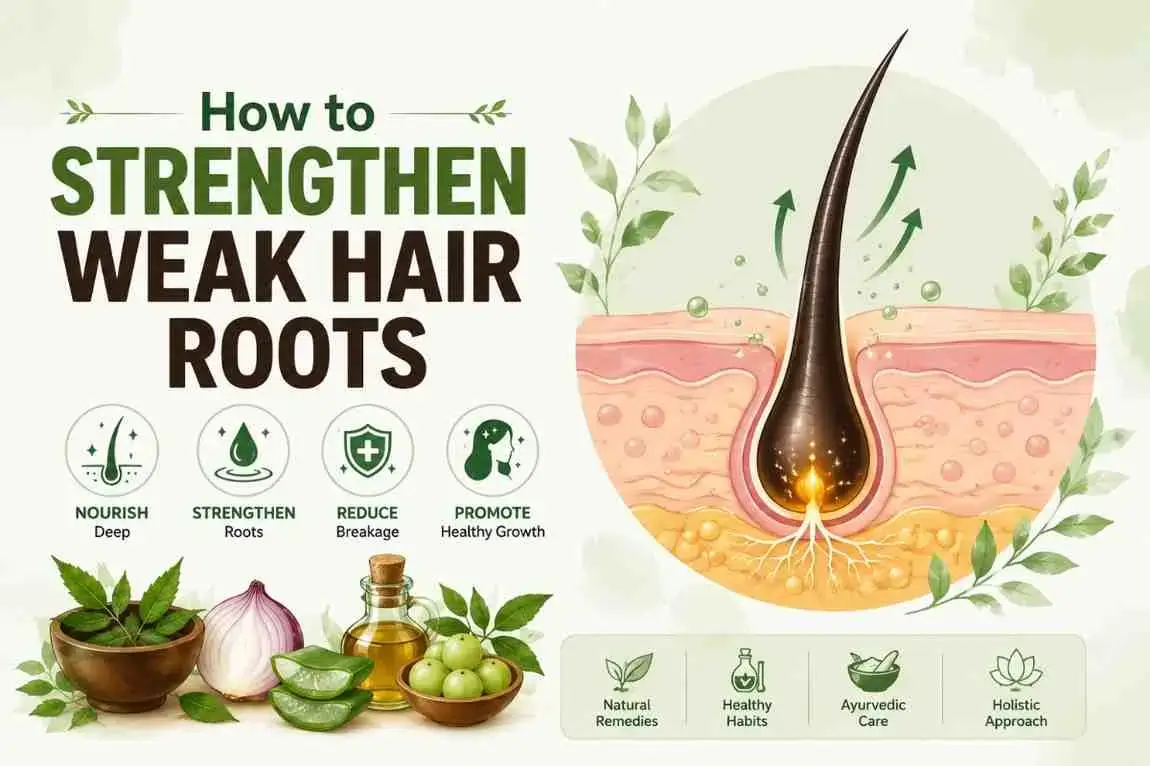
Hair roots, also called hair follicles, are tiny structures under your scalp that produce each strand of hair.
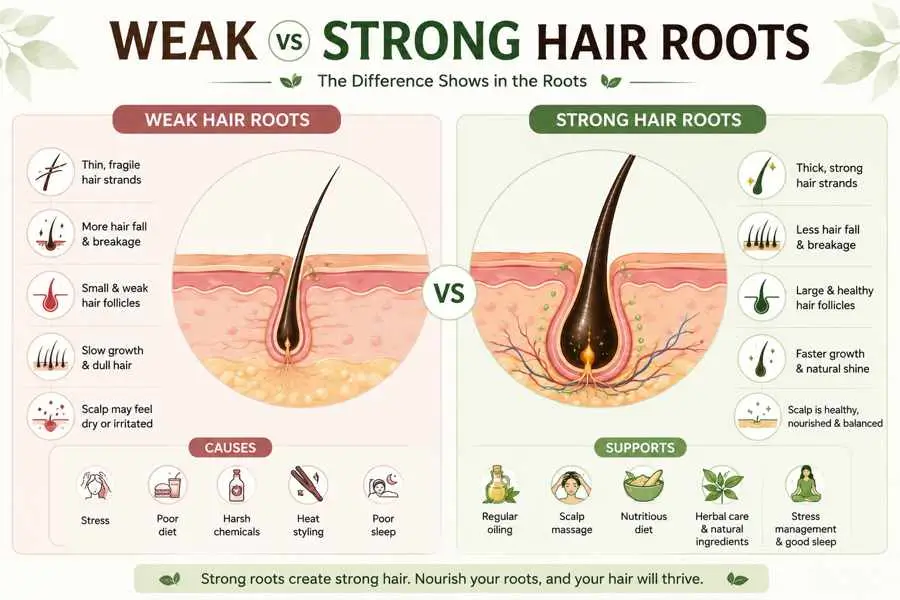
Healthy roots:
- Produce thicker, stronger strands
- Support steady hair growth
- Reduce breakage
Weak or damaged roots:
- Lead to thin, brittle hair
- Increase hair fall
- Slow down growth
In simple words:
If the root is weak, no product can truly fix the hair.
Common Causes of Weak Hair Roots
Nutritional Deficiencies
Low intake of protein, iron, zinc, and vitamins is one of the most common causes.
In many cases, the issue is not just what we eat, but how our eating habits have changed. The quality of food today is also not the same as it used to be. Home-cooked, balanced meals are increasingly replaced with junk food and processed options. With busy schedules and limited time, people often choose convenience over nutrition, and over time, this begins to weaken hair roots from within.
Stress & Hormonal Imbalance
Long-term stress can increase cortisol levels, which gradually disrupt the natural hair growth cycle. In many cases, this doesn’t show immediately but builds up over time, leading to weaker roots.
You may notice:
- Sudden or excessive hair fall
- Thinning, especially around the front or crown area
Poor Scalp Health
Scalp conditions like:
- Dandruff
- Fungal infections
- Inflammation
…can weaken hair follicles over time and affect their ability to support healthy hair growth.
Harsh Hair Practices
- Excess heat styling
- Chemical treatments
- Rough towel drying
Over time, these practices can weaken both the hair strands and the roots, making hair more prone to breakage, dryness, and overall damage.
Tight Hairstyles (Hidden Cause)
In many cases, regularly tying hair too tightly in ponytails, buns, or braids creates constant pull on the roots, which can eventually result in traction hair loss.
Environmental Damage
Pollution and prolonged sun exposure can silently damage the scalp, weakening hair roots over time and affecting overall hair health.
Ageing & Genetics
With age, hair naturally becomes finer, and genetics can also play a role in determining hair strength and root health.
How to Strengthen Weak Hair Roots Naturally (From Within)
Strong hair roots are usually built through consistent daily care, not overnight remedies. In many cases, hair strength improves naturally by supporting the body internally, protecting the scalp externally, and avoiding habits that gradually weaken the roots over time.
1. Fix Your Diet First (Most Important Step)
Hair is primarily made of keratin, a type of protein, but its strength and growth also depend on a balanced intake of vitamins and minerals. This means your overall diet plays a direct role in maintaining healthy hair roots.
Include in your daily diet:
- Protein: eggs, paneer, dal, sprouts
- Iron: spinach, beetroot, lentils
- Zinc: pumpkin seeds, nuts
- Vitamin C: amla, lemon
- Healthy fats: almonds, walnuts
Many people expect quick results, but in most cases, noticeable improvement in hair strength comes only after 3-4 weeks of consistent dietary changes, not overnight.
Improve Scalp Blood Circulation
Better circulation = better nourishment to the hair roots.
Simple ways:
- 5-10 minutes of daily scalp massage
- Walking, cycling, yoga, or light exercise
Scalp massage doesn’t always have to involve oil. A gentle dry massage using slow, circular fingertip movements can also help stimulate circulation. This is especially useful if your scalp is oily or prone to dandruff.
Manage Stress (Often Ignored)
Even the best hair routine won’t work if stress is high.
Try:
- Deep breathing (pranayama)
- Meditation
- Light yoga
Sleep & Hydration
- Aim for 7-9 hours of quality sleep
- Stay well hydrated throughout the day
In many cases, poor sleep and low water intake quietly affect hair health over time, even if the impact isn’t immediately visible.
External Care: Protect Your Hair Roots Daily
Be Gentle with Your Hair
- Pat dry hair instead of rubbing
- Use a wide-tooth comb
- Avoid combing wet hair aggressively
Avoid Tight Hairstyles
Switch to loose hairstyles to reduce tension on the hair roots. In many cases, avoiding tight styles can make a noticeable difference in overall hair strength.
Use Mild Products
Choose a gentle, sulfate-free or Ayurvedic shampoo for regular use. Harsh chemicals can dry out the scalp, disrupt its natural balance, and gradually weaken hair roots. Using milder products supports healthier, stronger hair over time.
Limit Heat Styling
Keep heat styling occasional rather than making it a daily habit. Frequent use can weaken hair strands and, over time, affect the strength of the roots.
Protect from Sun & Pollution
Protect your hair by covering it when outdoors, especially in strong sun or polluted environments. This simple habit can help minimise damage and maintain better scalp health over time.
Natural Remedies to Support Hair Root Health
Natural remedies can support scalp health and improve hair quality, but they work best when combined with proper nutrition and overall hair care. They are helpful as a supportive step, not a complete solution for weak hair roots.
Do a patch test before using any natural remedy, especially if you have a sensitive scalp.
Aloe Vera
Aloe vera is known for its soothing properties and works well for irritated or sensitive scalps. It can help calm the scalp and maintain a healthier environment for hair growth.
It can be applied to the scalp and left on for 15-20 minutes before washing.
Onion Juice
Onion juice is rich in sulfur, which may support hair strength and improve overall hair quality over time.
Apply for 10-15 minutes and rinse well. Avoid if you have a sensitive or irritated scalp.
Hibiscus Paste
Hibiscus flower has been traditionally used for improving hair strength and texture. It can help make hair feel softer and more manageable with regular use.
Curd + Mustard Oil Mask
This combination provides mild nourishment and helps improve softness. It can be especially useful for dry or dull-looking hair.
Neem Water Rinse
Neem is commonly used for maintaining scalp cleanliness. A neem water rinse can help manage dandruff and keep the scalp healthier.
Washing Routine for Weak Hair Roots
- Wash 2-3 times per week
- Use normal to lukewarm water
- Massage gently (avoid using nails)
- Apply conditioner only on lengths
- Finish with cool rinse
Oiling: Helpful or Harmful for Weak Hair Roots? (Ayurvedic View)
According to Ayurveda, oiling can be beneficial for hair, but it is not suitable for every scalp condition. Ayurveda focuses on understanding the root cause first rather than following the same routine for everyone.
When Oiling is Helpful
- When the scalp feels dry or lacks moisture
- When hair appears brittle, rough, frizzy, or weak
- When gentle oiling is used to provide nourishment with herbal oils or ingredients traditionally used for hair care, such as herbs or Vitamin E
When Oiling Can Be Harmful
- When the scalp is very oily or greasy
- When there is dandruff, fungal infection, or scalp buildup
- When the scalp feels itchy or inflamed
What Ayurveda Suggests
Always observe how your scalp responds. Oiling is not a one-size-fits-all remedy. It should be done based on your scalp type and condition. Use in moderation (1-2 times a week is enough). Avoid leaving oil for too long if prone to dandruff
Common Mistakes To Avoid
From what I have noticed, people often focus too much on finding the best oil, shampoo, or remedy, while ignoring the everyday habits that may actually be affecting their hair roots.
- Being inconsistent with hair care routines (trying things for a few days and then stopping)
- Expecting quick results instead of giving time for natural improvement
- Following every trending remedy without understanding scalp type
- Overloading the scalp with too many products at once
- Ignoring scalp health and focusing only on hair length
- Sleeping with tightly tied or wet hair
- Stressing about hair fall, which can further worsen the condition
Fixing these small but important habits can make a noticeable difference over time.
When to See a Doctor
Consult a dermatologist if you notice:
- Sudden or patchy hair loss
- Severe itching or pain
- Scalp infections
- Excessive shedding
Final Thoughts
From what I’ve noticed, weak hair roots are usually not caused by a single factor. In many cases, it’s a combination of stress, poor eating habits, harsh hair care, over-styling, and neglecting scalp health that gradually weakens hair over time. Small daily habits often matter more than expensive products or quick remedies.
The good thing is that hair roots can improve with consistent care, patience, and a routine that actually suits your scalp and lifestyle.
FAQs
1. Can weak hair roots become strong again?
Yes, in many cases they can improve with proper nutrition, scalp care, and consistent healthy habits.
2. How do I know if my hair roots are weak?
Common signs include excessive hair fall, thinning, weak strands, slow growth, and hair breaking easily.
3. Is oiling good for weak hair roots?
It depends on your scalp type. Light oiling may help dry scalps, while excessive oiling may not suit oily or dandruff-prone scalps.
4. Can stress weaken hair roots?
Yes, long-term stress may disturb the hair growth cycle and increase hair fall over time.
5. How long does it take to see improvement?
Hair improvement is usually gradual. Many people notice changes within a few weeks to a few months with consistent care.
Disclaimer
This article is for informational purposes only and is not a substitute for medical advice. If you have severe or persistent hair fall, scalp issues, or an underlying health condition, consult a dermatologist or healthcare professional.
References
- Indian Dermatology Online Journal – Influence of Nutrition, Food Supplements and Lifestyle in Hair Disorders
https://pmc.ncbi.nlm.nih.gov/articles/PMC9650738/ - PubMed – Nutrition and Hair
https://pubmed.ncbi.nlm.nih.gov/34785008/ - Journal of Ayurveda and Integrated Medical Sciences – Role of Abhyanga in Skin and Hair Care
https://www.jaims.in/index.php/jaims/article/view/963 - Times of India – Ayurvedic Hair Care Tips for Stronger Hair
https://timesofindia.indiatimes.com/life-style/beauty/7-ayurvedic-hair-care-tips-our-grandmothers-swore-by/photostory/123732253.cms

A natural living enthusiast passionate about Ayurveda and holistic wellness. Through HealthBooti, she shares well-researched, practical health tips and lifestyle guidance to help individuals and families embrace healthier habits naturally. Her mission is to make natural healing simple, safe, and accessible for everyday life.