Last Updated: 04 July 2026
Many of us don’t think much about our hair until we begin noticing extra strands in the shower, on our clothes, or tangled in the hairbrush. That’s often when the search for shampoos, oils, and home remedies begins.
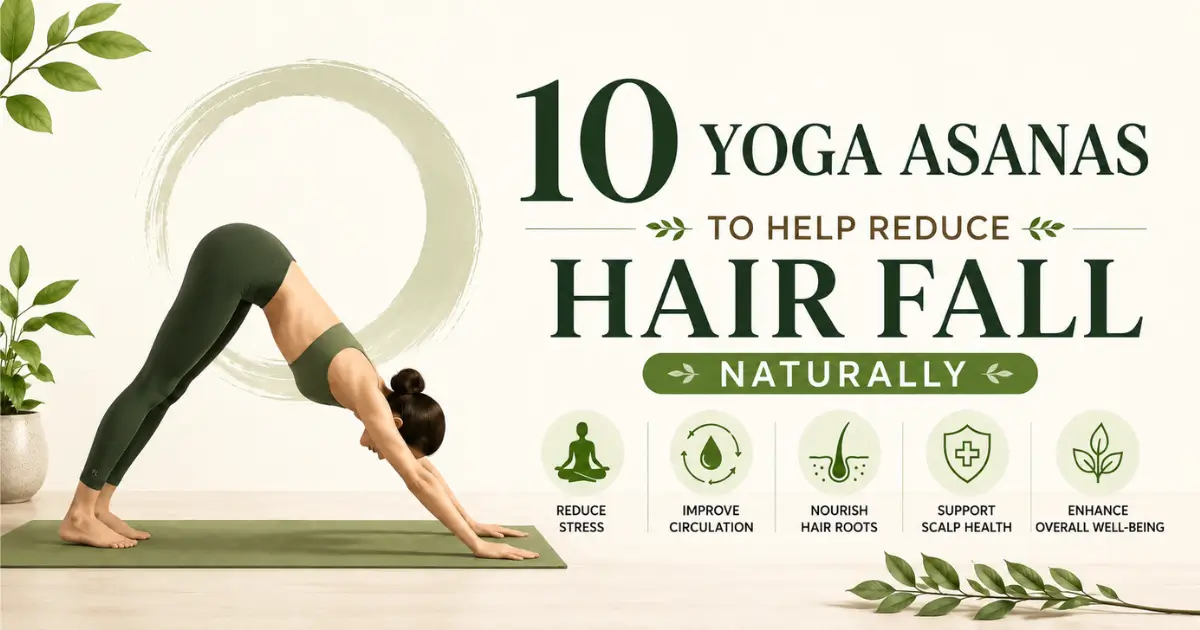
While caring for your hair from the outside is important, healthy hair also depends on what’s happening inside your body. Stress, poor sleep, nutritional deficiencies, hormonal changes, and overall health can all affect your hair. This is where yoga may help. Rather than acting as a quick fix, yoga supports your body through relaxation, improved circulation, mindful breathing, and overall well-being.
When combined with a nutritious diet, quality sleep, proper hair care, and other healthy lifestyle habits, regular yoga practice can become a valuable part of your overall wellness routine. In this article, we’ll explore 10 beginner-friendly yoga asanas that may help support healthy hair naturally, along with simple tips to practise them safely.
How Can Yoga Help Reduce Hair Fall?
Healthy hair depends on much more than the products you apply to your scalp. Factors such as nutrition, stress levels, sleep quality, hormonal balance, and overall health all play an important role in maintaining healthy hair. While yoga is not a cure for hair loss, regular practice may support your hair health by promoting overall physical and mental well-being.
1. May Improve Blood Circulation to the Scalp
Several yoga poses, especially forward bends and gentle inversions, may encourage better blood circulation throughout the body. Healthy blood flow helps carry oxygen and essential nutrients to the scalp and hair follicles, which are important for maintaining healthy hair.
2. Helps Reduce Stress
Stress is a well-known factor that can contribute to temporary hair shedding. Yoga combines physical postures, mindful breathing, and relaxation techniques that help calm the mind and relax the nervous system. Over time, managing stress may also help reduce stress-related hair fall.
3. Supports Healthy Digestion
Your hair needs a variety of nutrients, including protein, iron, zinc, vitamin D, biotin, and B vitamins, to stay healthy. Good digestion helps your body absorb these nutrients more effectively. Certain yoga poses may support healthy digestion as part of an overall healthy lifestyle.
4. May Support Hormonal Health
Hormones influence many functions in the body, including hair growth. Although yoga cannot treat hormonal disorders, regular practice may help regulate the body’s stress response and support overall hormonal well-being, which can indirectly benefit hair health.
5. Encourages Better Sleep and Relaxation
Quality sleep allows your body to rest, repair, and recover. Gentle yoga, breathing exercises, and relaxation techniques may help improve sleep quality, making them a valuable addition to a healthy daily routine.
6. Supports Overall Well-being
One of the greatest strengths of yoga is that it benefits the body as a whole rather than focusing on a single concern. When practised regularly alongside a nutritious diet, proper hair care, adequate sleep, and other healthy habits, yoga can become an important part of a holistic approach to supporting healthy hair.
The 10 Best Yoga Asanas for Hair Fall
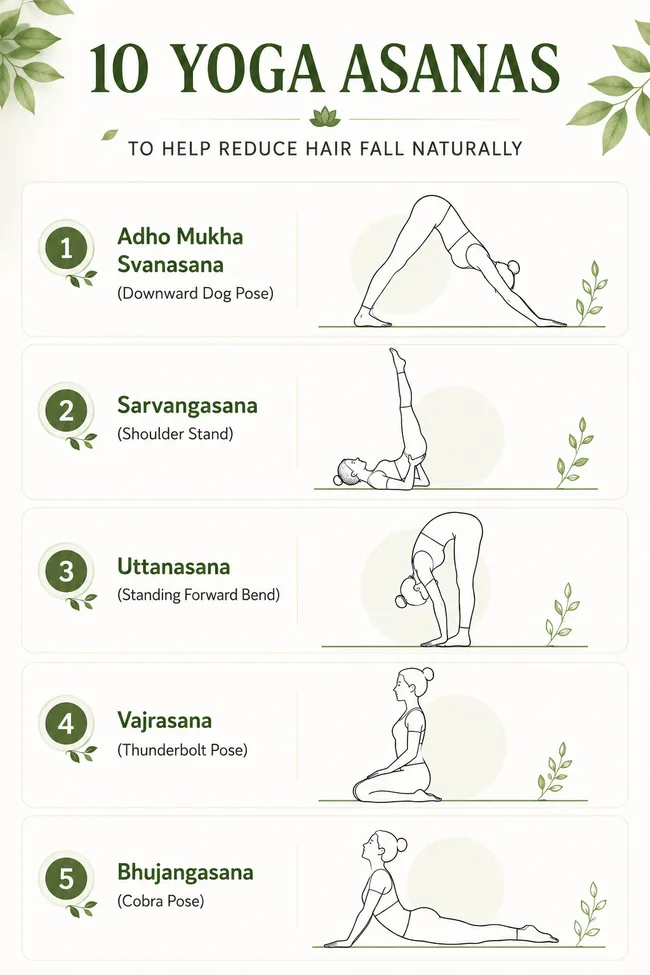
1. Adho Mukha Svanasana (Downward-Facing Dog Pose)
What is this pose?
Adho Mukha Svanasana is one of the most popular yoga poses for improving flexibility and overall circulation. As the head is positioned below the heart, this gentle inversion may encourage blood flow towards the upper body while helping to relieve stress and tension.
How to Do It
- Begin on your hands and knees in a tabletop position.
- Spread your fingers wide and tuck your toes under.
- Lift your hips towards the ceiling to form an inverted “V” shape.
- Keep your spine long, relax your neck, and press your palms firmly into the mat.
- Lower your knees back to the floor or rest in Child’s Pose to come out of the posture.
Breathing: Take slow, steady breaths through your nose.
Hold: 30-60 seconds (or 5-8 breaths).
How This Pose May Support Hair Health
This pose may improve overall blood circulation while helping the body relax. Since stress is a common contributor to temporary hair shedding, practising this pose regularly may support a healthier environment for your scalp and hair.
Who Should Avoid It?
Avoid this pose if you have severe wrist or neck injuries, uncontrolled high blood pressure, recent heart problems, or if your healthcare provider has advised against inversions.
Beginner Tip: Keep your knees slightly bent if your hamstrings feel tight. Focus on lengthening your spine rather than forcing your heels to touch the floor.
2. Sarvangasana (Shoulder Stand)
What is this pose?
Often called the “Queen of Asanas,” Sarvangasana is a classic inversion that has long been valued in traditional yoga. It requires proper alignment and is best learned under the guidance of an experienced yoga instructor.
How to Do It
- Lie comfortably on your back with your arms by your sides.
- Slowly lift your legs, followed by your hips.
- Support your lower back with your hands while keeping your elbows on the floor.
- Keep your body as straight as possible without straining.
- Lower your body slowly and with control.
Breathing: Breathe slowly and evenly throughout the pose.
Hold: 20-60 seconds if you’re comfortable. Beginners should start with a much shorter duration.
How This Pose May Support Hair Health
As an inversion, this pose may encourage blood circulation towards the head and scalp. It is also known for its calming effect, which may help manage stress, an important factor associated with temporary hair fall.
Who Should Avoid It?
Avoid this pose if you have neck or cervical spine problems, uncontrolled high blood pressure, glaucoma, certain heart conditions, or during pregnancy unless advised by a qualified instructor. It is also generally avoided during menstruation in many traditional yoga practices.
Beginner Tip: Place a folded blanket under your shoulders to reduce pressure on your neck, and never force yourself into the full posture.
3. Uttanasana (Standing Forward Bend)
What is this pose?
Uttanasana is a simple forward bend that gently stretches the back of the body while allowing the head to relax below the heart. It is beginner-friendly and can be easily included in your daily yoga routine.
How to Do It
- Stand with your feet hip-width apart.
- Inhale to lengthen your spine.
- Exhale as you bend forward from your hips.
- Let your head and arms hang naturally, keeping a slight bend in your knees if needed.
- Rise slowly to a standing position to avoid dizziness.
Breathing: Inhale before folding and exhale as you move into the stretch. Continue breathing slowly.
Hold: 30-60 seconds.
How This Pose May Support Hair Health
This gentle inversion may encourage blood flow towards the scalp while helping to ease tension in the neck, shoulders, and back. It also promotes relaxation, which may help reduce stress-related hair shedding.
Who Should Avoid It?
Avoid or modify this pose if you have a serious lower back injury, severe vertigo, uncontrolled high blood pressure, or certain eye conditions. Seek guidance if you have any medical concerns.
Beginner Tip: It’s perfectly fine if your hands don’t touch the floor. Rest them on your shins, ankles, or yoga blocks instead.
4. Vajrasana (Thunderbolt Pose)
What is this pose?
Unlike most yoga poses, Vajrasana can comfortably be practised after meals. It is a simple seated posture that encourages mindful breathing, relaxation, and healthy digestion.
How to Do It
- Kneel on the mat with your knees together or slightly apart.
- Sit back on your heels with your hands resting on your thighs.
- Keep your back straight and shoulders relaxed.
- Close your eyes and breathe comfortably.
- Slowly straighten your legs to release the posture.
Breathing: Breathe naturally and comfortably.
Hold: Start with 2-3 minutes and gradually increase to 5-10 minutes.
How This Pose May Support Hair Health
Healthy hair depends on a steady supply of nutrients. By supporting healthy digestion and encouraging relaxation, Vajrasana may indirectly contribute to better hair health as part of an overall healthy lifestyle.
Who Should Avoid It?
Avoid this pose if you have severe knee pain, recent knee or ankle surgery, or advanced arthritis that makes kneeling uncomfortable.
Beginner Tip: Place a folded blanket or cushion between your heels and hips for extra comfort.
5. Bhujangasana (Cobra Pose)
What is this pose?
Bhujangasana is a gentle backbend that opens the chest, stretches the front of the body, and strengthens the back muscles. It is often included in beginner yoga sequences because it is both energising and easy to learn.
How to Do It
- Lie on your stomach with your legs extended behind you.
- Place your palms under your shoulders and keep your elbows close to your body.
- Inhale as you gently lift your chest using your back muscles.
- Keep your shoulders relaxed and avoid overextending your lower back.
- Exhale as you slowly lower yourself back down.
Breathing: Inhale while lifting your chest and exhale as you return to the floor.
Hold: 15-30 seconds. Repeat 2-3 times if comfortable.
How This Pose May Support Hair Health
Bhujangasana helps open the chest and encourages healthy circulation throughout the body. It may also help reduce fatigue and promote relaxation, making it a beneficial addition to a balanced wellness routine.
Who Should Avoid It?
Avoid this pose if you have recently undergone abdominal surgery, have severe back pain, fractured ribs, or are in the later stages of pregnancy.
Beginner Tip: Lift only as high as feels comfortable. The goal is to create a gentle stretch, not the deepest backbend possible.
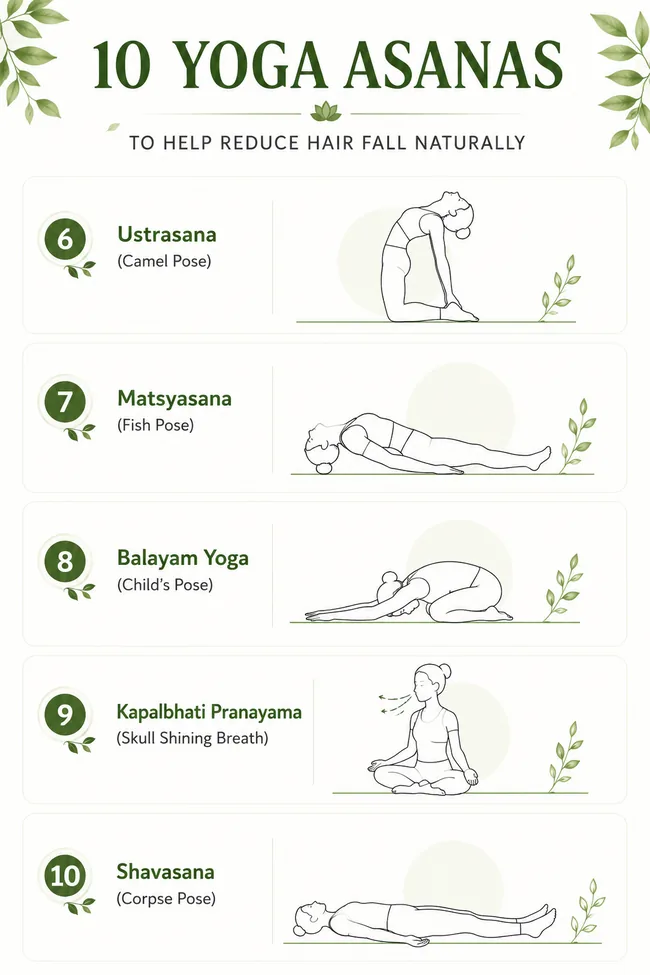
6. Ustrasana (Camel Pose)
What is this pose?
Ustrasana is a gentle backbend that opens the chest, stretches the front of the body, and improves posture. It also encourages deep breathing, helping you feel more relaxed and energised.
How to Do It
- Kneel on the mat with your knees hip-width apart.
- Place your hands on your lower back or reach for your heels if you’re comfortable.
- Gently push your hips forward while lifting your chest.
- Let your head move back naturally without straining your neck.
- Return to an upright position slowly.
Breathing: Inhale as you lift your chest and breathe slowly throughout the pose.
Hold: 20-30 seconds. Repeat 1-2 times if comfortable.
How This Pose May Support Hair Health
By opening the chest and encouraging deep breathing, Ustrasana may help improve overall circulation while reducing stress and fatigue. Regular practice may contribute to better overall well-being, which is important for maintaining healthy hair.
Who Should Avoid It?
Avoid this pose if you have severe back pain, spinal injuries, uncontrolled dizziness, or if your healthcare provider advises against deep backbends.
Beginner Tip: Keep your hands on your lower back instead of reaching for your heels until your flexibility improves.
7. Matsyasana (Fish Pose)
What is this pose?
Matsyasana is a relaxing backbend that gently opens the chest, throat, and shoulders. It is often practised after Shoulder Stand as a counter pose, helping release tension in the upper body.
How to Do It
- Lie comfortably on your back with your legs extended.
- Slide your hands underneath your hips.
- Press your elbows into the mat and lift your chest.
- Allow the crown of your head to rest lightly on the floor without putting weight on it.
- Lower your chest gently to release the pose.
Breathing: Take slow, deep breaths throughout the posture.
Hold: 20-40 seconds.
How This Pose May Support Hair Health
Matsyasana encourages good posture, opens the chest, and may improve circulation in the upper body. It also helps ease tension around the neck and shoulders, promoting relaxation and overall wellness.
Who Should Avoid It?
Avoid this pose if you have neck injuries, severe spinal problems, or any condition that makes backbends uncomfortable.
Beginner Tip: If placing your head on the floor feels uncomfortable, support it with a folded blanket.
8. Balayam Yoga (Nail Rubbing Exercise)
What is this practice?
Unlike traditional yoga poses, Balayam Yoga is a simple hand exercise that involves rubbing the fingernails against each other. It is based on the belief that stimulating the nerve endings beneath the nails may benefit scalp health. However, scientific evidence supporting this claim is currently limited.
How to Do It
- Sit comfortably with your spine straight.
- Curl your fingers inward, keeping your thumbs relaxed.
- Rub the fingernails of both hands together briskly.
- Continue for 2-5 minutes while breathing normally.
- Finish with a gentle fingertip massage of your scalp if you like.
Breathing: Maintain calm, natural breathing.
Duration: 2-5 minutes daily.
How This Practice May Support Hair Health
Although research is limited, many people include Balayam Yoga in their daily routine as a complementary practice for scalp stimulation. It is best viewed as a supportive habit rather than a proven treatment for hair loss.
Who Should Avoid It?
People with certain medical conditions, including uncontrolled high blood pressure or high-risk pregnancies, should consult their healthcare provider before trying this practice.
Beginner Tip: Apply only gentle pressure while rubbing your nails. Rubbing harder does not necessarily provide additional benefits.
9. Kapalbhati Pranayama (Skull-Shining Breathing Technique)
What is this practice?
Kapalbhati is a traditional yogic breathing technique that focuses on short, active exhalations followed by passive inhalations. It is known for energising the body and is best learned from a qualified yoga teacher.
How to Do It
- Sit comfortably with your back straight.
- Take a normal breath in.
- Exhale sharply through your nose while gently pulling your abdomen inward.
- Allow the inhalation to happen naturally.
- Begin with 20-30 breaths, then rest before repeating if comfortable.
Breathing: Active exhalations and relaxed, passive inhalations.
Duration: Start with 1-2 minutes and increase gradually under proper guidance.
How This Practice May Support Hair Health
Kapalbhati may help improve breathing efficiency, promote relaxation, and support overall well-being. It is often included in yoga routines that focus on stress management and healthy lifestyle habits, which may indirectly support hair health.
Who Should Avoid It?
Avoid Kapalbhati if you have uncontrolled high blood pressure, heart disease, epilepsy, hernia, glaucoma, or during pregnancy. It is also generally avoided during menstruation and after recent abdominal surgery.
Beginner Tip: Focus on correct technique rather than speed. Slow, controlled practice is far more beneficial than rushing through the breaths.
10. Shavasana (Corpse Pose) with a Gentle Scalp Massage
What is this practice?
Shavasana may look simple, but it is one of the most important parts of any yoga session. It allows your body and mind to relax completely, helping you absorb the benefits of your practice.
How to Do It
- Lie comfortably on your back with your arms resting by your sides.
- Close your eyes and allow your entire body to relax.
- Breathe naturally without trying to control your breath.
- Stay in this position for several minutes.
- Once you finish, gently massage your scalp using your fingertips for 2-3 minutes.
Breathing: Slow, natural breathing.
Hold: 5-10 minutes.
How This Practice May Support Hair Health
Stress is one of the most common triggers for temporary hair shedding. Shavasana promotes deep relaxation, while a gentle scalp massage may temporarily increase blood flow to the scalp and create a soothing self-care ritual.
Who Should Avoid It?
Shavasana is generally safe for most people. If lying flat is uncomfortable, support your knees or head with a cushion or folded blanket.
Beginner Tip: Try ending every yoga session with Shavasana, even if you only have five minutes. It helps your body unwind and leaves you feeling refreshed.
Tips for Practising Yoga Safely
- Practise on an empty stomach or wait 2-3 hours after a meal (except Vajrasana).
- Warm up your body before attempting deeper stretches.
- Focus on proper technique rather than flexibility.
- Breathe steadily throughout each pose.
- Stop immediately if you feel pain or dizziness.
- If you’re pregnant or have a medical condition, consult your healthcare provider or a qualified yoga instructor before starting.
Frequently Asked Questions (FAQs)
1. Can yoga help reduce hair fall?
Yoga is not a cure for hair loss, but regular practice may support healthy hair by helping reduce stress, improving circulation, and promoting overall well-being.
2. How often should I practise yoga for hair fall?
Aim for 20-30 minutes, 4-5 days a week. Consistency is more important than long or occasional sessions.
3. How long does it take to see results?
Results vary from person to person. With regular practice and a healthy lifestyle, you may notice improvements in overall well-being within a few weeks, while changes in hair health can take longer.
4. Can yoga regrow lost hair?
Yoga alone cannot regrow hair or reverse genetic hair loss. However, it may support a healthier scalp and overall wellness.
5. Which yoga pose is best for hair fall?
There isn’t a single best pose. Practising a combination of the yoga asanas covered in this article is likely to provide greater overall benefits.
6. Can beginners practise these yoga poses at home?
Yes. Most poses are beginner-friendly, but advanced postures like Sarvangasana and breathing practices like Kapalbhati should ideally be learned under proper guidance.
7. When should I see a doctor for hair fall?
Consult a dermatologist if your hair fall is sudden, severe, patchy, or accompanied by symptoms such as itching, pain, or scalp inflammation.
Final Thoughts
Yoga may not offer an overnight solution for hair fall, but it can be a valuable part of a healthy lifestyle that supports your overall well-being. By helping to reduce stress, encourage relaxation, improve flexibility, and promote better circulation, regular yoga practice may also contribute to a healthier scalp and hair over time.
The key is to practise consistently and listen to your body. Start with beginner-friendly poses, focus on proper technique, and gradually build your routine. Combined with a balanced diet, quality sleep, and good hair care habits, yoga can become a simple yet meaningful step towards supporting healthy hair naturally.
If your hair fall is sudden, severe, or persists despite healthy lifestyle changes, don’t hesitate to consult a dermatologist or healthcare professional to identify the underlying cause.
Disclaimer
This article is for informational purposes only and is not a substitute for professional medical advice. Practise yoga according to your fitness level, preferably under the guidance of a qualified yoga instructor, especially if you are a beginner or have an underlying medical condition. If you experience sudden, severe, or persistent hair loss, consult a qualified healthcare professional or dermatologist.
References
- The Art of Living
- The Indian Express – Do Yoga Asanas Help Stimulate Hair Growth? Experts Explain
- PubMed – Effects of Yoga on Stress Among Healthy Adults: A Systematic Review
- National Centre for Complementary and Integrative Health (NCCIH) – Yoga: Effectiveness and Safety

A natural living enthusiast passionate about Ayurveda and holistic wellness. Through HealthBooti, she shares well-researched, practical health tips and lifestyle guidance to help individuals and families embrace healthier habits naturally. Her mission is to make natural healing simple, safe, and accessible for everyday life.