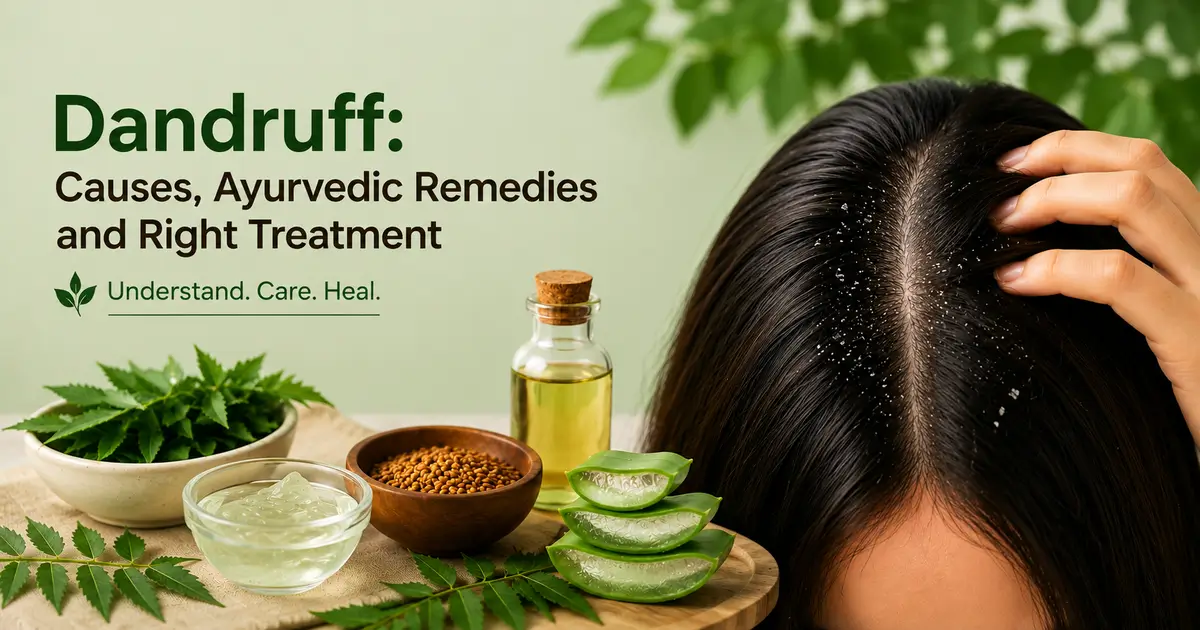
Last Updated: 31st August 2026
Those white flakes on your shoulders, an itchy scalp, or hair that becomes oily again soon after washing. Dandruff can be frustrating, especially when it keeps coming back.
But here’s something many people don’t realize, dandruff does not have just one cause. An oily scalp, the natural yeast Malassezia that normally lives on the scalp, irritation from hair products, weather changes, stress, and certain skin conditions can all play a role.
That’s why the same remedy may not work for everyone.
Instead of simply trying one dandruff remedy after another, it helps to understand what may be triggering your flakes first. Once you know what your scalp needs, choosing the right care becomes much easier.
What Exactly Is Dandruff?
Dandruff is a common scalp condition that causes visible flakes and may also cause itching. It is linked to changes in how the scalp sheds skin cells and can be influenced by scalp oil, Malassezia, irritation, and individual sensitivity.
One of these microorganisms is Malassezia, a type of yeast that normally lives on the skin. For some people, the scalp is more sensitive to it, particularly when there is more oil on the scalp. This can contribute to irritation and increased shedding of skin cells, resulting in the flakes we recognize as dandruff.
But dandruff is not simply a dry scalp, and it is not a sign of poor hygiene.
A dry or irritated scalp can also produce flakes that look like dandruff. Hair products, weather changes, and certain skin conditions can cause similar symptoms.
So, before choosing a remedy, it helps to understand what may actually be happening on your scalp.
Why Do You Get Dandruff?
There isn’t one universal reason behind dandruff. Several factors can contribute, and sometimes more than one is involved.
1. An Oily Scalp
If your scalp becomes greasy quickly and you also notice recurring flakes and itching, excess oil may be part of the problem.
Your scalp naturally produces an oil called sebum. Scalp oil can support the growth of Malassezia, and some people are more sensitive to its effects. This can contribute to irritation and flaking.
You may notice:
An oily scalp, recurring flakes, itching, and flakes that may look larger or slightly yellowish.
What can help:
Regular scalp cleansing and an appropriate anti-dandruff shampoo are generally more useful than applying heavy oils to an already oily scalp.
2. A Dry or Irritated Scalp
Not every flaky scalp has dandruff.
Dry weather, hot showers, harsh shampoos, or frequent washing can leave the scalp feeling tight and uncomfortable. This can cause small flakes that may look similar to dandruff.
You may notice:
A tight or dry-feeling scalp, small flakes, and little or no excess oil.
What can help:
Use a gentle shampoo, avoid very hot water, and reduce anything that leaves your scalp dry or irritated.
3. Hair and Scalp Products
Sometimes a product that is meant to make your hair look or feel better can irritate your scalp.
Hair dyes, shampoos, conditioners, fragrances, styling products, essential oils, and other ingredients can irritate the scalp or trigger contact dermatitis in some people.
If itching and flaking started after you introduced a new product, don’t ignore the connection.
What can help:
Stop using the suspected product and see whether your scalp settles. If the irritation continues or becomes severe, seek professional advice.
4. Product Buildup and Hair Products
Dry shampoo, styling products, serums, oils, and other hair products can build up on the scalp.
Buildup isn’t necessarily the underlying cause of dandruff, but it can make the scalp feel oily, itchy, or uncomfortable and can make existing flakes more noticeable.
What can help:
Cleanse your scalp properly and avoid putting too many products directly on it.
5. Stress
Have you ever noticed your scalp becoming worse during a stressful period?
Stress may not be the original cause of dandruff, but it can contribute to flare-ups in people who are already prone to it or other inflammatory scalp conditions.
What can help:
Along with appropriate scalp care, pay attention to sleep, stress management, and your overall routine.
6. Weather and Seasonal Changes
Your scalp can behave differently as the weather changes.
Cold, dry weather may increase dryness and irritation, while heat, humidity, and sweating can make an oily scalp feel worse.
What can help:
Adjust your hair-care routine according to how your scalp behaves instead of following exactly the same routine throughout the year.
7. Another Scalp Condition
Sometimes what looks like ordinary dandruff is actually another skin condition.
Seborrheic dermatitis, psoriasis, eczema, and contact dermatitis can all cause flaking, itching, redness, or scaling.
If your symptoms are severe, persistent, or keep returning despite appropriate dandruff care, it is worth getting your scalp checked.
How Can You Tell What May Be Triggering Your Dandruff?
You cannot always identify the exact cause yourself, but your symptoms can provide useful clues.
If your scalp gets oily quickly:
Recurring flakes and itching may fit typical dandruff or seborrheic dermatitis, where scalp oil and Malassezia can play a role.
If your scalp feels tight and dry:
Small flakes with little oil may point more toward dryness or irritation.
If the problem started after a new hair product:
Product irritation or an allergic reaction could be involved.
If dandruff keeps returning:
You may be dealing with a recurring scalp condition that needs ongoing management rather than a one-time remedy.
If you have thick scales, significant redness, sores, or hair loss:
Don’t keep experimenting with home remedies. A dermatologist can help determine what is actually causing the problem.
What Actually Helps Dandruff?
Once you have a better idea of what may be happening, treatment becomes much simpler.
1. Keep Your Scalp Clean
Regular washing helps remove excess oil, dead skin cells, sweat, and product buildup.
There is no fixed rule that everyone with dandruff must wash their hair exactly two or three times a week. Someone with an oily scalp may need to wash more frequently, while a dry or sensitive scalp may need a gentler routine.
Let your scalp guide your washing routine.
2. Don’t Scratch Your Scalp
An itchy scalp can be difficult to ignore, but scratching can irritate the skin further and may cause small breaks in the scalp.
Instead, massage gently with your fingertips while washing and keep your nails away from irritated areas.
3. Avoid Very Hot Water
A hot shower may feel relaxing, but very hot water can make an already dry or irritated scalp feel worse.
Use lukewarm water and rinse your scalp thoroughly.
4. Give Your Remedy Some Time
For mild dandruff, an Ayurvedic remedy that suits your scalp can be a useful part of your routine. Once you find a remedy that works well for you, stick with it instead of constantly trying different ingredients or changing remedies every few days.
Give your chosen remedy some time and watch how your scalp responds. A simple, consistent routine is better than trying something new every time you see a few flakes.
5. Try an Anti-Dandruff Shampoo
If ordinary shampoo isn’t controlling your flakes, an anti-dandruff shampoo may be more useful than trying one DIY remedy after another.
Depending on the product, active ingredients may include:
- Ketoconazole
- Zinc pyrithione
- Selenium sulfide
- Salicylic acid
- Coal tar
Some help control the yeast associated with dandruff, while others help reduce scaling, oiliness, or irritation. Follow the instructions on the product, including how often to use it and how long to leave it on your scalp before rinsing.
Ayurvedic and Natural Scalp-Care Remedies
If you prefer natural hair care, you can include simple Ayurvedic herbs and ingredients in your routine. For mild dandruff, they can be a useful addition to scalp care and may help keep the scalp and hair feeling clean, comfortable, and healthy.
The key is to choose ingredients according to your scalp rather than trying several remedies at once.
If your dandruff is persistent, severe, or keeps coming back, don’t rely only on home remedies. A proven anti-dandruff treatment or advice from a dermatologist may be a better choice.
If Your Scalp Feels Dry, Tight or Uncomfortable
Try a methi, aloe vera and hibiscus mask.
Soak 1 tablespoon of methi seeds overnight and grind them into a smooth paste. Mix in 1-2 tablespoons of aloe vera gel and a little hibiscus powder or fresh hibiscus paste.
Apply a thin layer to your scalp, leave it for 15-20 minutes, and then wash with a gentle shampoo.
This light mask can be a nice option when your scalp feels dry or uncomfortable, without adding heavy oil.
If Your Scalp Is Oily and Itchy
If your scalp gets oily quickly, avoid heavy oiling and try a neem, methi and aloe vera pack instead.
Mix 1 tablespoon of soaked methi paste with 1 tablespoon of aloe vera gel and a small amount of neem powder or fresh neem paste.
Apply it to the scalp for 15-20 minutes, then rinse and shampoo gently.
If your scalp feels drier or more irritated afterward, stop using it.
If You Prefer a Traditional Herbal Hair Wash
Try a simple amla, shikakai and curry leaf wash.
Mix amla and shikakai powder with a little curry leaf powder and enough water to make a thin paste. Apply it gently to the scalp and hair, leave it for a few minutes, and rinse thoroughly.
It can be a simple way to include traditional herbs in your regular hair-care routine.
A Simple Rule to Follow
You don’t need to try every remedy. Choose one that suits your scalp, use it occasionally, and see how your scalp responds.
Natural Remedies to Use With Care
Natural remedies can be helpful for mild dandruff, but more isn’t always better. Some popular DIY ingredients can irritate the scalp or make an oily scalp feel worse.
- Lemon juice: Avoid applying it directly to the scalp, especially if your scalp is itchy or sensitive, as it can cause irritation.
- Essential oils: Never apply concentrated essential oils directly to the scalp. They need proper dilution and may not suit sensitive skin.
- Heavy oiling: Oil may make dry hair feel softer, but heavy scalp oiling isn’t necessarily helpful when the scalp is already oily and flaky.
Natural doesn’t always mean suitable for every scalp. If a remedy causes burning, redness, or increased itching, stop using it.
A Simple Dandruff-Care Routine
You don’t need a complicated routine to manage mild dandruff. Keep your scalp clean, choose an Ayurvedic remedy that suits your scalp, and give it some time to work.
- For mild dandruff: Use your chosen Ayurvedic remedy once or twice a week.
- For a dry or uncomfortable scalp: Try the methi, aloe vera and hibiscus mask.
- For an oily or itchy scalp: Try the neem, methi and aloe vera pack.
- For traditional herbal cleansing: Use the amla and shikakai wash occasionally.
- Wash regularly: Cleanse your scalp according to how quickly it becomes oily, sweaty, or dirty. Use a gentle shampoo and rinse well.
- If dandruff doesn’t improve: Don’t keep trying different home remedies. Switch to an appropriate anti-dandruff treatment and follow the product instructions.
And don’t forget the basics: avoid scratching, very hot water, heavy scalp oiling, and products that irritate your scalp.
A simple and consistent routine is usually better than constantly changing remedies.
Why Does Dandruff Keep Coming Back?
Have you ever treated your dandruff, watched the flakes disappear, and then found them coming back again?
That’s common. Dandruff can be a recurring scalp condition, so getting rid of the flakes once doesn’t always mean the problem is gone permanently.
Factors such as excess scalp oil, sensitivity to Malassezia, stress, weather changes, sweating, or irritating hair products can contribute to another flare-up.
This is why consistency matters.
For mild dandruff, continuing a simple Ayurvedic scalp-care routine can be part of maintaining a clean and comfortable scalp. But if the flakes keep returning despite regular care, don’t keep changing home remedies. Persistent dandruff may need an anti-dandruff treatment to keep it under control.
And if the problem is severe or accompanied by redness, thick scaling, sores, or hair loss, it is important to see a dermatologist. Sometimes persistent flaking isn’t ordinary dandruff at all and may be related to another scalp condition.
When to See a Dermatologist?
Mild dandruff can often be managed with regular care, but some symptoms should not be ignored.
See a dermatologist if:
- Your dandruff does not improve with appropriate treatment
- Itching is severe or persistent
- Your scalp is very red, swollen, painful, or sore
- You develop thick scales or crusts
- The scalp bleeds or develops sores
- You notice hair loss along with the scalp problem
- Flakes or redness also appear around your eyebrows, ears, face, or other areas
- The problem keeps returning despite appropriate treatment
These symptoms can occur with conditions other than ordinary dandruff, so getting the right diagnosis is important.
Final Thoughts
Dandruff is common, but the reason behind it isn’t always the same for everyone. An oily scalp, Malassezia, dryness, irritation, hair products, weather changes, stress, and other scalp conditions can all play a role.
For mild dandruff, Ayurvedic remedies such as methi, aloe vera, neem, amla, shikakai, and hibiscus can be a simple part of your scalp and hair-care routine. They may help keep your scalp feeling clean, comfortable, and cared for.
But if your dandruff keeps coming back, becomes severe, or doesn’t improve, don’t keep trying one home remedy after another. At that point, an appropriate anti-dandruff treatment may be what your scalp actually needs.
And if you notice severe itching, redness, thick scales, sores, bleeding, or hair loss, it’s best to have your scalp checked by a dermatologist.
You don’t need to try every remedy you come across. Understand what your scalp needs, choose the care that suits you, give it some time, and get proper treatment when you need it.
Frequently Asked Questions(FAQs)
1. What is the main cause of dandruff?
Dandruff can have several causes, including excess scalp oil, Malassezia, scalp sensitivity, irritation, and certain skin conditions.
2. Is dandruff caused by poor hygiene?
No. Dandruff is not a sign of a dirty scalp. Regular cleansing can still help remove excess oil, sweat, and product buildup.
3. Is dandruff caused by a dry scalp?
Not always. A dry scalp can cause similar flakes, while dandruff is often linked to scalp oil and sensitivity to Malassezia.
4. Can Ayurvedic remedies help with mild dandruff?
Yes. Herbs such as methi, neem, amla, hibiscus, shikakai, and aloe vera can be part of a natural scalp-care routine for mild dandruff. Persistent or severe dandruff may need proper anti-dandruff treatment.
5. Can I oil my scalp if I have dandruff?
It depends on your scalp. Avoid heavy oiling if your scalp is already oily or becomes itchier and greasier after oiling.
6. How often should I wash my hair if I have dandruff?
There is no fixed rule. Wash according to how quickly your scalp becomes oily, sweaty, or dirty, while avoiding harsh cleansing.
Disclaimer
This article is for general informational and educational purposes only. It is not intended to diagnose, treat, or cure any medical condition. Natural and Ayurvedic remedies may not be suitable for everyone. If you have persistent, severe, or worsening scalp symptoms, consult a qualified dermatologist or healthcare professional.
References
- American Academy of Dermatology Association – Dandruff and seborrheic dermatitis
- Mayo Clinic – Dandruff: Symptoms and causes
- NHS-Dandruff

A natural living enthusiast passionate about Ayurveda and holistic wellness. Through HealthBooti, she shares well-researched, practical health tips and lifestyle guidance to help individuals and families embrace healthier habits naturally. Her mission is to make natural healing simple, safe, and accessible for everyday life.