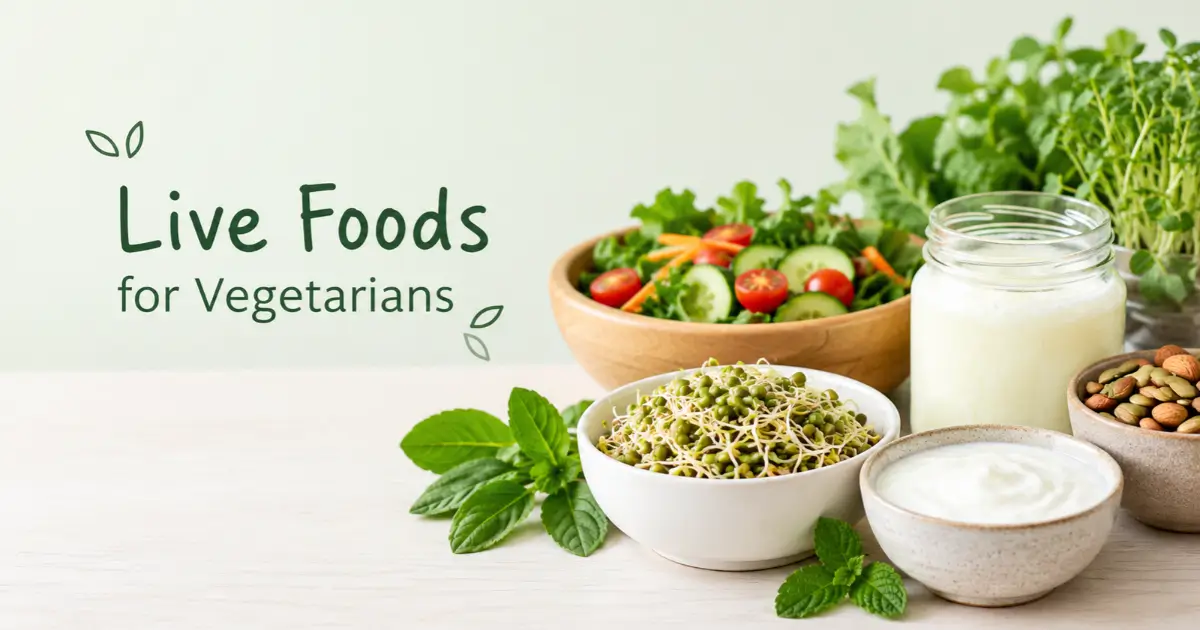
You must have heard someone say they’re eating more live foods these days, or perhaps you’ve come across the term while scrolling through a health-conscious site. Maybe you’ve even wondered what it really means.
The truth is, “live foods” isn’t as straightforward as it sounds. The term is used in different ways, which can make it difficult to know what actually belongs in this category.
So, let’s clear up the confusion and look at what live foods really are, which vegetarian foods fit the idea, and whether they’re really worth including in your diet.
So, What Exactly Are Live Foods?
The term “live foods” isn’t a formal scientific food category, and it can mean different things to different people. In general, it is used to describe foods that are fresh and close to their natural form, along with sprouted foods and some fermented foods.
Fresh fruits and vegetables are often included in this idea, as are foods such as sprouts, nuts and seeds. Fermented foods such as curd or traditionally fermented vegetables may also be described as “live foods,” particularly when they contain living microorganisms.
So, when people talk about “live foods,” they aren’t always talking about one specific type of food. The idea is more about choosing foods that are fresh, sprouted, fermented or minimally processed.
And that makes the term much easier to understand. You don’t need to look for some special “live food” section at the grocery store. Many familiar foods you already eat can fit into the idea.
Are Live Foods the Same as Raw Foods?
Not exactly.
Raw food simply means food that is eaten without cooking it. Think of a fresh apple, cucumber or carrot.
Live foods, on the other hand, is a broader term. It can be used for fresh foods, sprouted foods and some fermented foods such as curd that may contain live microorganisms.
So, some raw foods can be called live foods, but not every live food is raw.
For example, an apple is raw, while curd is fermented, yet both may be included when people talk about “live foods.”
Live Foods for Vegetarians: What Can You Eat?
The good news is that you probably already eat several foods that can fit into the idea of “live foods.” You don’t need a special diet or unusual ingredients.
Here are some familiar vegetarian options:
1. Fresh Fruits
Apples, guava, oranges, papaya, bananas, berries, pomegranate and other fresh fruits are commonly included when people talk about live foods.
They are naturally nutritious and can be enjoyed as they are, without any special preparation.
2. Fresh Vegetables
Cucumber, carrots, tomatoes, cabbage and leafy greens are other foods that are often included, especially when eaten fresh or lightly prepared.
You can add them to salads, sandwiches, wraps or everyday meals.
3. Sprouts
Sprouted moong, chickpeas and other beans or legumes are popular choices.
You can add them to salads, chaat, sandwiches or wraps. If you’re eating sprouts raw, wash them thoroughly before eating. You can also cook them if you prefer.
4. Microgreens
Microgreens are young edible plants that are harvested after their first leaves develop. They have become increasingly popular and can be added to salads, sandwiches, wraps and bowls.
They aren’t exactly the same as sprouts, but they are often included in the broader idea of fresh, minimally processed plant foods.
5. Fresh Herbs and Edible Leaves
Fresh herbs and edible leaves such as coriander, mint and curry leaves can also be eaten fresh or used in chutneys, salads and other preparations.
They may not always be labelled as “live foods,” but they fit well with the idea of adding fresh, minimally processed plant foods to your diet.
6. Curd and Yogurt
Curd and yogurt are good examples of fermented foods that can fit into the idea of live foods. They may contain live microorganisms, and some packaged products mention “live cultures” on the label.
Homemade curd is another simple option and can easily be included with everyday meals.
However, if you follow Ayurvedic practices, you may come across recommendations to limit or avoid curd during the monsoon. Want to know more? Read our guide on Can You Eat Curd During Monsoon? What Ayurveda Says
7. Other Fermented Foods
Fermented foods are another group often included when people talk about live foods. Some familiar examples include kanji, traditionally fermented vegetables, sauerkraut, kimchi and certain homemade pickles.
Pickles are especially familiar in Indian homes, but it’s important to remember that not every pickle is fermented. Some are preserved mainly with oil, salt or vinegar, while others may go through natural fermentation.
And even when a food has been fermented, it doesn’t necessarily mean that live microorganisms are still present when you eat it. Heating, pasteurization or other processing can kill or reduce them.
So, if you’re specifically looking for live cultures, don’t assume that every fermented food contains them. Look for information about live cultures on the label when available.
8. Nuts and Seeds
Nuts and seeds such as almonds, walnuts, pumpkin seeds, sunflower seeds, chia and flaxseeds are also commonly included in some live-food approaches.
They are usually eaten raw or minimally processed, but unlike fermented foods such as curd, they are not included because they contain live cultures.
They can still be a nutritious addition to a vegetarian diet and are easy to add to breakfast, snacks or salads.
Why Add Live Foods to Your Vegetarian Diet?
So, why add live foods to your vegetarian diet when you already have dal, roti, sabzi and other everyday foods?
Because they can bring something different to your plate.
Fresh fruits and vegetables give you fibre, vitamins, minerals and a variety of plant compounds. Sprouted foods go through natural changes during sprouting that can improve the availability of some nutrients. And fermented foods, such as curd and some traditionally fermented foods, may provide live microorganisms that can support a healthy gut when they are still present.
Another simple advantage is variety. Different foods provide different nutrients and plant compounds.
What Could This Look Like on Your Plate?
You don’t need to turn your diet into a raw-food diet. Keep your regular meals and simply make room for some fresh, sprouted and fermented foods.
For example:
- Add a fresh salad to lunch or dinner
- Have 1-2 seasonal fruit during the day
- Add sprouts to a salad or chaat
- Include curd with a meal
- Add nuts and seeds to breakfast, snacks or salads
Think of live foods as an addition, not a replacement. Your cooked meals still have an important place in a balanced vegetarian diet.
Is “Live Food” Really a New Idea?
Your grandmother probably never called her homemade curd a “live food.” She simply made curd. You probably never called your salad a live food either, you just ate it with your meal.
So, what’s new?
Mostly, the label.
The term “live foods” has become popular as a way of grouping together foods such as fresh fruits and vegetables, sprouts and certain fermented foods. But many of these foods have been part of traditional diets for generations.
What is interesting is that we now know more about what happens when foods are sprouted or fermented, how fermentation can involve living microorganisms, and how different ways of preparing food can affect its nutrients and digestibility.
So, you don’t need to suddenly change the way you eat just because the term “live foods” is trending. If you already enjoy fresh fruits, salads, sprouts, curd or traditionally fermented foods, you’re probably already including some of the foods that people now describe as “live foods.”
The name may be new to many of us, but the foods themselves are certainly not.
Final Thoughts
“Live foods” may sound like a new health trend, but you don’t need to completely change the way you eat to include them.
Fresh fruits and vegetables, sprouts, fermented foods, nuts and seeds, herbs and microgreens, and other minimally processed foods can all have a place in a balanced vegetarian diet.
Enjoy some fresh, some sprouted, some fermented and some cooked. There is room for all of them on your plate.
After all, healthy eating doesn’t have to follow a trend. Sometimes, it simply means appreciating the good habits we’ve had all along.
Disclaimer
This article is for general information only. “Live foods” is a broad, informal term, and individual dietary needs may vary. If you have a health condition or specific dietary concern, consult a qualified healthcare professional or registered dietitian before making significant changes to your diet.
References
- Fermented Foods, Health and the Gut Microbiome
- ISAPP – Fermented Foods
- Harvard T.H. Chan School of Public Health – Probiotics for Gut Health
- Microgreens: Functional Food for Nutrition and Dietary Diversification

A natural living enthusiast passionate about Ayurveda and holistic wellness. Through HealthBooti, she shares well-researched, practical health tips and lifestyle guidance to help individuals and families embrace healthier habits naturally. Her mission is to make natural healing simple, safe, and accessible for everyday life.