Last Updated: 02 May 2026
Yoga is much more than a physical workout. It is a gentle practice that nurtures the body, calms the mind, and creates a deeper connection with yourself. For women, yoga can be especially beneficial because it supports flexibility, strength, posture, emotional well-being, and overall health through different stages of life.
Whether you are in your 20s, managing a busy family life, approaching menopause, or simply looking for a way to stay active and balanced, regular yoga practice can help you feel stronger, calmer, and more energised.
In this article, we’ll explore some of the best yoga poses for women, along with their benefits, precautions, and helpful tips for safe practice.
Why Yoga Is Beneficial for Women
Women’s bodies go through various physical and hormonal changes throughout life. A regular yoga practice may help support overall well-being by:
- Improving flexibility and posture
- Strengthening muscles and joints
- Supporting pelvic health
- Reducing everyday stress and anxiety
- Encouraging mindful breathing
- Promoting better sleep quality
- Enhancing body awareness and balance
- Supporting healthy ageing
The beauty of yoga is that it can be adapted to suit different fitness levels and life stages.
Yoga Poses For Women
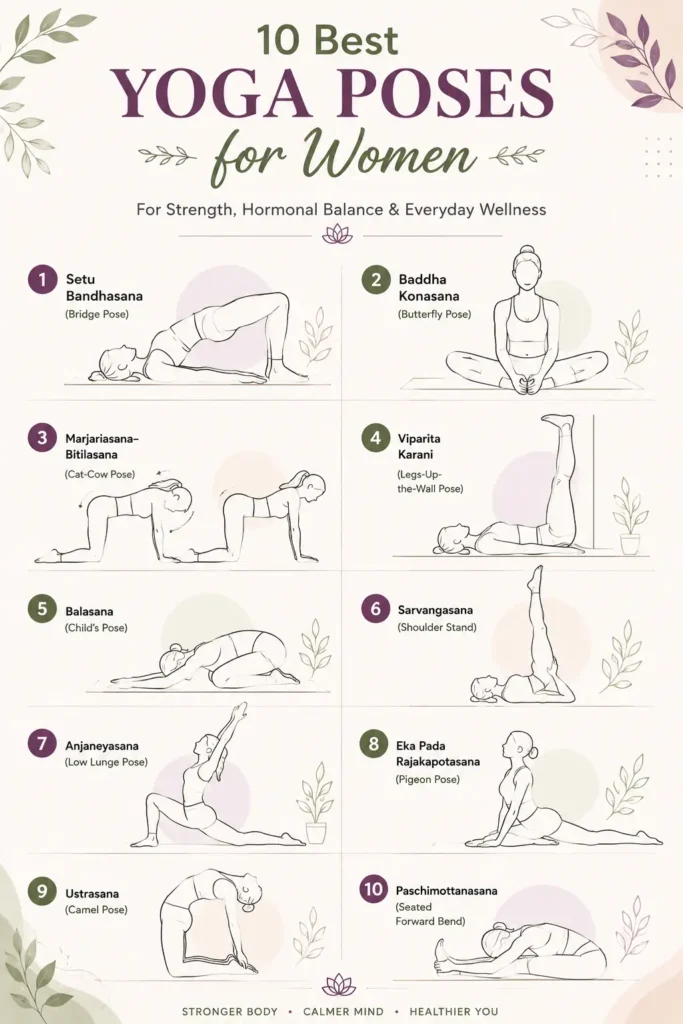
These yoga poses for women can be a wonderful addition to a healthy lifestyle. From gentle stretches and relaxing postures to strength-building asanas, each pose offers its own unique benefits. Whether your goal is to improve flexibility, support hormonal balance, reduce stress, or simply feel more connected to your body, these asanas can help you move towards greater well-being.
However, pregnant women, individuals with injuries, or those with any medical conditions should practice these poses only after consulting a qualified yoga instructor or healthcare professional.
1. Setu Bandhasana (Bridge Pose)
Setu Bandhasana is a gentle backbend that lifts the hips and opens the chest. For women, it may help improve pelvic flexibility, strengthen the lower body, and support overall well-being. The pose also stretches the front of the body, encourages better posture, and promotes a sense of calm and balance.
Benefits
- Strengthens the back, glutes, and legs
- Opens the chest and shoulders
- Improves posture
- May help ease mild lower-back discomfort caused by prolonged sitting
- Encourages relaxation and stress relief
Precautions
Avoid this pose if you have a recent neck injury, severe back pain, or if your healthcare professional has advised against backbends.
2. Baddha Konasana (Butterfly Pose)
Butterfly Pose is a simple yet effective posture that gently opens the hips and inner thighs. For women, it may help improve pelvic flexibility, ease tension, and promote relaxation and overall well-being.
Benefits
- Improves hip flexibility
- Stretches the groin and inner thighs
- Encourages relaxation
- May help ease mild menstrual discomfort
- Supports better posture
Precautions
Practice carefully if you have knee injuries or severe hip discomfort. Use cushions or yoga blocks for support if needed.
3. Marjariasana-Bitilasana (Cat-Cow Pose)
It is a gentle, flowing movement between two positions that helps warm up the spine and improve mobility. For women, it may help relieve stiffness in the back and neck, promote relaxation, and support overall flexibility and comfort.
Benefits
- Improves spinal flexibility
- Releases stiffness in the neck and back
- Encourages mindful breathing
- May help relieve tension caused by long hours of sitting
- Gently massages abdominal organs
Precautions
Move slowly and comfortably if you have back or neck issues.
4. Viparita Karani (Legs-Up-the-Wall Pose)
Often called one of the most restorative yoga poses, Viparita Karani is excellent for relaxation. For women, it may help reduce stress, ease tired legs, and support overall physical and emotional well-being.
Benefits
- Helps relax tired legs and feet
- Encourages circulation
- Promotes calmness and stress relief
- May support better sleep
- Provides gentle relaxation after a busy day
Precautions
People with glaucoma, serious neck issues, or certain medical conditions should seek professional guidance before practising.
5. Balasana (Child’s Pose)
Balasana is one of the most comforting and restorative yoga poses. For women, it may help ease tension in the back, hips, and shoulders while encouraging a sense of rest and gentle renewal.
Benefits
- Gently stretches the hips and lower back
- Encourages relaxation
- Helps release physical and mental tension
- Supports mindful breathing
- Can be used as a resting pose during practice
Precautions
Avoid if you have severe knee injuries or significant abdominal discomfort.
6. Sarvangasana (Shoulder Stand)
Sarvangasana is often referred to as the “Queen of Asanas” in traditional yoga. For women, it is traditionally valued for supporting overall vitality and balance while helping improve posture and concentration.
Benefits
- Improves body awareness and balance
- Strengthens the shoulders and upper body
- Encourages circulation
- May help reduce stress
- Supports overall vitality
Precautions
This is an advanced posture. Avoid if you have neck problems, uncontrolled high blood pressure, glaucoma, heart conditions, or if you are pregnant unless practising under expert supervision.
7. Anjaneyasana (Low Lunge Pose)
Anjaneyasana is a graceful hip-opening pose that stretches the thighs, groin, and hip flexors while strengthening the lower body. For women, it may help improve pelvic flexibility, support good posture, and ease stiffness, while promoting better circulation and overall well-being.
Benefits
- Stretches the hips, groin, and thigh muscles
- Helps improve posture and balance
- Strengthens the legs and core
- Supports pelvic flexibility and mobility
- May help ease mild menstrual discomfort
- Encourages healthy blood circulation in the lower body
Precautions
Avoid or modify the pose if you have knee injuries, hip problems, or severe lower-back pain.
8. Eka Pada Rajakapotasana (Pigeon Pose)
Pigeon Pose provides a deep stretch for the hips and lower body. For women, it may help improve hip flexibility, ease tightness from prolonged sitting, and encourage greater mobility and comfort.
Benefits
- Improves hip flexibility
- Helps release tight hip muscles
- Supports better posture
- Stretches the thighs and glutes
- Encourages relaxation
Precautions
Avoid if you have knee, hip, or lower-back injuries. Beginners can practise modified versions.
9. Ustrasana (Camel Pose)
Camel Pose is an energising backbend that opens the front of the body. For women, it may help improve spinal flexibility, counteract the effects of prolonged sitting, and support better posture.
Benefits
- Stretches the chest, abdomen, and thighs
- Strengthens the back muscles
- Improves posture
- Helps counteract the effects of prolonged sitting
- Encourages deeper breathing
Precautions
Avoid if you have severe neck or back issues, migraines, or uncontrolled blood pressure.
10. Paschimottanasana (Seated Forward Bend)
Paschimottanasana gently stretches the spine and lower body while calming the mind. For women, it may help ease menstrual discomfort, reduce stress, and support hormonal balance. It also improves circulation in the pelvic area and promotes deep relaxation, making it especially helpful during emotional or hormonal changes.
Benefits
- Improves flexibility in the back body
- Improves blood flow to the abdominal area
- Encourages calmness
- Supports healthy posture
- May help reduce stress
- Promotes relaxation before bedtime
- May help support healthy digestion and promote smoother bowel movements
Precautions
People with severe back injuries or hamstring strains should modify the pose and avoid overstretching.
Can Women Practice Yoga During Menstruation?
Yes, many women continue practising yoga during menstruation. However, comfort levels vary from person to person.
Gentle and restorative poses are often preferred during this time, including:
- Balasana (Child’s Pose)
- Baddha Konasana (Butterfly Pose)
- Cat-Cow Pose
- Gentle seated stretches
If you experience heavy flow, severe cramps, dizziness, or fatigue, consider reducing the intensity of your practice and prioritising rest.
Most importantly, listen to your body and choose movements that feel comfortable.
Tips for a Safe and Effective Yoga Practice
- Begin with a gentle warm-up.
- Focus on slow, steady breathing.
- Practise with proper alignment.
- Wear comfortable clothing.
- Avoid practising immediately after a heavy meal.
- Never force your body into a pose.
- Use yoga props when needed.
- Finish your practice with relaxation.
- Seek professional guidance if you are pregnant or have existing health conditions.
Final Thoughts
Yoga poses for women offer a simple yet powerful way to support physical, mental, and emotional well-being. From improving flexibility and posture to encouraging relaxation and balance, these asanas can be a valuable addition to a healthy lifestyle at every stage of life.
Remember that yoga is not about achieving the perfect pose. It is about building awareness, moving with kindness, and creating a healthy relationship with your body. Start slowly, stay consistent, and enjoy the journey.
Frequently Asked Questions (FAQs)
Which yoga pose is best for women beginners?
Balasana (Child’s Pose), Butterfly Pose, Cat-Cow Pose, and Legs-Up-the-Wall Pose are beginner-friendly options that are easy to learn and gentle on the body.
Can yoga help reduce stress in women?
Yes. Regular yoga practice combines movement, breathing exercises, and mindfulness, which may help reduce everyday stress and promote relaxation.
Is it okay to do yoga every day?
For most healthy individuals, gentle yoga can be practised daily. However, the intensity and duration should match your fitness level and comfort.
Which yoga poses may help with flexibility?
Butterfly Pose, Pigeon Pose, Wide-Legged Forward Bend, and Seated Forward Bend are commonly practised to improve flexibility.
Can women practice yoga after age 40 or 50?
Absolutely. Yoga can be adapted for different ages and fitness levels. Many women continue practising yoga well into their later years.
How long should a yoga session be?
A daily yoga practice of around 30 minutes can help improve flexibility, strength, and overall well-being. Longer sessions may be added according to your schedule and experience level.
Disclaimer
This article is intended for informational and educational purposes only and should not be considered medical advice. Yoga practices should be performed according to individual ability and health conditions. If you are pregnant, have an injury, or have a medical condition, consult a qualified healthcare professional or certified yoga instructor before beginning any new exercise or yoga routine.
References
- Yoga Journal (Pose Library)
- Morarji Desai National Institute of Yoga (MDNIY)
- Central Council for Research in Yoga & Naturopathy (CCRYN)
- International Journal of Yoga
- Harvard Health Publishing

A natural living enthusiast passionate about Ayurveda and holistic wellness. Through HealthBooti, she shares well-researched, practical health tips and lifestyle guidance to help individuals and families embrace healthier habits naturally. Her mission is to make natural healing simple, safe, and accessible for everyday life.