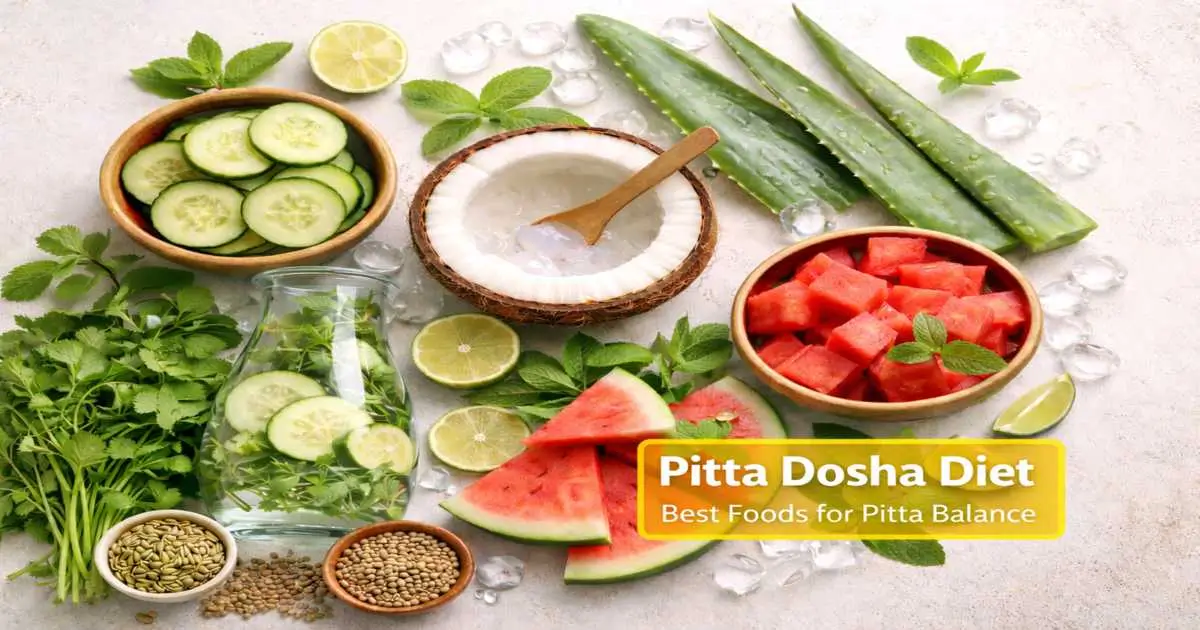
Do you often feel overheated, easily irritated, or constantly pushing yourself to do more and make everything perfect?
This might not be just stress or lifestyle. It could also be linked to your Pitta dosha.
In Ayurveda, health is all about balance between three natural energies: Vata, Pitta, and Kapha. Among these, Pitta is the energy of heat, digestion, and transformation. It influences how your body processes food, how your mind thinks, and how you respond to situations.
When Pitta is balanced, it brings clarity, confidence, and strong digestion. But when it becomes excessive, it can lead to acidity, irritation, and emotional intensity.
In this article, we’ll understand what Pitta dosha is, its key traits, signs of imbalance, and simple natural ways to bring it back into balance.
What Is Pitta Dosha?
Pitta dosha is primarily made up of fire and water elements.
Fire represents heat, transformation, and metabolism, while water gives it a slightly fluid nature.
Because of these elements, Pitta has qualities such as:
- Heat
- Sharpness
- Intensity
- Lightness
- Oiliness
Think of Pitta like the digestive fire in your body. It is powerful, focused, and necessary. But when it increases too much, it can create too much heat in the body.
Why Is Pitta Important?
Pitta plays a vital role in maintaining proper body functions.
According to Ayurvedic principles, Pitta is responsible for:
- Digestion and metabolism
- Body temperature regulation
- Hormonal balance
- Vision and skin health
- Understanding, intelligence, and decision-making
It helps you process not only food, but also thoughts and emotions.
When Pitta is balanced, it gives clarity, confidence, and strong digestion. But when disturbed, it can lead to heat, irritation, and inflammation.
Common Traits of a Pitta Dosha Person
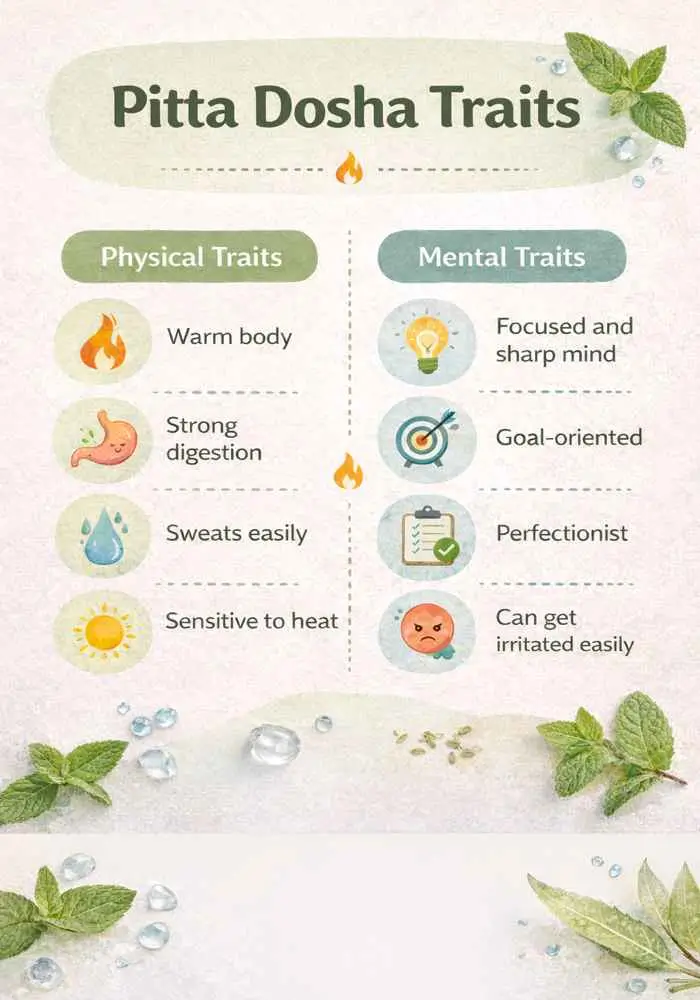
People with a dominant Pitta constitution often share certain physical and mental characteristics.
Physical Traits
Many Pitta individuals tend to have:
- Medium body build
- Warm body temperature
- Soft, slightly oily skin
- Tendency to sweat easily
- Strong appetite and digestion
- Early greying or thinning of hair
They usually cannot tolerate heat very well and prefer cooler environments.
Mental and Emotional Traits
Pitta is closely linked with intelligence and leadership.
Common mental traits include:
- Sharp mind and quick understanding
- Strong focus and determination
- Goal-oriented personality
- Confidence and leadership qualities
However, when Pitta increases, it may lead to:
- Irritability or anger
- Impatience
- Criticism (towards self and others)
- Perfectionism
Recognising these patterns can help bring awareness and balance.
Where Is Pitta Located in the Body?
Although present throughout the body, Pitta mainly resides in:
- Stomach and small intestine
- Liver and blood
- Eyes
- Skin
- Sweat glands
This is why Pitta imbalance often shows up as digestive issues, skin problems, or heat-related discomfort.
Signs of Pitta Imbalance
When Pitta increases beyond its natural balance, it can lead to various physical and emotional changes in the body.
Common Symptoms Include:
- Acidity or heartburn
- Loose motions or frequent hunger
- Skin rashes, acne, or redness
- Excessive sweating
- Burning sensation in the body
- Anger, frustration, or impatience
- Sensitivity to heat
- Bad breath or body odor
If several of these signs are present, your Pitta may need calming.
What Causes Pitta Imbalance?
Modern lifestyle habits can easily aggravate Pitta without us realising.
Common triggers include:
- Eating spicy, oily, or fried foods in excess
- Excessive intake of tea, coffee, caffeinated drinks, or alcohol
- Skipping meals (especially for Pitta types with strong digestion)
- Working under pressure or stress
- Exposure to heat or hot climates
- Over-competitiveness or perfectionism
Even emotional stress can increase internal heat.
How to Balance Pitta Naturally
Balancing Pitta involves cooling, calming, and softening its intense nature.
Simple lifestyle changes and diet can make a big difference.
1. Follow a Pitta-Balancing Diet
Food is one of the most effective ways to calm Pitta.
Prefer:
- Cooling vegetables like cucumber, leafy greens, and bottle gourd – help reduce excess heat in the body
- Sweet fruits like melons, apples, pears, and pomegranate – naturally soothing and hydrating
- Whole grains like rice, oats, and wheat – easy to digest and stabilising
- Light pulses like moong dal – easier on digestion compared to heavier dals
- Milk and ghee (in moderation) – nourish the body while helping balance Pitta
- Soaked nuts and seeds (in small amounts) – better digested and less heating when consumed mindfully
- Mild spices like fennel, coriander, and cardamom – support digestion without increasing heat
- Fresh, homemade meals – lighter and more suitable than processed foods
- Seasonal foods – help maintain natural balance as the body adapts to the weather
Avoid:
- Spicy, oily, and fried foods – increase heat and irritation in the body
- Excess salt and sour foods – can aggravate Pitta and lead to acidity
- Fermented and processed foods – may disturb digestion and increase internal heat
- Excessive intake of tea, coffee, caffeinated drinks, or alcohol – overstimulate the system and raise heat levels
- Eating very hot, freshly cooked (steaming hot) foods frequently – adds to internal heat
- Overeating or eating at irregular times – can disturb strong digestion and create imbalance
- Excess nuts and seeds (especially without soaking) – can increase heat, particularly in summers
If you eat non-vegetarian food, keep it moderate and avoid heavy, spicy preparations, as they can increase body heat.
2. Maintain a Calm and Structured Routine
Pitta people are naturally driven, but pushing too hard can leave them feeling tired and stressed.
- Avoid overworking
- Take breaks between tasks
- Do not skip meals
- Maintain a regular sleep schedule
Instead of constantly pushing yourself to achieve more, allow space for rest and recovery in your day. A balanced routine helps prevent mental and physical exhaustion.
3. Choose Cooling and Moderate Exercise
Instead of intense workouts, focus on calming and cooling forms of movement that do not overheat the body.
- Yoga (slow and mindful) – helps relax the body while calming the mind
- Swimming – naturally cools down body temperature and refreshes the system
- Walking in nature – reduces stress and brings a sense of mental calmness
- Light cycling – keeps the body active without creating excess heat
Avoid exercising during peak heat (afternoon time), as it can increase Pitta and lead to fatigue or irritation.
4. Practice Cooling Breathing and Relaxation
Pitta benefits greatly from calming the mind and reducing internal intensity.
- Deep breathing exercises – help slow down the mind and reduce stress
- Meditation – promotes emotional balance and inner calmness
- Spending time in nature – especially in green or cool environments, helps soothe both body and mind
- Practicing gratitude and slowing down – reduces frustration and brings a sense of contentment
These practices help reduce stress, cool emotional intensity, and bring a sense of balance to both body and mind.
5. Use Cooling Oils and Self-Care Practices
Unlike Vata, which needs warmth, Pitta benefits from cooling and soothing therapies.
- Coconut oil massage (Abhyanga) – helps cool the body, reduce heat, and calm the skin
- Sandalwood-based oils – naturally cooling and useful for relaxing the mind and reducing irritation
- Aloe vera for skin – soothes inflammation, redness, and heat-related skin issues
These practices help cool the body, relax the mind, and support overall skin and tissue health.
6. Stay Cool and Hydrated
Managing body temperature is essential to keep Pitta in balance.
- Drink room temperature or matka (clay pot) water – naturally cool and gentle on digestion, especially during summers
- Avoid very hot drinks frequently – excess heat from beverages can increase internal warmth
- Stay in well-ventilated spaces – fresh air helps prevent overheating and discomfort
- Wear light, breathable clothes – supports proper air circulation and keeps the body cool
Even small cooling habits in your daily routine can go a long way in keeping Pitta balanced.
7. Avoid Pitta-Aggravating Habits
Certain lifestyle habits can increase internal heat and disturb Pitta balance, so it’s important to stay mindful of them.
- Overworking or constant competition – creates mental pressure and increases irritability
- Excess screen exposure – overstimulates the mind and adds to mental fatigue
- Skipping meals – can disturb strong digestion and lead to acidity or discomfort
- Late-night working – disrupts natural rhythms and increases internal heat
- Frequent anger or holding in emotions – both expression and suppression of intense emotions can disturb mental balance
Slowing down, staying mindful, and giving yourself space to relax can go a long way in keeping Pitta balanced.
Final Words
Pitta dosha is the energy of transformation, intelligence, and inner fire.
When balanced, it gives you clarity, confidence, and strong digestion. But when it becomes excessive, it can lead to heat, irritation, and emotional intensity.
If your life feels too heated physically or emotionally, it may be a sign to slow down, cool your system, and create space for calmness.
Ayurveda teaches us that balance is not about restriction, but about understanding your body’s needs and responding with awareness.
While diet plays a very important role in balancing Pitta, it is equally important to observe your daily routine and small habits. Simple things like irregular schedules, overworking, or constant mental pressure can quietly increase internal heat over time.
By becoming more mindful of these small patterns and making gentle changes, you can create a lifestyle that supports long-term balance and well-being.
Small, consistent shifts in food, routine, and mindset can go a long way in bringing Pitta back into harmony.
Still confused about your body type? A simple Ayurvedic body type test can help you understand your constitution more clearly.
Disclaimer
The information in this article is based on traditional Ayurvedic principles and general wellness knowledge. It is intended for informational purposes only and should not be considered medical advice. For any specific health concerns or existing medical conditions, it is always advisable to consult a qualified healthcare professional.
Sources
This article is based on traditional Ayurvedic principles, including concepts described in classical texts such as the Charaka Samhita and Sushruta Samhita. It also reflects general wellness knowledge commonly shared by recognised Ayurvedic practitioners and institutions.

A natural living enthusiast passionate about Ayurveda and holistic wellness. Through HealthBooti, she shares well-researched, practical health tips and lifestyle guidance to help individuals and families embrace healthier habits naturally. Her mission is to make natural healing simple, safe, and accessible for everyday life.