Last Updated: 02 July 2026
Yoga is an ancient practice that originated in India and has been followed for thousands of years to support physical, mental, and emotional well-being. More than just a form of exercise, yoga is a way of life that encourages balance, mindfulness, self-awareness, and overall wellness.
In today’s fast-paced world, many people spend long hours sitting, working on screens, and dealing with daily stress. Over time, this can affect both physical and mental health. Regular yoga practice can help improve flexibility, strengthen muscles, support better posture, promote relaxation, and enhance overall well-being.
Yoga combines physical postures (asanas), breathing techniques (pranayama), and mindfulness. Together, these practices help create harmony between the body and mind. Many people also find yoga helpful for reducing stress, improving focus, and feeling more energised throughout the day.
One of the best things about yoga is that anyone can begin, regardless of age or fitness level. You do not need to be flexible or experienced to start. With patience, consistency, and the right guidance, even simple yoga poses can provide significant benefits over time.
In this article, we will look at some of the best yoga poses for beginners, along with their benefits, precautions, and step-by-step instructions to help you practise safely.
Important Tips Before You Start Yoga
If you are new to yoga, keep the following tips in mind:
- Start with beginner-friendly yoga poses.
- Do not force your body into difficult postures.
- Focus on proper alignment rather than perfection.
- Practise regularly, even if it is only for a few minutes each day.
- Learn under the guidance of a qualified yoga instructor whenever possible.
- Move slowly and listen to your body’s limits.
- Stop immediately if you experience pain or discomfort.
- Pay attention to your breathing throughout the practice.
Best Time to Practise Yoga
Many people prefer practising yoga in the morning because the mind is generally calm and the stomach is empty. However, yoga can be practised at any time of the day that suits your schedule.
For the best experience:
- Practise on an empty stomach or wait 2-3 hours after a meal.
- Wear comfortable clothing that allows free movement.
- Choose a clean, quiet, and well-ventilated space.
- Focus on slow and steady breathing during your practice.
- Stay hydrated throughout the day.
Remember, consistency is more important than duration. Even 15-20 minutes of yoga daily can be beneficial when practised regularly.
Best Yoga Asanas for Beginners
1. TADASANA (Mountain pose)
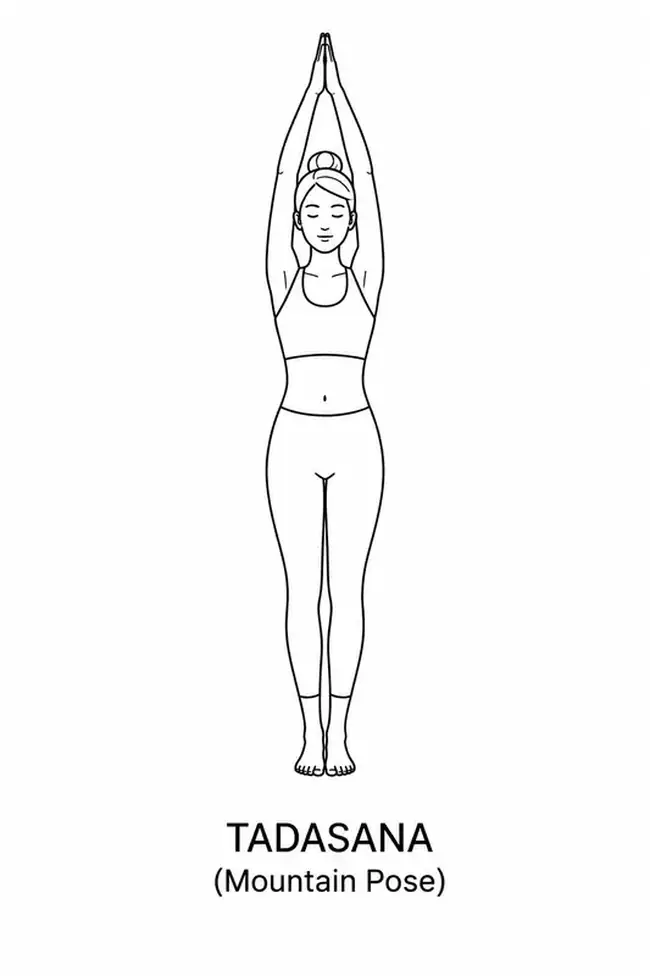
Tadasana, or Mountain Pose, is one of the most basic yet important yoga poses for beginners. Although it looks like simply standing still, this foundational asana teaches proper posture, body alignment, and balance. It helps you become more aware of how your body is positioned while engaging the muscles of the legs and core. Since many standing yoga poses build upon Tadasana, learning it correctly creates a strong foundation for your yoga practice.
Benefits of Tadasana
- helps improve posture and body alignment
- strengthens the legs and core muscles
- promotes balance and stability
- supports body awareness
- may improve circulation
Who Should Avoid Tadasana?
- people with low blood pressure
- who have undergone knee, ankle, hip, or spinal surgery
- who suffer from migraine
Steps to Do Tadasana
- Stand straight.
- While inhaling, raise both your arms over your head and connect the fingers together.
- Slowly raise the heels and pull your body and your arms up towards the ceiling.
- Breathe normally and feel the stretch.
- Hold this position for 30-60 seconds or as long as you are comfortable in it.
- While exhaling, come back to the normal standing position. Relax.
2. VRIKSHASANA (Tree pose)
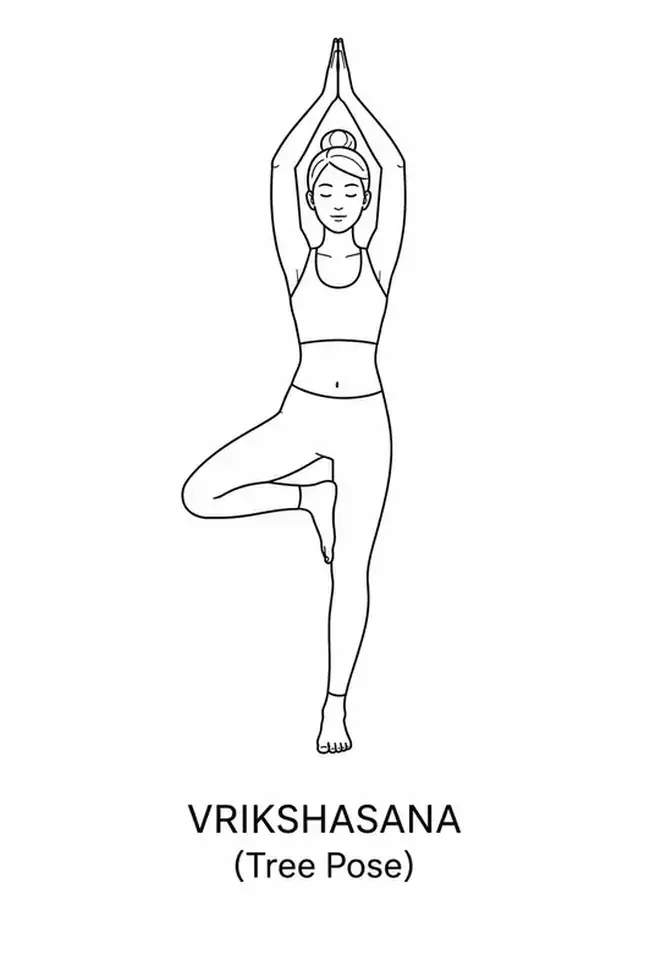
Vrikshasana, or Tree Pose, is one of the best balancing yoga poses for beginners. As the name suggests, the body resembles the steady stance of a tree. While it may look simple, balancing on one leg requires focus, coordination, and stability. With regular practice, Tree Pose can help improve balance, strengthen the legs, enhance body awareness, and improve concentration, making it an excellent addition to any beginner’s yoga routine.
Benefits of Vrikshasana
- improves balance and stability
- strengthens the legs, ankles, and core muscles
- helps improve posture and body alignment
- enhances focus and concentration
- promotes better body awareness
Who Should Avoid Vrikshasana?
- who have ankle or knee pain
- who suffer from headaches or migraine
- recently had an injury/surgery
Steps to Do Vrikshasana
- Stand straight.
- Shift your body weight on one leg (say left leg)
- Bend your right knee and place the right foot on your left inner thigh.
- While inhaling, slowly raise your arms over your head in a namaste mudra
- Breathe normally.
- Hold this asana for 30-60 seconds or as long as you are comfortable in it.
- While exhaling, bring down your arms and return to the starting position.
- Repeat this asana on the opposite leg.
3. TRIKONASANA (Triangle pose)
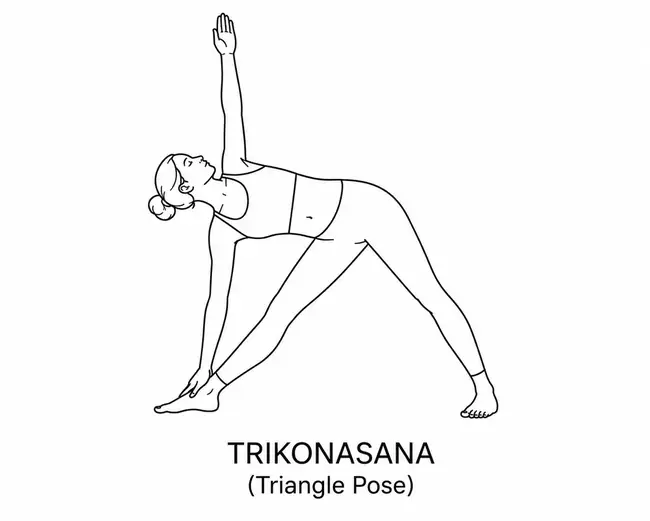
Trikonasana, commonly known as Triangle Pose, is a standing yoga posture that gently stretches the sides of the body while improving flexibility and stability. The name comes from the triangle shape formed by the body during the pose. This beginner-friendly asana stretches several muscle groups simultaneously and promotes better posture and balance. With regular practice, it can also help improve overall body awareness and mobility.
Benefits of Trikonasana
- stretches the sides of the body
- strengthens the legs and core
- improves flexibility and balance
- may support digestion
- helps improve posture
Who Should Avoid Trikonasana?
- who has severe back pain
- who has low or high blood pressure
- who has neck or back injuries
People having pain in their back and spinal column should do this asana under the guidance of an expert.
Steps to Do Trikonasana
- Stand straight.
- Lift the right leg and keep it at a distance of at least 3 feet from your left leg.
- While inhaling, raise both your arms and bring them to shoulder level.
- While exhaling, bend your body from the waist towards the right, pointing the left arm towards the ceiling and the right arm towards the ground. Rest your right palm on the ground near your right foot.
- Look at the ceiling, breathe normally.
- Hold this position for 30-60 seconds or as long as you are comfortable in it.
- While inhaling, come back slowly to the normal standing position.
- While exhaling, bring both arms down. Relax.
4. VAJRASANA (Thunderbolt pose/Diamond pose)
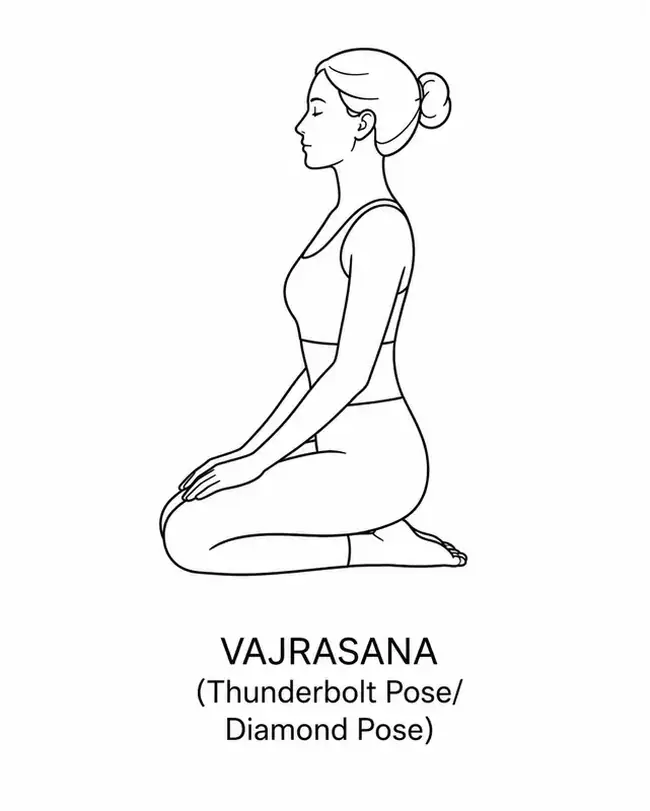
Vajrasana is a simple seated yoga pose that is suitable for people of almost all age groups. Unlike most yoga asanas, it is one of the few poses that can be practised after a meal, making it popular for supporting healthy digestion. It is also commonly used for meditation and breathing exercises because the upright sitting position encourages relaxation, proper posture, and steady breathing.
Benefits of Vajrasana
- may support healthy digestion
- helps promote relaxation
- supports good posture
- may help reduce discomfort caused by gas and bloating
- strengthens the muscles of the lower body
Who Should Avoid Vajrasana?
- who have severe knee pain or have recently undergone knee surgery
Steps to Do Vajrasana
- Take a sitting position
- Fold the knees and ankles backwards. The bottom of the feet should face upward. Join both toes together.
- Sit on the pit formed by the parted heels. Your buttocks should rest on the heels, and your thighs should rest on the calves.
- Place the palms on the knees.
- Keep the spine, neck, and head upright in one straight line.
- Breathe normally.
- Hold this posture for 3-5 minutes or as long as you are comfortable in it.
- Straighten your legs and come back to the normal sitting position. Relax.
5. BALASANA (Child pose)
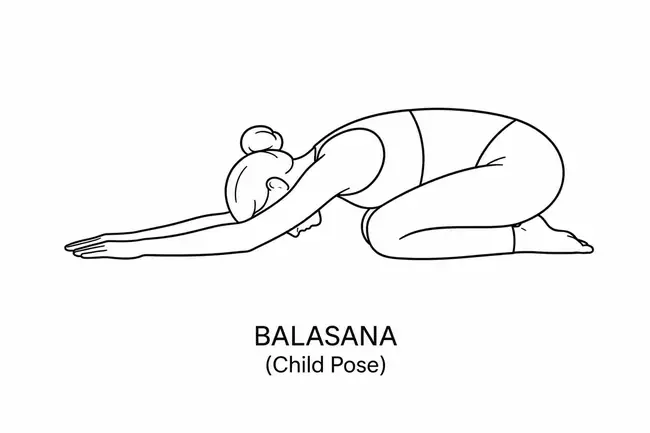
Balasana, or Child’s Pose, is one of the most relaxing yoga poses for beginners. It is often practised between more challenging asanas or at the end of a yoga session to help the body recover. This gentle resting posture stretches the back, hips, and thighs while promoting relaxation. It is an excellent pose to slow down, release tension, and reconnect with your breath during yoga practice.
Benefits of Balasana
- relaxes the body and calms the mind
- gently stretches the back, hips, and thighs
- may help ease tension in the lower back
- promotes relaxation
- supports flexibility
Who Should Avoid Balasana?
- who have a knee injury or have recently undergone knee surgery
- pregnant women
- suffering from diarrhoea
Steps to Do Balasana
- Sit in vajrasana (No. 4)
- While exhaling, fold forward for your hips and stretch your arms in front of you. Rest your forehead on the ground.
- Breathe normally and feel the stretch.
- Hold this position for 60 seconds or as long as you are comfortable in it.
- While exhaling, come back to the Vajrayana. Straighten your legs. Relax.
6. NAUKASANA (Boat pose)
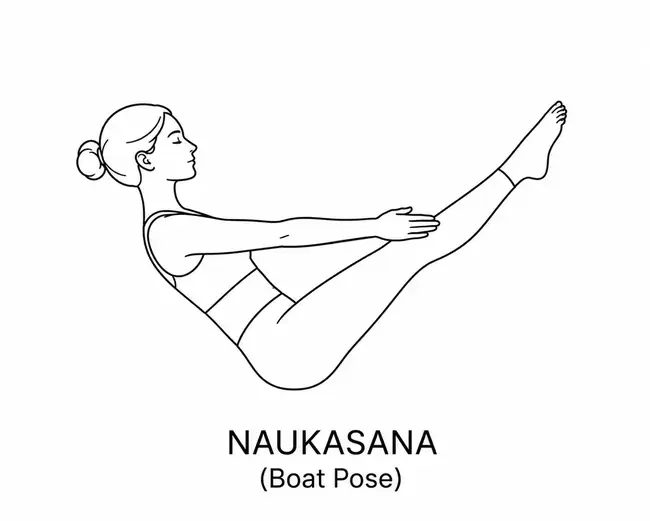
Naukasana, also known as Boat Pose, is a beginner-friendly yoga asana that focuses on strengthening the core and improving balance. In this pose, the body forms the shape of a boat while balancing on the sitting bones. Although it may feel challenging at first, regular practice helps build core strength, improve stability, and enhance overall body control. It is a great pose for developing strength and endurance as you progress in your yoga journey.
Benefits of Naukasana
- strengthens the core muscles
- improves balance and stability
- engages the muscles of the back and abdomen
- supports overall fitness
- may help improve posture
Who Should Avoid Naukasana?
- who have severe back pain
- who have been operated on the abdomen
- who have low blood pressure
- severe headache or migraine
- pregnant women
Steps to Do Naukasana
- Sit comfortably on the mat and extend your legs
- Bend your knees, bringing the soles of the feet to the ground.
- Raise your arms in front of you, parallel to the ground.
- Begin to lean back and start raising both legs upward, till they make an angle of 45 degrees with the floor. The weight of your body is now on your buttocks.
- Breathe normally.
- Keep your arms straight in front of you, parallel to the ground.
- Hold this posture for 15 seconds or as long as you are comfortable in it.
- While exhaling, release the pose and come back to the sitting position. Relax.
7. BHUJANGASANA (Cobra pose)
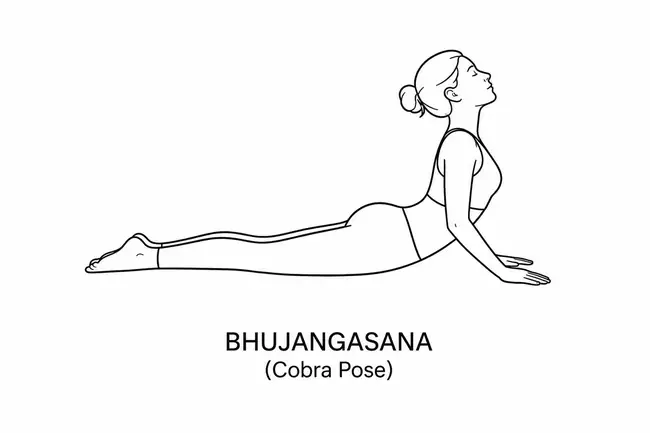
Bhujangasana, or Cobra Pose, is a gentle back-bending yoga posture that helps open the chest and strengthen the back muscles. It is one of the most well-known yoga poses and is commonly included in the Surya Namaskar (Sun Salutation) sequence. This beginner-friendly asana helps improve spinal flexibility, encourages better posture, and provides a gentle stretch to the front of the body, making it a valuable addition to any yoga routine.
Benefits of Bhujangasana
- strengthens the back muscles
- stretches the chest and shoulders
- helps improve posture
- supports spinal flexibility
- may promote better breathing capacity
Who Should Avoid Bhujangasana?
- who suffer from severe back problems
- who suffer from a hernia and stomach ulcer
- who have recently undergone abdominal surgery
Steps to Do Bhujangasana
- Lie down on your stomach, taking the feet a little apart, and rest the forehead on the ground.
- Bring both hands near the chest and place the palms on the ground.
- While inhaling, lift the forehead and chest. Very slowly raise your shoulder until your arms are straight.
- Bend your neck and back as much as possible and feel the stretch in your back.
- Breathe normally.
- Hold this position for 15-30 seconds or as long as you are comfortable in it.
- While exhaling, come back to the normal position, comfortably lowering your shoulder and chest. Rest your forehead on the ground. Relax.
8. SHAVASANA (Corpse pose)
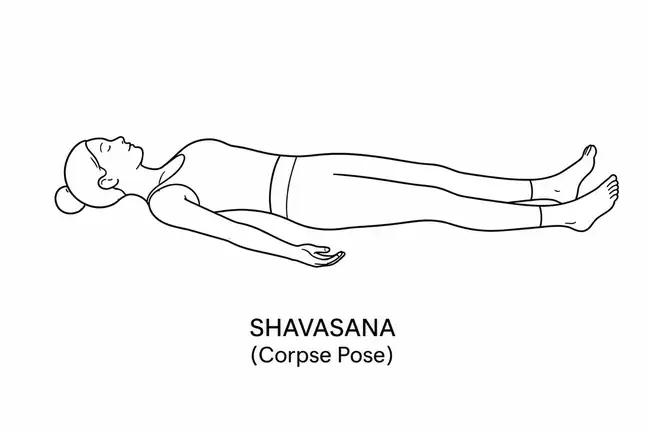
Shavasana, or Corpse Pose, is usually practised at the end of a yoga session and is considered one of the most important yoga poses. Although it appears to involve simply lying down, its purpose is to allow the body and mind to relax completely after physical activity. This pose gives you time to slow your breathing, release built-up tension, and absorb the benefits of your yoga practice, leaving you feeling refreshed and calm.
Benefits of Shavasana
- deeply relaxes the body and mind
- helps reduce stress and promote relaxation
- may improve mental focus and mindfulness
- supports recovery after a yoga session
- promotes a sense of overall well-being
Who Can Do It?
- Everyone
Steps to Do Shavasana
- Lie on your back and spread your legs 1-2 feet apart, and arms to the side 5-6 inches away from the body.
- You can turn your neck on any side you feel comfortable with.
- Keep your eyes closed. Breathe normally.
- Hold this position for 5-10 minutes.
- Relax.
Useful Yoga Tips for Beginners
- Begin each session with a few minutes of gentle warm-up exercises.
- Focus on your breathing while performing each pose.
- Avoid comparing yourself with others.
- Initially, do not hold poses for too long. Allow your body to adapt gradually.
- End your practice with Shavasana to relax the body and mind.
- Stay consistent and patient with your progress.
- Practising regularly for a short duration is often more beneficial than practising occasionally for long periods.
Final Thoughts
Yoga is a simple yet powerful practice that can support both physical and mental well-being. Whether your goal is to improve flexibility, build strength, enhance balance, manage stress, or simply take some time for yourself each day, yoga offers benefits for people of all ages.
If you are new to yoga, begin with basic poses and focus on practising them correctly rather than trying advanced postures too soon. Progress gradually, listen to your body, and stay consistent with your practice.
Over time, these small daily efforts can help you develop greater strength, flexibility, body awareness, and inner calm. The journey of yoga is not about achieving perfect poses. It is about creating a healthier and more balanced lifestyle.
Disclaimer
This article is intended for general informational and educational purposes only and should not be considered medical advice. Always consult a qualified healthcare professional or certified yoga instructor before starting any new exercise or yoga programme, especially if you are pregnant, have a medical condition, injury, or any health concerns. If you experience pain, dizziness, or discomfort while practising yoga, stop immediately and seek professional guidance.
References
- National Center for Complementary and Integrative Health (NCCIH)
- Ministry of AYUSH, Government of India – Common Yoga Protocol
- World Health Organization (WHO) – Physical Activity
- MedlinePlus (U.S. National Library of Medicine) – Yoga for Health
- International Journal of Yoga – Exploring the Therapeutic Effects of Yoga and Its Ability to Increase Quality of Life (Woodyard C., 2011)

A natural living enthusiast passionate about Ayurveda and holistic wellness. Through HealthBooti, she shares well-researched, practical health tips and lifestyle guidance to help individuals and families embrace healthier habits naturally. Her mission is to make natural healing simple, safe, and accessible for everyday life.