
In Ayurveda, life is understood through the lens of the five natural elements: earth, water, fire, air, and space. These elements don’t just exist in nature. They also exist within us. Their unique combinations form the three doshas: Vata, Pitta, and Kapha, each governing different functions in the body and mind.
If you’re new to these concepts, understanding the basics of Ayurveda can help you connect more deeply with this approach to health.
Among these, Vata dosha is considered the most powerful and influential. Why? Because it is responsible for movement. Without movement, nothing in the body can function.
Let’s understand Vata deeply, its traits, diet, signs of imbalance, and simple natural ways to bring it back into harmony.
What Is Vata Dosha?
In Ayurveda, Vata is primarily associated with the elements of air and space. These elements give Vata certain natural qualities such as lightness, dryness, coldness, mobility, and quickness.
Think of wind that is constantly moving, changing direction, invisible yet powerful. That’s exactly how Vata behaves in the body.
Why Is Vata So Important?
According to classical Ayurvedic texts like the Charaka Samhita and Sushruta Samhita, Vata is known as the “master dosha.”
This is because:
- It governs all movement in the body and mind, including muscles and joints
- It controls breathing, circulation, and nerve impulses
- It regulates elimination and sensory perception
- It supports the functioning of both Pitta and Kapha
- It also influences mental clarity, imagination, and creativity
Without Vata, the other doshas simply cannot function.
Vata is naturally light and mobile. Individuals with a dominant Vata constitution often exhibit similar characteristics in their body structure, digestion, and personality.
Common Traits of a Vata Dosha Person
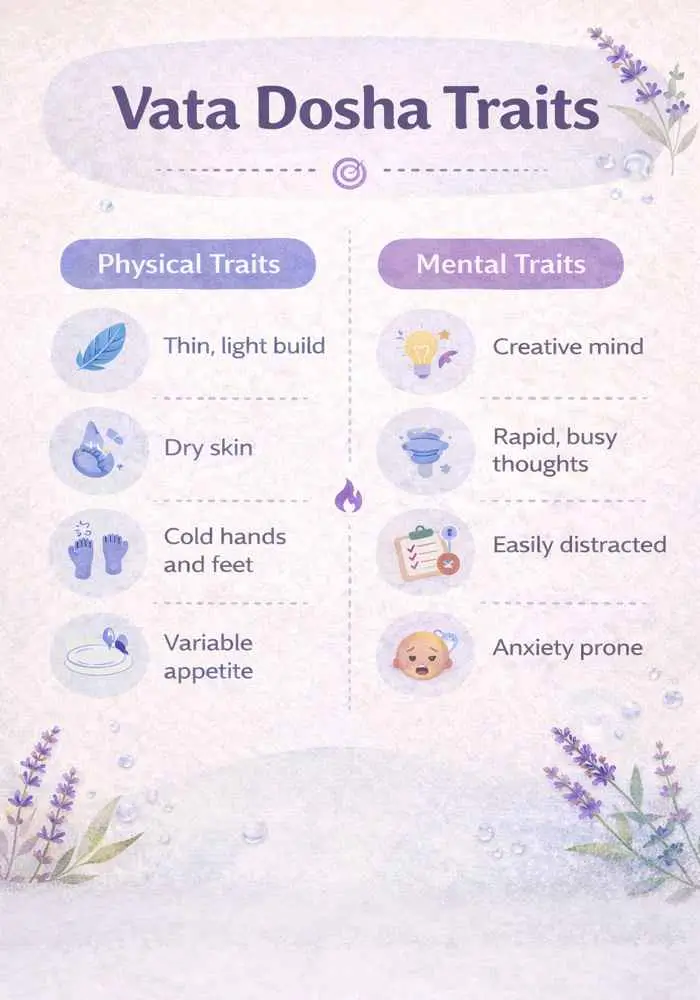
People with dominant Vata usually share certain physical and mental characteristics. However, these traits can vary from person to person.
Physical Traits
Many Vata-dominant individuals tend to have:
- a naturally slim or light body frame
- dry skin and hair
- cold hands and feet
- variable appetite and digestion
- quick movements and active body language
Their energy can also fluctuate during the day, sometimes feeling energetic and at other times feeling tired quickly.
Mental and Emotional Traits
Vata is also connected with creativity and quick thinking.
People with Vata qualities often show:
- creative thinking
- enthusiasm for new ideas
- curiosity and imagination
- quick learning ability
However, when Vata becomes excessive, it may lead to:
- overthinking
- anxiety
- difficulty concentrating
- irregular sleep patterns
Recognising these tendencies can help a person understand how to support their natural constitution.
Where Is Vata Located in the Body?
Vata is present throughout the body, but its main seats include:
- Head and chest
- Colon (large intestine)
- Bones and joints
- Skin and ears
- Thighs and pelvis
- Nervous system
This explains why Vata imbalance often shows up as issues related to digestion, joints, skin, and mental health.
Signs of Vata Imbalance
Are you experiencing dryness, irregular routines, or restlessness? These could be early signs of Vata disturbance.
Common Symptoms Include:
- Dry skin, brittle nails, and dry hair
- Constipation, gas, and bloating
- Anxiety, worry, and overthinking
- Cold hands and feet
- Sensitivity to cold weather
- Irregular appetite and unpredictable digestion
- Poor or interrupted sleep
- Cracking joints and stiffness
- Muscle twitching
- Unexplained weight loss or fatigue
If several of these sound familiar, your Vata may need balancing.
What Causes Vata Imbalance?
Modern lifestyles unknowingly increase Vata. Common triggers include:
- Irregular eating and sleeping habits
- Excessive travel or constant movement
- Eating cold, dry, or raw foods
- Overuse of screens and digital stimulation
- Multitasking and mental overload
- Exposure to cold and dry environments
How to Balance Vata Naturally
Balancing Vata naturally involves bringing warmth, stability, and nourishment into your daily life. This can be achieved through the right diet, a consistent routine, gentle exercise, and calming practices that support both body and mind. Making small, mindful changes in your everyday habits can go a long way in keeping Vata in balance.
1. Vata-Balancing Diet

Food plays a major role in calming Vata.
Prefer:
- Warm, freshly cooked meals – help calm Vata’s cold and dry nature
- Root vegetables like sweet potato, carrots, and beetroot – grounding and nourishing
- Whole grains like rice, wheat, and oats – provide stability and sustained energy
- Well-cooked pulses like moong dal and masoor dal – easier to digest and less drying
- Healthy fats like ghee and warm oils – reduce dryness and support lubrication in the body
- Soaked nuts and seeds – more digestible and less likely to increase dryness
- Mild warming spices like ginger, cumin, and ajwain – support digestion and reduce gas
- Warm milk (if suitable) – nourishing and calming for the system
- Seasonal and slightly warm foods – help maintain balance according to the weather
Avoid:
- Cold, dry, and raw foods like salads and packaged snacks – increase dryness and imbalance
- Excessive consumption of dry foods like biscuits, namkeen, and roasted items – worsen dryness
- Cold drinks and refrigerated foods – weaken digestion and increase coldness
- Irregular eating habits or skipping meals – disturb digestion and energy levels
- Excess caffeine (tea, coffee, caffeinated drinks) – overstimulates and increases restlessness
- Excessive intake of raw or hard-to-digest pulses – can cause gas and bloating
- Too much fasting or light eating – can aggravate Vata further
- Excess travel or irregular routine eating – creates instability in digestion
If you eat non-vegetarian food, have it warm and freshly prepared in moderation, as heavy or dry foods can disturb Vata.
2. Follow a Consistent Routine
Vata stays balanced with regular habits and a steady routine.
- Eat meals at the same time daily
- Sleep and wake up on a fixed schedule
- Avoid skipping meals
Even small consistency can bring big balance.
3. Gentle and Grounding Exercise
Avoid intense or exhausting workouts.
Instead, choose:
- Yoga (slow and steady) – improves flexibility while calming the nervous system
- Pranayama – calms the mind and reduces anxiety
- Walking in nature – grounding and relaxing for mind and body
- Stretching exercises – ease stiffness and improve joint mobility
- Light strength training – builds stability without exhausting the body
These help calm the nervous system.
4. Daily Oil Massage (Abhyanga)
One of the most effective Vata remedies.
Use warm and nourishing oils:
- Sesame oil – best for reducing dryness and calming Vata
- Mustard oil – warms the body and improves circulation
- Brahmi oil – relaxes the mind and improves sleep
- Mahanarayan oil – helps in joint pain and stiffness
This deeply nourishes dry tissues and calms the mind.
5. Keep Yourself Warm and Well-Hydrated
Maintaining warmth and proper hydration helps balance Vata by reducing its cold and dry qualities.
- Drink room temperature or clay pot (matka) water – gentle on digestion and suitable for daily use
- Avoid very cold or refrigerated water – can disturb digestion and increase dryness
- Protect yourself from cold weather – cover the body properly, especially in windy conditions
- Choose warm fluids when possible – like soups or light herbal drinks for added comfort
6. Include Warm Herbal Teas in Your Daily Routine
Warm herbal teas help calm Vata by supporting digestion, reducing bloating, and bringing a sense of relaxation.
- Ginger tea – improves digestion and reduces gas
- Cinnamon tea – gently warms the body and boosts circulation
- Cardamom tea – aids digestion and refreshes the system
- Fennel tea – soothes the stomach and relieves bloating
- Liquorice tea – helps reduce dryness and nourishes tissues
7. Avoid Habits That Aggravate Vata
Certain lifestyle habits can increase Vata’s dry, cold, and restless nature, so it’s best to keep them in check.
- Excessive multitasking – increases mental restlessness and stress
- Overuse of mobile or laptop – overstimulates the nervous system
- Loud music and constant stimulation – disturbs calmness and focus
- Excessive travel – creates instability and fatigue
- Skipping meals – can disrupt digestion and energy balance
Final Thought
Vata dosha is the energy of movement and life itself. When balanced, it brings creativity, flexibility, and enthusiasm, but when disturbed, it can lead to anxiety, dryness, and a sense of instability. If your life feels too fast, too dry, or too irregular, it may be a gentle sign that your Vata needs attention.
The key is not drastic change, but simple, mindful shifts like slowing down, staying warm, and nourishing your body with care. Ayurveda reminds us that balance doesn’t come from strict restriction, but from understanding what your body truly needs.
At the same time, it is not always necessary to completely avoid certain foods. Simple adjustments, such as pairing dry or light foods with healthy fats or including them as part of a balanced meal, may help make them easier to tolerate.
If you’re unsure about your body constitution, taking a simple Ayurvedic body type test can be a helpful first step. Once you understand your dominant dosha, it becomes much easier to choose foods and habits that truly support your body.
Disclaimer
The information in this article is based on traditional Ayurvedic principles and general wellness knowledge. It is intended for informational purposes only and should not be considered medical advice. For any specific health concerns or existing medical conditions, it is always advisable to consult a qualified healthcare professional.
References
This article is based on traditional Ayurvedic principles, including concepts described in classical texts such as the Charaka Samhita and the Sushruta Samhita. It also reflects general wellness knowledge commonly shared by recognised Ayurvedic practitioners and institutions.

A natural living enthusiast passionate about Ayurveda and holistic wellness. Through HealthBooti, she shares well-researched, practical health tips and lifestyle guidance to help individuals and families embrace healthier habits naturally. Her mission is to make natural healing simple, safe, and accessible for everyday life.