Last Updated: 3 June 2026
Do you often feel tired, low on energy, dizzy, or notice excessive hair fall and pale skin? These symptoms may be linked to low haemoglobin levels or iron deficiency anaemia, a common nutritional deficiency that affects millions of people worldwide, especially women and growing children.
Haemoglobin is a protein found in red blood cells that carries oxygen throughout the body. When haemoglobin levels fall below normal, the body’s tissues receive less oxygen, which can lead to fatigue, weakness, and several other health concerns.
One of the most common reasons for low haemoglobin is iron deficiency because iron is essential for making haemoglobin.
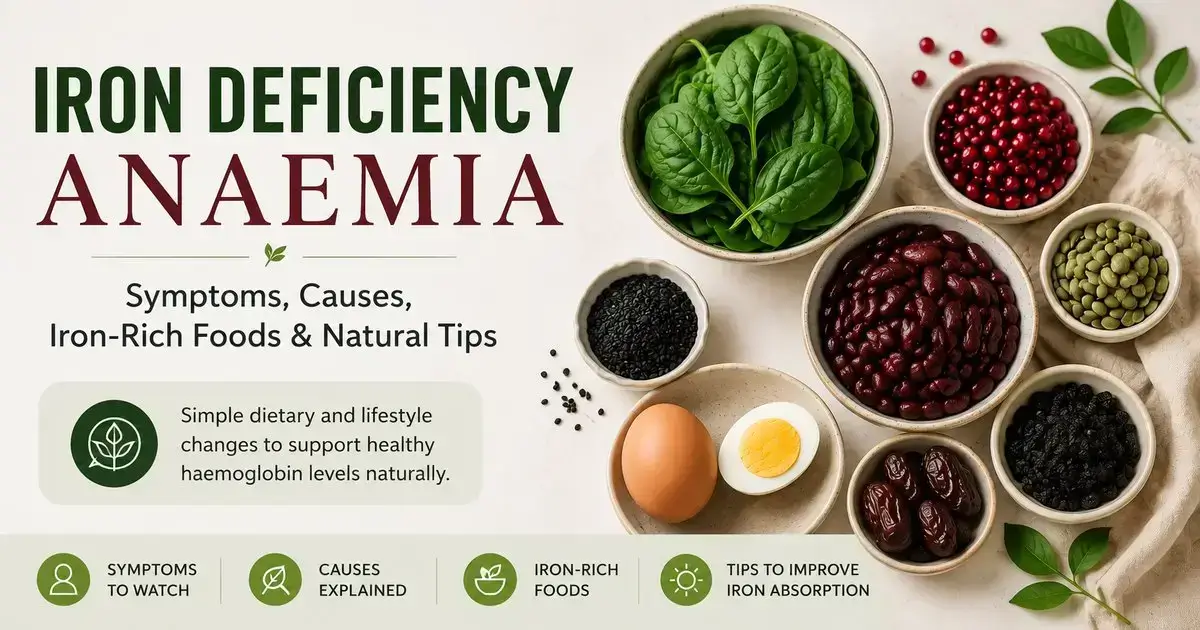
In this article, you’ll learn about the symptoms, causes, iron-rich foods, and practical tips that may help support healthy haemoglobin levels naturally.
What Is Anaemia?
Anaemia is a condition in which the body does not have enough healthy red blood cells or sufficient haemoglobin to transport oxygen efficiently.
Among the different types of anaemia, iron deficiency anaemia is the most common.
Who Is Considered Anaemic? (WHO Guidelines)
According to the World Health Organisation (WHO), anaemia is diagnosed when haemoglobin levels fall below:
| Group | Haemoglobin Level |
|---|---|
| Children under 5 years | Less than 11 g/dL |
| Children 5-11 years | Less than 11.5 g/dL |
| Children 12-14 years | Less than 12 g/dL |
| Non-pregnant women | Less than 12 g/dL |
| Pregnant women | Less than 11 g/dL |
| Men (15 years and above) | Less than 13 g/dL |
Vegetarians and vegans may have a higher risk of iron deficiency because plant foods contain non-heme iron, which is generally absorbed less efficiently than heme iron found in animal foods.
Common Symptoms of Low Haemoglobin and Iron Deficiency
Symptoms can vary from person to person but may include:
- Persistent tiredness
- Weakness and low energy
- Pale skin or pale inner eyelids
- Dizziness
- Difficulty concentrating
- Shortness of breath
- Hair fall
- Brittle nails
- Cold hands and feet
- Heart palpitations
- Tingling sensations
- Restless legs
If these symptoms persist, consult a healthcare professional for proper testing and diagnosis.
Common Causes of Iron Deficiency Anaemia
Several factors can contribute to low iron levels, including:
- Heavy menstrual bleeding
- Blood loss after childbirth or injury
- Low intake of iron-rich foods
- Poor iron absorption due to digestive issues
- Vitamin B12 or folate deficiency
- Low stomach acid
- Intestinal worm infestations
- Certain chronic illnesses
Iron-Rich Foods That May Help Support Healthy Haemoglobin Levels
A balanced diet plays an important role in maintaining healthy haemoglobin levels. While no single food can cure anaemia, regularly including iron-rich foods in your meals may help support red blood cell production and overall blood health.
1. Leafy Green Vegetables
Dark green leafy vegetables provide iron, folate, and other nutrients that contribute to healthy blood formation.
Good options include:
- Spinach (Palak)
- Fenugreek leaves (Methi)
- Bathua leaves
- Amaranth leaves (Chaulai)
- Mustard greens (Sarson)
- Coriander leaves
- Mint leaves
These greens can be enjoyed as sabzi, parathas, soups, saag, or fresh chutneys.
2. Pulses and Legumes
Pulses and legumes are among the best plant-based sources of iron and protein.
Include foods such as:
- Kala chana
- Kabuli chana
- Rajma
- Masoor dal
- Whole moong
- Soybeans
Adding a variety of dals and legumes to your weekly meals can help improve overall nutrient intake.
3. Dry Fruits
Several dried fruits contain iron and other minerals that support overall nutrition.
Good choices include:
- Black raisins
- Munakka
- Dates
- Chuara (dried dates)
- Anjeer (dried figs)
Many people prefer soaking raisins or munakka overnight before consuming them.
4. Seeds
Certain seeds are naturally rich in iron and other beneficial nutrients.
- Black sesame seeds (kale til)
- Pumpkin seeds
You can add them to smoothies, porridge, laddoos, salads, or homemade trail mixes.
5. Ragi (Finger Millet)
Ragi is a nutritious whole grain that contains iron, calcium, and fibre. It can be included as ragi roti, porridge, dosa, or other traditional preparations.
6. Beetroot
Although beetroot is not among the highest iron-rich foods, it contains folate, antioxidants, and other nutrients that support overall health. It can be enjoyed as juice, salad, soup, or cooked vegetable dishes.
7. Seafood, Eggs and Lean Meat (For Non-Vegetarians)
Animal-based foods contain heme iron, which is generally absorbed more efficiently than plant-based iron.
Examples include:
- Eggs
- Sardines
- Tuna
- Salmon
- Lean mutton
- Chicken liver
These foods can help increase overall iron intake when included as part of a balanced diet.
Other Foods That May Support Overall Blood Health
- Pomegranate
- Strawberries
- Bananas
- Pistachios
- Carrots
- Lettuce
- Plums
- Pumpkin seeds
- Watermelon
- Sweet potatoes
Jaggery
Traditional jaggery contains small amounts of iron and minerals. While it should not be considered a treatment for anaemia, it can be used as a healthier alternative to refined sugar when consumed in moderation. Many people pair jaggery with roasted chana or sesame seeds as a nutritious snack.
Foods and Habits That Help Improve Iron Absorption
Eating iron-rich foods is important, but your body also needs to absorb that iron efficiently. Certain foods and daily habits can help increase iron absorption, while others may reduce it.
1. Include Vitamin C-Rich Foods with Iron-Rich Meals
Vitamin C helps your body absorb iron from plant-based foods more efficiently. This is why pairing iron-rich foods with vitamin C-rich foods can be beneficial.
Good sources of vitamin C include:
- Amla (Indian gooseberry)
- Lemon
- Oranges
- Guava
- Kiwi
- Tomatoes
- Bell peppers (capsicum)
- Strawberries
For example, you can squeeze lemon over dal, salads, or leafy vegetables, or have amla or guava along with meals.
2. Cook in Cast-Iron Utensils
Traditional iron cookware may contribute small amounts of iron to food during cooking. Using an iron kadhai for everyday cooking is one of the simple dietary practices often recommended to support iron intake.
3. Avoid Tea and Coffee Around Meal Times
Tea and coffee contain compounds that can interfere with iron absorption.
For better iron absorption, try to avoid tea or coffee for at least one hour before and after iron-rich meals.
4. Avoid Taking High-Calcium Foods with Iron-Rich Meals
Calcium can compete with iron absorption when consumed together in large amounts.
If possible, avoid combining iron-rich meals with:
- Milk
- Cheese
- Large amounts of curd
- Calcium supplements
Instead, consume them at a different time of the day.
5. Include Adequate Protein in Your Diet
Protein plays an important role in the production of red blood cells and overall health.
Good sources include:
- Dal and legumes
- Soybeans
- Paneer
- Curd
- Eggs
- Fish
- Lean meat
6. Maintain Good Gut Health
A healthy digestive system helps the body absorb nutrients more effectively.
Including fibre-rich foods, staying hydrated, and managing digestive issues can support better nutrient absorption.
7. Make Room for Nutrient-Rich Foods
If your diet is filled with packaged snacks, fast food, and sugary drinks, you may miss out on important nutrients needed for healthy blood formation. Try to include more iron-rich foods such as leafy greens, dals, legumes, seeds, and dried fruits in your daily meals.
8. Follow a Consistent Approach
Improving iron levels usually takes time. Regularly eating iron-rich foods, pairing them with vitamin C-rich foods, and consistently following healthy eating habits can make a meaningful difference over time.
When Should You See a Doctor?
Consult a healthcare professional if:
- Fatigue is persistent or worsening.
- You experience unexplained hair loss.
- You feel breathless during routine activities.
- You have very heavy periods.
- Your blood test shows low haemoglobin or ferritin levels.
A proper diagnosis is important because anaemia can result from several underlying causes, not just iron deficiency.
(FAQs)
1. What is the fastest way to improve low iron levels?
Eating iron-rich foods along with vitamin C can help improve iron intake. However, people with moderate or severe iron deficiency may require supplements prescribed by a healthcare professional.
2. Which foods are highest in iron?
Some iron-rich foods include spinach, lentils, beans, chickpeas, pumpkin seeds, black sesame seeds, lean meat, fish, and chicken liver.
3. What are the symptoms of low haemoglobin?
Common symptoms include fatigue, weakness, dizziness, pale skin, hair fall, shortness of breath, and cold hands or feet.
4. Can anaemia improve naturally?
Mild iron deficiency may improve with dietary changes and proper medical guidance. The outcome depends on the underlying cause.
5. Which drinks may support healthy haemoglobin levels?
Beetroot juice, amla juice, spinach smoothies, and citrus-based drinks can help increase overall nutrient intake.
6. What should I avoid if I have iron deficiency?
Avoid consuming tea, coffee, or excessive amounts of calcium-rich foods immediately after iron-rich meals, as they may reduce iron absorption.
7. How long does it take to improve iron deficiency?
The timeline varies depending on the severity and cause. Some people notice improvement within a few weeks, while others may require several months.
8. Can heavy periods cause anaemia?
Yes. Heavy menstrual bleeding is one of the most common causes of iron deficiency anaemia in women.
9. Should I take iron supplements on my own?
Iron supplements should only be taken after proper testing and medical advice because excess iron can be harmful.
10. How can I improve iron absorption naturally?
Pair iron-rich foods with vitamin C-rich foods, avoid tea and coffee around meals, and maintain a balanced diet.
Final Thoughts
Low haemoglobin and iron deficiency can affect energy levels, concentration, and overall well-being. The good news is that many people can support healthy iron levels through a balanced diet, better food combinations, and healthy lifestyle habits.
If symptoms persist or blood tests show low haemoglobin, consult a qualified healthcare professional for proper diagnosis and treatment.
Disclaimer
This article is intended for educational and informational purposes only and should not be considered medical advice. Always consult a qualified healthcare professional regarding any health concern, diagnosis, or treatment.
References
- World Health Organization (WHO) – Anaemia Guidelines
- National Institutes of Health (NIH) – Iron Fact Sheet
- Harvard T.H. Chan School of Public Health – Iron
- Mayo Clinic – Iron Deficiency Anaemia
- NHS (UK) – Iron Deficiency Anaemia

A natural living enthusiast passionate about Ayurveda and holistic wellness. Through HealthBooti, she shares well-researched, practical health tips and lifestyle guidance to help individuals and families embrace healthier habits naturally. Her mission is to make natural healing simple, safe, and accessible for everyday life.