Last Updated: 09 July 2026
In recent years, the way we approach health has changed significantly. More people are choosing healthier lifestyles, paying closer attention to what they eat, and looking for natural ways to support their overall well-being. As interest in preventive healthcare continues to grow, many traditional wellness practices are finding their way back into daily routines.
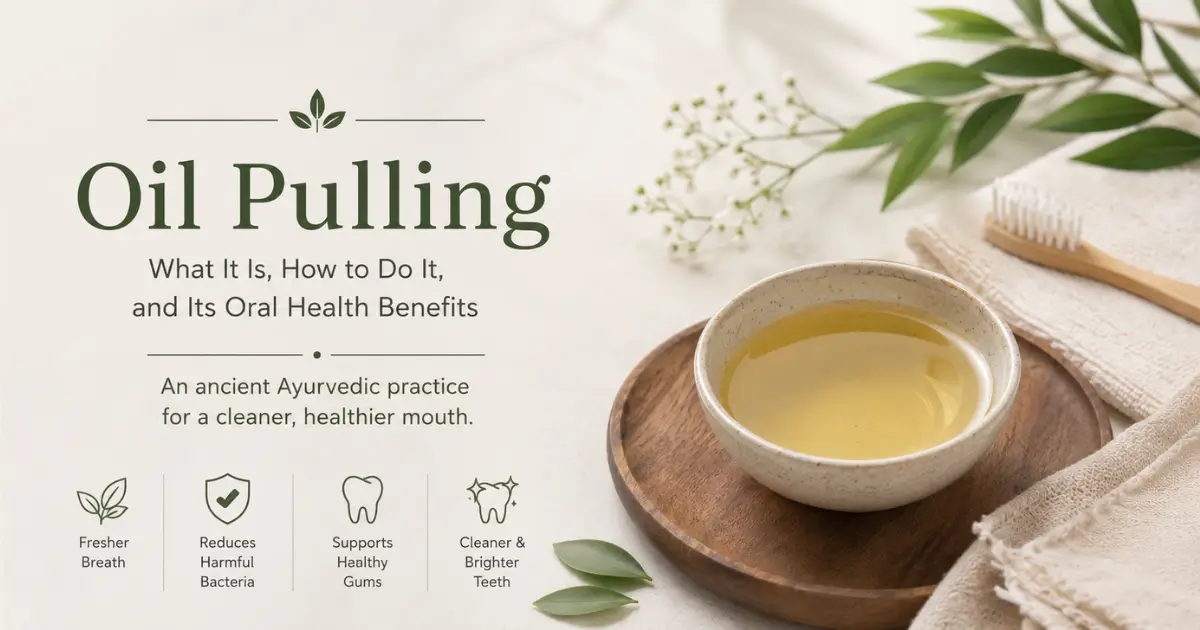
One such practice is oil pulling. Rooted in Ayurveda, oil pulling has been used for centuries as a natural method to support oral hygiene. Today, it has gained renewed attention as people look for simple, affordable ways to complement their regular dental care.
But what exactly is oil pulling? How does it work, and is it really worth adding to your daily routine?
In this guide, you’ll learn what oil pulling is, how to do it correctly, its potential oral health benefits, the best oils to use, and what current research says about this traditional practice.
What Is Oil Pulling?
Oil pulling is a traditional oral hygiene practice that involves gently swishing edible oil around the mouth for several minutes before spitting it out. It is commonly performed for 15-20 minutes, although beginners can start with a shorter duration and gradually increase the time as they become comfortable.
This practice has its roots in Ayurveda, the traditional system of medicine that originated in India thousands of years ago. In Ayurveda, oil pulling is known as Gandusha or Kavala, depending on the method used. If you’re new to Ayurveda, you may also enjoy our guide on What Is Ayurveda? to understand its basic principles and holistic approach to health.
It has long been recommended as part of Dinacharya (the daily routine) to help maintain oral cleanliness and support overall well-being. Oil pulling is just one part of a traditional Ayurvedic daily routine. To learn about other morning wellness practices, read our complete guide on Daily Routine According to Ayurveda (Dinacharya).

From a modern perspective, oil pulling is thought to work by coating the teeth, gums, and tongue with oil as it is swished around the mouth. During this process, the oil mixes with saliva and may trap bacteria, food particles, and other debris present in the oral cavity. Once the oil is spit out, these substances are removed along with it.
While oil pulling should not replace brushing, flossing, or regular dental check-ups, many people use it as an additional step in their daily oral care routine. Some studies suggest it may help reduce certain harmful bacteria and support oral hygiene, although more high-quality research is needed to fully understand its long-term benefits.
How Does Oil Pulling Work?
Although oil pulling is an ancient practice, the process itself is quite simple.
You begin by taking a small amount of edible oil and gently swishing it around your mouth. As you move the oil between your teeth and across your gums, it mixes with saliva and gradually becomes thinner. The swishing action allows the oil to come into contact with different areas of the mouth, including places that may be difficult to reach with brushing alone.
Some researchers believe that the oil can bind to bacteria and other debris present in the mouth, helping remove them when the oil is spit out. This may contribute to a cleaner oral environment and support daily oral hygiene. However, oil pulling is not a substitute for brushing or flossing, which remain essential for maintaining healthy teeth and gums.
After completing the process, spit the oil into a trash bin rather than the sink, as it can solidify over time and clog pipes. Rinse your mouth thoroughly with water and brush your teeth as you normally would to remove any remaining oil residue.
Which Oil is Best for Oil Pulling?
One of the most common questions people ask is, which oil should you use for oil pulling?
The good news is that you don’t need anything expensive or complicated. The most important thing is to choose a pure, edible, cold-pressed oil without added flavours or chemicals.
The oils most commonly used for oil pulling include:
Cold-Pressed Coconut Oil
Cold-pressed coconut oil is one of the most popular choices today. It has a mild taste and contains lauric acid, a natural compound known for its antibacterial properties. Because of its pleasant flavour and smooth texture, many beginners find it easier to use than other oils.
Sesame Oil
Sesame oil is the traditional oil recommended in Ayurveda for oil pulling. It has been used for centuries as part of the daily oral care routine (Dinacharya) and remains a popular choice among Ayurvedic practitioners.
Olive Oil
Olive oil is another edible oil that some people use for oil pulling. While it has a stronger taste than coconut oil, it can be a suitable alternative if that’s what you have available at home.
Ultimately, there is no single “best” oil for everyone. The right choice depends on your personal preference, taste, and comfort. Whichever oil you choose, make sure it is food-grade, pure, and preferably cold-pressed.
Note: If you’re allergic to any of these oils, avoid using them for oil pulling and choose a safe alternative.
How to Do Oil Pulling (Step-by-Step)
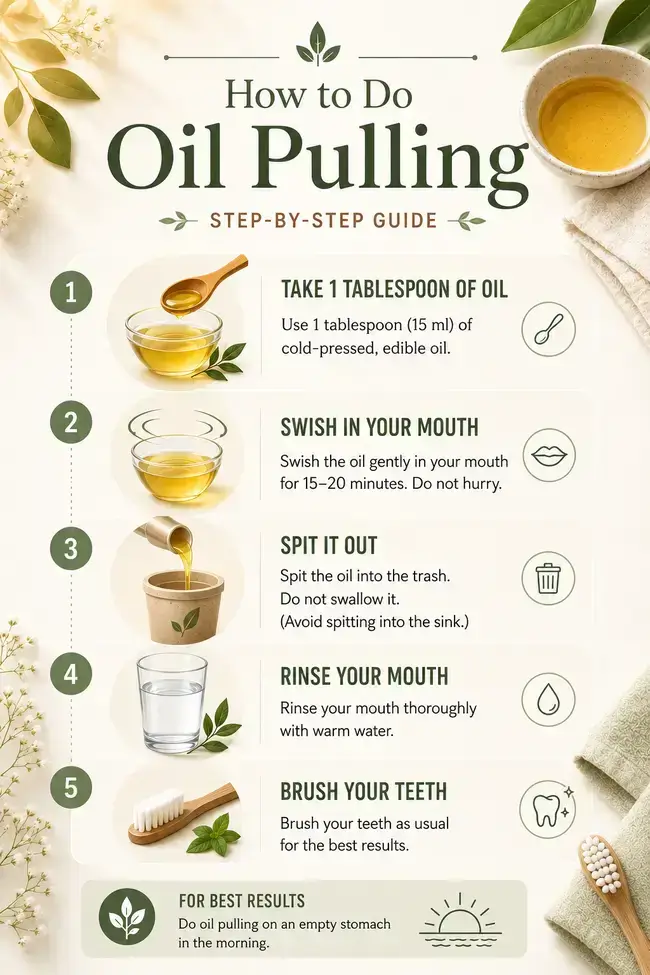
Oil pulling is simple to include in your morning routine. Follow these steps to do it safely and effectively.
Step 1: Take the Oil
Measure about 1 tablespoon of your preferred edible oil. If you’re trying oil pulling for the first time, you can start with 1 teaspoon until you get used to the sensation.
Step 2: Swish Gently
Place the oil in your mouth and slowly swish it around. Move it between your teeth and over your gums without gargling or swallowing. The movement should be gentle and comfortable.
Step 3: Continue for 15-20 Minutes
Aim to swish the oil for 15 to 20 minutes. If that feels too long, begin with 5 to 10 minutes and gradually increase the duration over time.
As you continue swishing, the oil will mix with saliva and become thinner. It may also turn milky or frothy, which is completely normal.
Step 4: Spit Out the Oil
Once you’re finished, spit the oil into a trash bin instead of the sink. This helps prevent oil from solidifying inside the pipes and causing blockages.
Step 5: Rinse Your Mouth
Rinse your mouth thoroughly with water to remove any remaining oil. Some people prefer using warm water, but plain water works well too.
Step 6: Brush Your Teeth
Finish by brushing your teeth with your regular toothpaste. Oil pulling should always be used alongside brushing and flossing, not as a replacement for them.
When Is the Best Time to Do Oil Pulling?
For most people, the best time to practice oil pulling is in the morning on an empty stomach, before eating, drinking, or brushing your teeth. However, if that isn’t convenient, you can do it at another time of the day as long as you haven’t eaten recently.
Benefits of Oil Pulling
Oil pulling has been practiced in Ayurveda for centuries as a daily oral cleansing ritual. Today, many people include it in their oral care routine because of its potential to support a healthier mouth.
While research on oil pulling is still evolving, some studies suggest it may offer certain oral health benefits when practiced regularly alongside brushing, flossing, and routine dental care.
Here are some of the potential benefits of oil pulling:
1. May Help Reduce Bad Breath
Bad breath, also known as halitosis, is often caused by the buildup of bacteria, food particles, and plaque in the mouth.
Oil pulling may help reduce the number of odour-causing bacteria, which can contribute to fresher breath. Some studies have found that it may be comparable to certain mouthwashes in reducing bad breath, although more research is needed to confirm these findings.
2. May Help Reduce Harmful Oral Bacteria
The mouth naturally contains hundreds of different types of bacteria. While many of them are harmless or even beneficial, some can contribute to plaque formation, tooth decay, and gum problems.
Research suggests that regular oil pulling may help lower the levels of certain harmful bacteria in the mouth, particularly when combined with good oral hygiene practices. However, it should not be considered a replacement for brushing, flossing, or professional dental care.
3. May Support Healthier Gums
Plaque buildup along the gum line can lead to irritation, swelling, and bleeding gums over time.
Some small studies suggest that oil pulling may help reduce plaque and improve certain signs of gum inflammation when practiced consistently. Although these findings are encouraging, larger and better-quality studies are still needed.
4. May Help Improve the Appearance of Teeth
Over time, tea, coffee, tobacco, and certain foods can leave surface stains on teeth, making them appear dull.
Although oil pulling does not whiten teeth in the same way as professional whitening treatments, regular practice may help reduce surface buildup and leave teeth looking cleaner and brighter as part of a good oral hygiene routine.
5. May Support Overall Oral Hygiene
Oil pulling helps cleanse the mouth by allowing the oil to come into contact with the teeth, gums, tongue, and other oral tissues.
When the oil is spit out, it may carry away some bacteria, food debris, and other particles from the mouth. Used consistently, it can be a simple addition to your daily routine to support overall oral cleanliness.
6. May Promote a Cleaner, Fresher Feeling
Many people who practice oil pulling regularly say their mouth feels cleaner and fresher afterward. Some also report experiencing less dryness and a smoother feeling on their teeth.
These experiences are largely based on personal observations and traditional use rather than strong scientific evidence, so results can vary from person to person.
Important: Oil pulling is best viewed as a complementary oral care practice. It works best when combined with brushing twice a day, daily flossing, a balanced diet, and regular dental check-ups.
Do’s and Don’ts of Oil Pulling
To get the most out of oil pulling, it’s important to follow the right technique. Here are some simple do’s and don’ts to keep in mind.
Do’s
- Practice oil pulling in the morning on an empty stomach, if possible.
- Use a pure, edible, cold-pressed oil such as coconut, sesame, or olive oil.
- Swish the oil gently around your mouth without forcing the movement.
- Start with 5-10 minutes if you’re a beginner, then gradually work up to 15-20 minutes.
- Spit the used oil into a trash bin rather than the sink to help prevent clogged pipes.
- Rinse your mouth thoroughly and brush your teeth after completing the process.
- Practice regularly for the best results, as consistency is more important than doing it occasionally.
Don’ts
- Don’t swallow the oil, as it may contain bacteria, food particles, and other debris collected from your mouth.
- Don’t gargle or swish too aggressively, as this can tire your jaw muscles.
- Avoid talking, eating, or drinking while oil pulling.
- Don’t use oils that you are allergic to.
- Don’t rely on oil pulling as a replacement for brushing, flossing, or regular dental check-ups.
Helpful Tips for Beginners
If you’re new to oil pulling, these simple tips can make the experience easier and more comfortable.
- Start with 1 teaspoon of oil instead of a full tablespoon if it feels more comfortable.
- If keeping the oil in your mouth for 20 minutes feels difficult, begin with 5-10 minutes and increase the duration gradually.
- Swish gently. You don’t need to move the oil forcefully for it to be effective.
- If your jaw starts to feel tired, slow down the swishing or take a short break before continuing.
- If the oil feels too much in your mouth after it mixes with saliva, you can spit out a small amount and continue.
- Try to make oil pulling part of your daily morning routine so it becomes a consistent habit.
Who Should Avoid Oil Pulling?
Oil pulling is generally considered safe for most healthy adults when performed correctly. However, it may not be suitable for everyone.
You should avoid or speak to a healthcare professional before trying oil pulling if you:
- Have an allergy to coconut, sesame, olive, or any other oil you plan to use.
- Have difficulty swishing liquids or are at risk of accidentally inhaling them.
- Are experiencing severe tooth pain, gum infections, swelling, or other dental problems that require professional treatment.
- Have recently undergone oral surgery or a dental procedure and have been advised to follow specific aftercare instructions.
Children should only practice oil pulling under adult supervision if they are old enough to swish and spit safely without swallowing the oil.
Does Science Support Oil Pulling?
Oil pulling has been practiced in Ayurveda for centuries, but what does modern research say?
Several small studies suggest that oil pulling may help reduce certain harmful bacteria in the mouth, improve bad breath, and lower plaque buildup when practiced regularly. These findings are encouraging, but many of the existing studies have small sample sizes and vary in quality.
Because of this, researchers agree that more well-designed clinical studies are needed to fully understand the long-term benefits of oil pulling.
Organizations such as the American Dental Association (ADA) also state that there is currently insufficient scientific evidence to recommend oil pulling as a replacement for established oral hygiene practices. Brushing twice a day with fluoride toothpaste, flossing daily, and visiting your dentist regularly remain the most effective ways to maintain good oral health.
If you enjoy oil pulling and find it beneficial, it can be used as a complementary practice alongside your regular oral care routine, not as a substitute for it.
Final Thoughts
Oil pulling is a simple Ayurvedic practice that has stood the test of time and continues to be popular among people looking for natural ways to support their oral hygiene.
While modern research suggests it may offer certain benefits, such as helping reduce harmful oral bacteria, freshen breath, and support gum health, the current evidence is still limited. For this reason, oil pulling is best viewed as a complementary practice rather than a replacement for proven dental care.
When combined with brushing, flossing, a balanced diet, and regular dental check-ups, oil pulling can be a simple addition to your daily routine that may contribute to a cleaner, fresher mouth.
If you decide to try oil pulling, choose a high-quality edible oil, practice it consistently, and remember that good oral health always starts with proper daily dental hygiene.
Frequently Asked Questions (FAQs)
Can I do oil pulling every day?
Yes. Many people practice oil pulling daily, especially in the morning before breakfast. Consistency is generally considered more important than doing it occasionally.
How long should I swish the oil?
The traditional recommendation is 15-20 minutes. However, if you’re just starting, even 5-10 minutes can help you get comfortable with the practice before gradually increasing the duration.
Can oil pulling whiten teeth?
Oil pulling is not a teeth-whitening treatment. However, some people notice that their teeth look cleaner or brighter over time because it may help reduce surface buildup and improve overall oral hygiene.
Should I brush my teeth before or after oil pulling?
It’s generally recommended to perform oil pulling first, then rinse your mouth and brush your teeth afterward.
What happens if I accidentally swallow the oil?
A small accidental swallow is unlikely to cause serious problems for most healthy adults. However, it’s best to avoid swallowing the oil because it may contain bacteria and debris collected from your mouth during the swishing process.
Can oil pulling replace mouthwash?
No. Oil pulling can be a complementary addition to your oral care routine, but it should not replace brushing, flossing, or any treatment recommended by your dentist.
Is coconut oil better than sesame oil?
Both oils are commonly used for oil pulling. Coconut oil is popular because of its mild taste and natural antibacterial properties, while sesame oil has been traditionally recommended in Ayurveda. The best choice is the one that you find comfortable and can use consistently.
Disclaimer
The information in this article is intended for educational and informational purposes only. It should not be considered medical or dental advice, nor should it replace professional diagnosis or treatment. If you have persistent bad breath, tooth pain, bleeding gums, cavities, or any other oral health concern, consult a qualified dentist or healthcare professional for proper evaluation and treatment. Always seek personalised medical advice before starting any new health practice if you have an underlying medical condition or specific health concerns.
References
- American Dental Association (ADA) – Oil Pulling
- Oil Pulling for Maintaining Oral Hygiene – A Review
- The Effect of Oil Pulling with Coconut Oil to Improve Dental Hygiene and Oral Health: A Systematic Review
- Effectiveness of Oil Pulling for Improving Oral Health: A Meta-Analysis
- Oral Health Effects of Oil Pulling: A Systematic Review of Randomised Controlled Trials

A natural living enthusiast passionate about Ayurveda and holistic wellness. Through HealthBooti, she shares well-researched, practical health tips and lifestyle guidance to help individuals and families embrace healthier habits naturally. Her mission is to make natural healing simple, safe, and accessible for everyday life.