Last Updated: 28 May 2026
Constipation is something most people experience at some point, but very few talk about openly. It can feel uncomfortable, frustrating, and even affect your daily energy and mood.
The good news is that you don’t always need strong medicines or laxatives. In many cases, small changes in your daily habits, food choices, and routine can support better digestion and bowel movements.
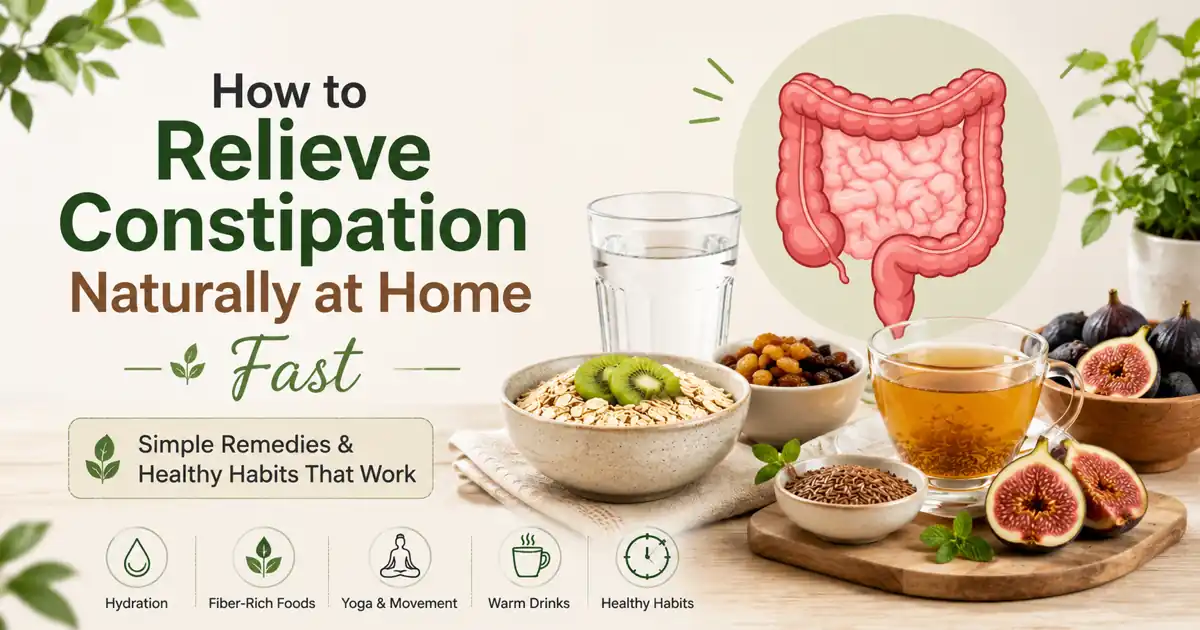
If you’re looking for natural ways to relieve constipation, there are several simple remedies you can try at home. In this article, we’ll explore 10 natural ways to relieve constipation that may help support smoother digestion and more regular bowel movements.
1. Start Your Day with Warm Water
One of the easiest and most effective habits is drinking a glass of warm water in the morning.
It gently activates your digestive system, helps soften stool, and supports natural bowel movement.
Tip: Add a few drops of lemon if you like. Drinking warm water while sitting in Malasana (the deep squat position) can also support digestion and help the bowels move more naturally.
2. Increase Fibre in Your Daily Diet
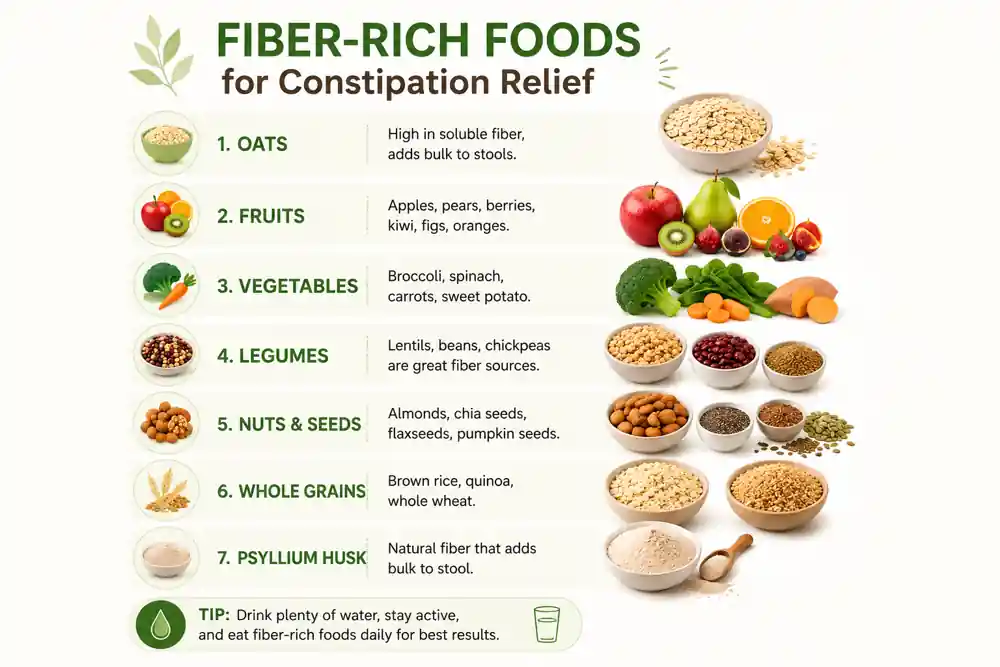
Fibre plays a key role in keeping your digestion smooth. It adds bulk to stool and helps it move easily through the intestines.
Include fibre-rich foods:
- Apple & pear with their skin
- Oats and whole grains like whole-wheat, brown rice
- Cruciferous and leafy green vegetables
- Flaxseeds & chia seeds
- Dried figs & prunes
Tip: Don’t increase fibre too quickly. Add it gradually and drink enough water so your digestive system can adjust comfortably. A sudden increase in fibre may lead to bloating or gas.
3. Stay Properly Hydrated
Low water intake is one of the most common causes of constipation.
When your body is dehydrated, the colon absorbs more water from stool, making it hard and dry.
Try to drink:
- Drink enough water throughout the day instead of waiting until you feel very thirsty.
- Herbal teas or naturally infused water can also be refreshing ways to stay hydrated.
4. Add Ghee to Support Digestion
In Ayurveda, ghee is known for its digestive benefits. A small amount can help lubricate the intestines and support smoother bowel movements.
How to use:
- 1 teaspoon cow ghee in warm milk at night (especially helpful for dry stools)
5. Eat Papaya for Natural Relief
Papaya is one of the best fruits for constipation relief. It contains natural enzymes that support digestion and improve gut movement.
Eating papaya in the morning or as a snack can help keep your stomach light and regular.
6. Stay Physically Active
A sedentary lifestyle slows down digestion.
Simple movement can make a big difference:
- A short walk after meals helps support digestion and reduce bloating.
- Gentle yoga poses like Pawanmuktasana, Vajrasana, and Child’s Pose may help release trapped gas and support smoother bowel movements.
- Staying physically active helps keep the digestive system moving naturally.
Movement helps stimulate the intestines and improves bowel activity.
7. Never Ignore Nature’s Call
Holding your urge to pass stool regularly may worsen constipation over time.
Your body follows a natural rhythm, especially in the morning, so try not to ignore the urge when it comes.
Tip: Sit calmly and avoid stress or phone distractions. Giving your body a few quiet minutes can help support a more natural and comfortable bowel movement.
8. Drink Warm Herbal Water at Night
Warm fluids at night help relax the digestive system and support morning bowel movement.
You can try:
- Jeera water – may help support digestion and reduce bloating
- Ajwain water – may help with gas and stomach heaviness
- Saunf water – soothing for digestion and bloating
- Mild Triphala water – traditionally used in Ayurveda to support bowel regularity, though it may not suit everyone.
9. Try a Natural Squatting Position
Your toilet posture can also affect bowel movement. Sitting in a slightly squatting position may help stools pass more easily and comfortably by relaxing the rectal muscles naturally.
If you use a western toilet, placing a small stool under your feet can help create a more natural posture and support smoother bowel movements.
10. Reduce Constipation-Triggering Foods
Some foods may slow digestion or worsen constipation when eaten in excess:
- Excess tea or coffee
- Fried and oily foods
- Packaged or highly processed snacks
- Refined flour (maida) and low-fibre meals
You don’t need to avoid these foods completely, but balancing them with fibre-rich foods, enough water, and regular movement may help support healthier digestion.
When Should You See a Doctor?
Constipation is usually manageable with lifestyle changes, but you should consult a doctor if:
- It lasts more than 1 week
- There is severe pain or discomfort
- You notice blood in stool
- There is sudden change in bowel habits
Final Thoughts
Constipation is common, but it’s often your body’s way of asking for a little more care and balance. Simple habits like staying hydrated, eating fibre-rich foods, moving your body, and maintaining a healthy routine can make a big difference over time.
These natural ways to relieve constipation may not work overnight, but when followed consistently, they can help support healthier digestion and more regular bowel movements.
Instead of depending on quick fixes, focus on supporting your digestion naturally and consistently.
(FAQs)
1. What are the fastest natural ways to relieve constipation?
Warm water in the morning, papaya, ghee in warm milk at night, and light walking are quick natural remedies.
2. Which foods help soften stool naturally?
Papaya, pear, apple, oats, flaxseeds, and vegetables are excellent for softening stool.
3. Is ghee good for constipation?
Yes, a small amount of ghee can help lubricate the intestines and support smoother bowel movements.
4. Can low water intake cause constipation?
Yes, dehydration is one of the most common causes of hard stools and constipation.
5. Which seeds are best for constipation?
Flaxseeds and chia seeds are highly effective due to their fibre content.
6. Are natural constipation home remedies safe to try?
Many natural constipation home remedies are generally safe for most people. However, if constipation is severe, persistent, or accompanied by other symptoms, it’s best to consult a healthcare professional.
7. When should constipation be taken seriously?
If it continues for more than a week or comes with pain, bleeding, or unusual changes, medical advice is recommended.
Disclaimer
This article is for informational purposes only and is not a substitute for medical advice, diagnosis, or treatment. If constipation is severe, persistent, or accompanied by pain, bleeding, or other concerning symptoms, consult a qualified healthcare professional.
References
- National Institute of Diabetes and Digestive and Kidney Diseases (NIDDK) – Constipation Treatment
- Mayo Clinic – Constipation: Symptoms and Causes
- National Institute of Diabetes and Digestive and Kidney Diseases (NIDDK) – Symptoms & Causes of Constipation
- Cleveland Clinic – Constipation Overview

A natural living enthusiast passionate about Ayurveda and holistic wellness. Through HealthBooti, she shares well-researched, practical health tips and lifestyle guidance to help individuals and families embrace healthier habits naturally. Her mission is to make natural healing simple, safe, and accessible for everyday life.